
Did You Know?
We serve loans, the best way you can borrow
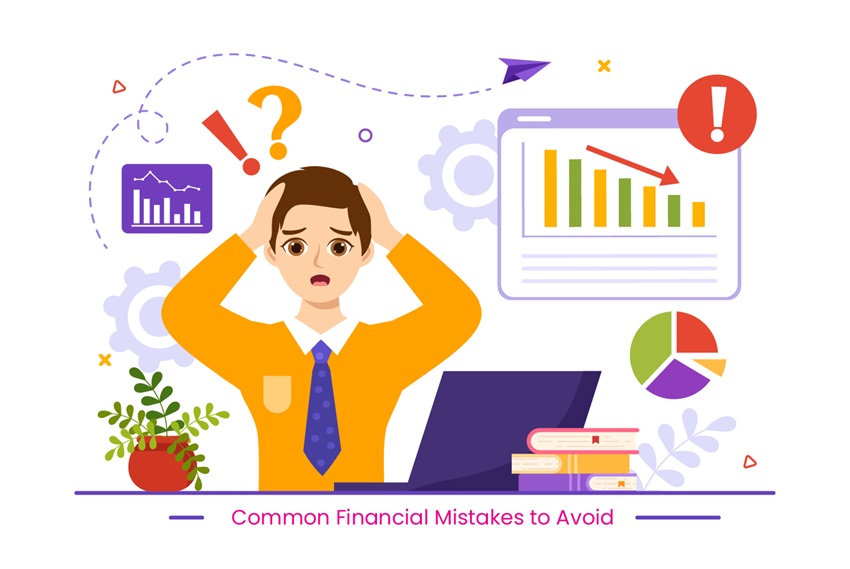

Not everyone grasps everything instantly in life. A lot of individuals take sufficient time to understand the right way to manage their finances. Aside from lifestyle choices, the spending habits of different people vary significantly. So, there’s no denying that not everyone becomes financially sound from an early age. Most of them often end up making common financial mistakes.
Know that even a considerable number of financially savvy persons often find it challenging to make favorable financial decisions. You can remain economically healthy if you know the typical financial mistakes that you must avoid.
Financial mistakes are essentially those specific choices or oversights in your daily money management that lead to a loss of wealth or a rise in debt. These errors usually happen when you prioritise immediate gratification over your future stability. Perhaps you spend your whole monthly salary without setting anything aside or you ignore the creeping balance on your credit card. The real risk lies in how these choices build up over time. Small, repetitive slips create a heavy burden for your future self. You might see your credit score drop or find that your savings account is empty in spite of your hard work. Avoiding financial mistakes to avoid is about protecting your peace of mind and making sure you have enough to reach your long-term goals.
Poor financial habits often take root the very moment you get your first paycheck or student loan payment. You may check that additional cash as purely disposable income rather than a tool for your growth. You likely spend on those that don’t add lasting value to your life.
Impulse spending is when you purchase a thing on a sudden whim without checking the budget or needs. It happens if you feel a bit bored or stressed. Such a habit happens due to the most common financial mistakes (as it drains your cash flow before you even cover your basic essentials).
Many individuals do not think twice before spending money on unnecessary things. It’s high time you took time to analyse your spending habits if you spend money like water. There’s no point in spending more than your earnings. You will have to bear the brunt if you have this habit.
Continuing to do so will lead you to accumulate debts, paying back, which might be immensely difficult later. So, the most prudent step to stop bad spending habits is to create a monthly budget.
Keep proper track of your earnings and expenditures. You must have a clear idea about your wants and needs. Paying immense importance to saving a part of your monthly earnings is paramount. Keep in mind that it is one of the most common financial mistakes to avoid.
You might experience the worst scenarios if you take life for granted. Prioritising an emergency fund is necessary. Your financial situation can change anytime for the worse beyond your expectations. A sudden job loss, unforeseen car repairs, or medical emergencies can put you in immense trouble if there’s no emergency fund.
In such situations, you must resort to securing loans or using credit cards. Ultimately, you will be in debt, and your financial health will weaken further. Thus, maintain a separate account for the emergency fund.
Many financially smart individuals harness the power of compounding to reap a plethora of benefits. They consider it a tremendously helpful tool to create wealth in an effective way. It is paramount to have a profound knowledge of compounding beforehand.
You can generate returns on the amount you invest and earn interest. Enjoy more advantages if you begin to invest early. Avoiding capitalising on compounding is one of the common financial mistakes many people make.
Many people overlook the importance of investing for their future. They find it immensely difficult to enjoy financial growth in the long term. So, it is essential to prioritise investing from an early stage of your life.
The money you invest will work remarkably for you and help you fulfil your financial goals. You can use the amount later in your life to buy a new property or spend a great retirement life. It is wise to invest in bonds, stocks, or mutual funds.
Seek comprehensive assistance from a well-versed financial advisor. One of the common financial mistakes to avoid is not prioritizing future investment.
One must start their retirement plan earlier to keep their financial health good post-retirement. You must make sure that you do the same, even if you are going to retire a few years later.
Many people do not have clear knowledge about the money they may need to lead a financially happy retirement life. Create a retirement account beforehand to be on the safer side. Contacting a financial consultant to create a proper retirement plan is a good move.
Remember, your credit score can affect your financial life to a significant extent. So, it is necessary to prioritise keeping a decent credit score. If you avoid one of these common financial mistakes, you can secure loans anytime, especially in a financial emergency.
Monitoring the credit report is paramount on a regular basis if you don’t want the score to be low. Take all those crucial steps that can enable you to increase your credit score. Make it a priority to keep your credit utilization low and make timely loan repayments.
A budget is essential for efficient money management. It is imperative that you adhere to your spending plan. Creating a budget is imperative for saving substantial money. Knowing where your money is going will help you make wise spending plans and control it.
It is not enough to simply have a budget; you need to make one that works for you. Making a budget is not difficult. All you have to do is adhere to this 50/30/20 rule on a regular basis.
According to this regulation, 50% of your income must go towards meeting your basic needs, such as housing, your child’s education, transportation, etc. The remaining funds should be spent on lifestyle choices or indulgences, with 20% going towards investments and savings. This would enable you to monitor your expenditures routinely.
Not everyone understands the importance of saving money from an early phase of their life. One needs to be aware that life might be challenging at times. But, when the route is steep, it is always beneficial to wear a seat belt.
Effectively adhering to the 20% savings rule can positively impact your situation. But before you save efficiently, ensuring you know the reality and doing the math is essential. Remember that it is one of the typical financial mistakes to avoid.
One of a person’s biggest concerns is debt. The main focus should be on preventing the debt from growing. The issue of minimizing the debt is secondary. That does not preclude you from having debt.
While some debt might help you accumulate wealth early in life, excessive debt can have a disastrous effect on your finances. Therefore, adopting a specific mindset is essential to prevent accruing further debt.
To become debt-free, you must set a target and strive towards it. Be careful about not spending more than you make. It is one of the common financial mistakes you must avoid.
Never deceive yourself into thinking that a debt on a credit card is less severe than any other type of debt. If you do not pay off this debt on time, it may compound itself. Paying what you save for the entire month is paramount to lowering the overall amount owed on your credit card. Your debt will only grow as a result of this. Moreover, paying other bills is impossible, leading to lower credit scores.
One financial error many people make is not establishing a goal. You can accomplish your financial objectives by following the outlined steps meticulously. These objectives could include everything from saving for retirement, launching your own company, and owning a home.
Without clear goals, you can feel lost and never be able to save enough money for a down payment. Also, your economic condition won’t be good once you retire if you don’t have any financial goals. Take your time, establish sound financial objectives, and continue to examine them frequently.
Gains from investments are fantastic, but they’re even better when they come with tax advantages. Whatever you gain from investments requires you to handle it carefully. One excellent strategy to save money that might otherwise be lost is to invest in schemes that offer tax benefits. Make sure you prioritize one of these financial mistakes to avoid.
Insurance is a must, not a choice. You should ensure you have health insurance and other basic insurance coverage to guard against potential issues. Many people decide not to opt for insurance just to save money. But they frequently overlook the fact that insurance serves as a safety net. In addition to ensuring you have the items you require, it will shield you against bankruptcy.
The majority of people make the mistake of not diversifying their investments. Individuals frequently expose themselves to danger by allocating a major chunk of their earnings to a single financial product. Instead, they ought to diversify their investments to hedge risks appropriately.
They will save substantial money that they would have otherwise lost as a result of taking on more risks. Moreover, getting a favourable return is another advantage. So, one of the common financial mistakes to avoid is not diversifying your sources of income.
Diversifying your sources of income will give you a safety net in case of emergencies. It’s an opportunity to expand your horizons and discover new things.
There’s no point in opting for co-signing loans if you are not fully prepared. Do not be a loan co-signer when you aren’t ready to become entirely responsible for the repayment. Always remember that a loan co-signer will be held accountable for the loan if the main borrower becomes a defaulter.
You may read this: Personal Loan Guarantor – Responsibilities, Pros & Cons
You must not make any financial choices based on emotions. One of the common financial mistakes to avoid is taking a financial step impulsively. The market can change every minute, so an impulsive decision can significantly affect your financial health. The most prudent decision is to diligently follow your financial plans and take steps that help you achieve long-term goals.
Planning for a decent financial future always starts with awareness alongside a change in your daily routines. You need to shift your focus from just spending to actively building. If you want to dodge the top 10 most common financial mistakes, you must take an active role in watching every single pound that leaves your pocket.
You really need to know where your money goes every month. List your total income and then subtract your fixed costs like rent and utilities. This gives you a clear picture of what is actually left for your savings. This simple act helps you avoid many financial mistakes people make when they just guess their spending.
Try treating your savings like a bill you have to pay. Set up a direct transfer to your savings account for the day you get paid. This removes the temptation to spend that money on things you don’t need. (I find that if the money isn’t sitting in my main account, I don’t even miss it).
Stop using credit cards for things you cannot afford to buy with cash. High interest rates turn a small purchase into a long-term debt trap very quickly. Look for a low-interest instant personal loan to consolidate what you owe and bring down your monthly expenses if you are already struggling with several bills.
Life is unpredictable & you need to save a minimum of three months of living expenses. That prevents you from falling into financial mistakes to avoid (such as taking out high-interest payday loans when the car breaks down or your boiler suddenly leaks).
Consult a financial advisor if you do not want to make typical monetary mistakes. Keep your financial health in top condition by avoiding the errors above. Before securing instant personal loans, you must be clear about the loan repayment terms. Becoming more financially disciplined to enjoy a financially healthy life is paramount.
When you lean too heavily on credit cards, you end up spending money you do not actually have. High interest rates make your purchase more expensive. Note that it becomes a debt cycle (which, later on, may feel impossible to break). You might also find your credit score dropping when your balances stay close to the limits for too long.
You should look at your total monthly take-home pay before you start house hunting. Most experts suggest your housing costs should not be more than 30% of your income. This figure includes your mortgage, insurance, and taxes. Spending more than this leaves you “house poor”. You won’t have enough left for your savings or for any unexpected household emergencies that pop up.
Using your home equity as a personal piggy bank is quite risky. Suppose the property values in your area drop. You then could end up owing more than the house is actually worth. That can make it quite difficult to sell or move without losing your money. Only use equity for things that may add real value (like major home improvements or necessary repairs).
A plan gives you a proper map for your money. You are just getting bills as they land without one. You need to set clear goals for things like retirement or home ownership (even your daily living expenses). Note that a decent plan helps you stay disciplined when you feel the urge to spend. It ensures you are ready for life’s surprises.
Many people fail to track their daily spending or save for their future. They often live well beyond their means just to keep up with their friends. Another big error is not having insurance to cover life’s bigger disasters. These financial mistakes to avoid often lead to years of stress. You can stay ahead by spending less than you earn and investing the rest.
You should try the 24-hour rule for any non-essential purchase you want to make. Give yourself a full day to think before you tap your card. This helps stop impulse shopping in its tracks. Also, keep a very close eye on your bank balance. When you see your funds getting low, you naturally become more cautious about what you are buying.
You have no real idea where your money is leaking away without a budget. You might be paying for subscriptions you never use or spending way too much on takeaways. This lack of oversight makes it far too easy to overspend. You risk falling into debt because you aren’t planning for those big, irregular expenses that happen every year.
Suppose you have no emergency fund. Then, a single car repair can completely ruin your month. You might have to use high-interest credit cards just to cover the basic bill. This adds more debt and more interest to your plate. (I’ve seen people lose sleep over a broken appliance because they had zero savings). You need that cash buffer for your own sanity.
The main danger here is the compound interest. If you only ever pay the minimum, your debt can stay with you for decades. It limits your ability to get other loans, such as a mortgage. You also lose the habit of living within your actual income. If you need a temporary fix, an instant personal loan is often a much cheaper option.
Start by teaching yourself the basics of how the market works. Avoid any “get rich quick” schemes that sound too good to be true. Diversify your money across different assets like stocks and property. Don’t put all your money into one single thing. If you are feeling unsure, talk to a professional. Patience is your best friend when growing wealth.
The longer you wait to save for your retirement, the harder it becomes to catch up later. You miss out on years of compound growth. If you start late, you will have to save a much larger portion of your income just to survive. You don’t want to reach old age and find you cannot afford to stop working.
Don’t ignore your student loan statements when they arrive. Your interest rates & your repayment terms perfectly. Consider making overpayments to reduce the total interest you will eventually pay if you have some extra cash. You need to prioritise paying off higher-interest debt first. Ensure you are on the right repayment plan for your current salary level.
Insurance can protect you from total financial ruin when things go wrong. The costs may be huge if you lose your ability to work or your home is damaged. Skipping life or health insurance might save you a little bit of money each month, but it exposes you to massive risks. You should see insurance premiums as a necessary cost.
When you don’t track your spending, you lose control of your financial life. Small daily costs add up to hundreds of pounds by the end of the month without you noticing. You will likely wonder where your money went rather than telling it where to go. This leads to missed savings goals and a lot of unnecessary financial stress.
Download our personal loan app to apply for a personal loan. Get up to 2Lakhs* as a personal loan. Download Now!


Sign into avail a personal loan up to ₹ 2,50,000

Unifinz Capital India Limited is a Non Banking Finance Company (NBFC) registered with the Reserve Bank of India (RBI). lendingplate is the brand name under which the company conducts its lending operations and specialises in meeting customer’s instant financial needs.













 RBI CMS
 RBI Sachet


