
Did You Know?
We serve loans, the best way you can borrow
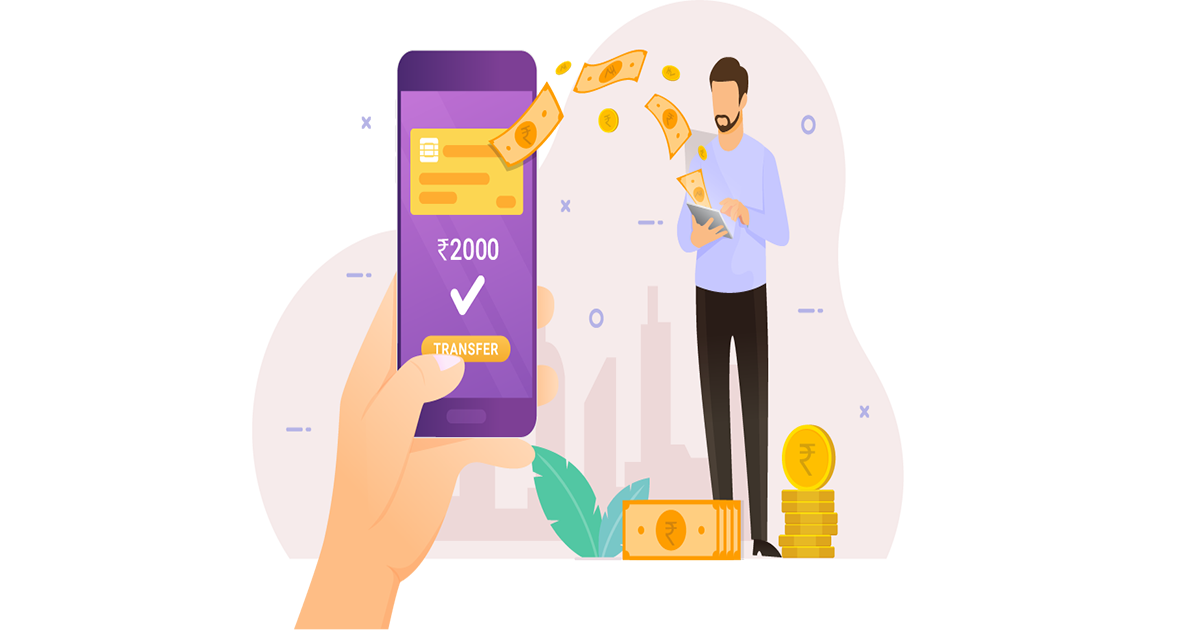

Gone are the days when you had to visit a branch and provide extensive paperwork to get a loan. With the arrival of digital lending, the entire loan processing has changed. Now you can discover various loan options, complete KYC and submit the documents online without visiting the branch. Even the approval and disbursement will be done online, and you will directly receive the funds in your bank account.
Digital lending has completely reshaped how financial services operate in India. This transformation is possible due to Smartphones, Digital Payments, Aadhaar-based Services, e-KYC, Data Analytics, Artificial Intelligence and rising use of the Internet.
But with this progress in online lending, there are also concerns like data privacy, fraud, aggressive recovery practices and unregulated loan apps, which have made responsible regulation essential. RBI has issued digital lending guidelines, which aim at strengthening the regulatory framework for digital lending. Let us now understand what is digital lending.
Digital lending is the process of providing loans through online platforms, websites and mobile apps without visiting a physical branch of a bank or traditional financial institution. Borrowers can submit applications and documents online and receive approvals digitally too.
Lenders here make use of technology like Artificial Intelligence and Machine Learning to automate various stages of the borrowing journey. This makes the loan process faster and results in quick approval.
Traditionally, the Indian lending system was dominated by physical branches, paper-based applications and long verification processes. But with the rise in mobile phone usage and affordable internet, there came a change in the lending system, and it went digital.
Due to wider acceptance of digital KYC, online banking, Aadhaar-based verification, and online documentation, remote loan processing became possible. Fintech companies started using this technology to simplify customer acquisition and credit assessment.
The covid19 pandemic further pushed the adoption of remote financial services. Consumers and businesses started getting more comfortable with online transactions, and lenders also started investing in digital infrastructure.
Along with this growth comes regulation. RBI has also issued digital lending guidelines to regulate digital lending apps and platforms in India. They keep on bringing updates to these guidelines from time to time to protect customer data and privacy and ensure reporting and due diligence in the fast-growing industry.
Digital lending operates as a substitute for the traditional banking process. It replaces the use of traditional paper and branch visits with an online system. Let us understand how digital lending works:
The first step is the application initiation. Borrowers have to submit the application online through a website or mobile app. They have to submit details like age, address, employment, income source, etc.
The lender will verify the applicant’s identity and other relevant information by using permitted digital processes.
The lender will then initiate an online credit risk assessment. They will evaluate the borrower’s income, credit history, and repayment capacity. They will also assess the possibility of insolvency, repayment-related risks and the liability of the user.
The loan will be approved if the borrower fulfils all the personal loan eligibility criteria. The borrower will then receive the information about the loan amount, personal loan interest rate, tenure, EMI and applicable charges.
Digital lending platforms offer fast approval. The funds are credited to the borrower’s bank account within a few hours.
Loan repayment is also completely online. The EMIs are collected through authorised digital payment channels.
Digital lending has come a long way in the last few years. It allows you to borrow money online without visiting a branch. Here are some of the major types of digital lending: –
These are technology companies that build the application experience, but they don’t lend their own money. They function as digital lending applications and collaborate with banks or NBFCs.
Under this model, a bank and an NBFC provide a single loan under an RBI-approved framework. They both share the funding and risk.
P2P lending allows you to lend and borrow money directly from each other. Here, the borrowers and loan providers connect online and agree to offer a loan on mutually suitable terms. The P2P website will take care of documentation, loan processing and payments. The loans here are offered at lower interest rates as compared to banks and NBFCs.
There are some financial institutions that have direct digital lending platforms. These are available 24×7 and you can apply for a loan through a website or app. The entire loan processing takes place online, which includes documentation, eligibility checks, approval, disbursal, etc. Even the repayment is online through these direct platforms
Digital lending marketplaces help in connecting various loan providers to prospective loan applicants. Depending on the eligibility criteria like credit history, income, loan purpose, etc., the platform will match applicants with the suitable lending institutions. This model gives borrowers various loan options to choose from, and even loan providers get access to a broader market.
Specialised digital microfinance platforms provide unsecured loans of small amounts for shorter tenures to those individuals who don’t qualify for mainstream credit. These platforms make use of alternative data and analytics to assess creditworthiness.
Digital lending has made borrowing very convenient and fast. Here are the major benefits of digital lending: –
There is no need for heavy paperwork or repeated branch visits. You can complete the entire loan application online in just a few minutes. This saves a lot of time and gives comfort to borrowers.
Customers can apply for a loan at any time from any location convenient to them. They just need a laptop or mobile phone and a stable internet connection.
Digital lenders make use of automation, which reduces manual intervention in application and verification. Due to this, they are able to give instant loan approvals, at times just in a few minutes or hours.
Digital lending reduces the time taken to receive the funds. As soon as the loan is approved, the funds get transferred to the bank account, often within the same day.
Even those individuals and businesses who don’t qualify for traditional credit are now able to get loans through digital lending.
Technology plays an important role in modern lending. E-KYC and digital document verification can be very helpful in reducing manual processing, whereas APIs allow lenders to connect with authorised data and financial systems.
With the help of Artificial Intelligence and Machine Learning, lenders are able to analyse large volumes of information and identify patterns related to credit assessment. Optical character recognition can help extract information from documents, while automated workflows can improve process efficiency.
Cloud infrastructure, encryption, authentication systems and fraud-monitoring tools can also support secure loan servicing.
However, technology should complement responsible lending rather than replace sound credit assessment. Automated decisions must be governed appropriately, particularly when errors or biases could affect borrowers.
The RBI regulations on digital lending have evolved since it was first introduced in 2022. The RBI has provided the regulatory framework for digital lending by banks, specified co-operative banks, NBFCs, including Housing Finance Companies and All-India Financial Institutions.
This framework majorly emphasizes on transparency, responsible lending, data protection and borrower safety. Key requirements are as specified below: –
Regulated entities should evaluate borrowers’ repayment capacity before sanctioning digital loans.
Borrowers should get details like APR, the repayment schedule, and applicable charges.
Loan disbursal and repayment should take place directly between the borrower and the regulated entity, subject to permitted exceptions.
Borrowers should be given an option to exit eligible digital loans during the prescribed cooling-off period by paying the principal and the proportionate APR, subject to applicable conditions.
Personal data should be collected only if the need arises and that too with proper consent and security safeguards.
Banks and NBFCs remain responsible for monitoring their Lending Service Providers.
RBI’s Public Digital Lending Apps (DLA) Directory, operationalised from July 1, 2025, helps borrowers check if an app is associated with a regulated entity or not. RBI has clarified that the information is submitted by regulated entities and not independently certified by RBI.
There are a lot of advantages of digital lending, but it also has some challenges. Some of the major challenges are: –
Digital lending is vulnerable to fraud and cyberattacks. There are so many fake loan apps and phishing attacks that trick borrowers into sharing sensitive information. Lenders should invest in robust security measures to protect customer data and prevent fraudulent loan applications.
Digital lending means there will be involvement of sensitive financial and personal information. Unnecessary data collection, weak security controls, or misuse of information can lead to significant privacy risks.
Some illegal apps may advertise easy loans but hide the high costs or impose unfair terms. Borrowers should refer to KFS and calculate total borrowing cost before accepting an offer.
Easy availability of loans can make borrowers borrow more than their requirement. This can lead to high monthly repayments, which increases financial stress.
Some fraudsters may misuse your PAN, Aadhaar information, Bank details or other information and take fraudulent loans in your name or even commit other crimes.
Automated Credit Models can give unfair results if the underlying data or model is inaccurate or biased. Lenders require proper governance and monitoring of automated decision-making systems.
Banks, NBFCs and their LSPs should keep themselves updated with evolving RBI requirements, which cover disclosure, data, outsourcing, customer protection and grievance redressal.
Many borrowers don’t have proper financial knowledge, and they don’t understand lending terminologies like APR, processing fees, penal charges, and privacy permissions. Some are not even aware of the difference between a lender and an LSP. Financial and digital literacy is therefore very important.
Unethical recovery practices can disturb borrowers. Regulated entities should ensure that their recovery practices are as per the applicable regulations.
System outages, software errors, cyberattacks and third-party technology failures can affect loan processing or servicing. Strong technology controls and business continuity arrangements are therefore essential.
Here is how digital lending differs from traditional lending
| Characteristic | Digital Lending | Traditional Lending |
|---|---|---|
| Application Mode | Application is 100% online. You can apply through a mobile app or website | You have to visit a branch and submit a physical application. |
| Documentation | Minimal documentation is required and can be done online. | Heavy paperwork is required. You have to fill forms, get documents attested and submit photocopies. |
| Access | Even underserved segments of society like small businesses and micro entrepreneurs are able to get loans from digital lenders. | Traditional lenders don’t give loans to underserved segments of society. |
| Creditworthiness Assessment | Technology like artificial intelligence and machine learning is used to assess the creditworthiness of borrowers. | Traditional methods are used to assess creditworthiness, such as credit reports and cibil score. |
| Approval Time | Loan approval doesn’t take much time. It is approved instantly or within a few hours | Loan approval can take 3-7 business days. |
| Disbursal Time | The loan is mostly disbursed on the same day | Disbursal can take 5-10 days of time. |
Here is how digital lending has an impact on financial inclusion: –
Digital lending is able to provide loans to underserved segments of society who may not qualify for branch-based traditional credit. Faster application and digital documentation have removed the barriers to formal borrowing.
Small businesses need funds frequently to manage inventory, cash flow, and payroll. Digital lending helps lenders evaluate applications and serve even MSMEs more efficiently.
With the help of smartphones, digital payments and good internet connectivity, even rural communities are now able to access credit. But still, connectivity, digital literacy and financial awareness gaps need to be filled.
The future of digital lending is likely to be shaped by deeper integration between Financial Institutions, Fintech Companies, Data Infrastructure and Digital Public Infrastructure.
AI-powered Underwriting, Automatic Fraud Detection, Digital Identity Verification, Alternative Data Analysis and increasingly seamless customer journeys are likely to influence lending. At the same time, it is expected of regulators that they maintain a strong focus on consumer protection and responsible innovation.
Credit is increasingly being integrated into platforms where consumers and businesses already transact. Embedded finance has made credit more contextual, whereas open-data frameworks help in improving financial decision-making if used with appropriate consent and safeguards.
AI can help lenders tailor loan offers, repayment options and customer communication based on legitimate borrower needs and risk profiles. However, transparency, explainability, data quality and safeguards against discriminatory outcomes will remain important.
India’s large consumer and MSME credit market gives important opportunities to Banks, NBFCs and Fintech Companies. Partnerships can combine balance-sheet strength and regulatory capabilities of financial institutions with the technology and customer experience capabilities of fintech firms.
Digital lending has changed the way credit can be accessed, evaluated and delivered in India. It has made borrowing faster, more convenient and potentially more inclusive. But this should not be at the cost of safety.
Borrowers should always verify the lender, check the total cost of borrowing, review KFS, protect personal information and borrow only as per requirement. For lenders and fintech companies, sustainable growth will depend on responsible innovation and compliance with RBI’s evolving framework.
As India’s financial ecosystem is becoming digital, it should not just aim to process loans faster. It should try to make credit more accessible, transparent, secure and responsible.
Digital lenders assess your loan eligibility by using technology to check your data online. They review your Bank Statements, Digital Tax Records, Mobile Phone Data and Credit Bureau scores instantly through automated systems. This replaces old paper forms with automated computer checks.
Yes, you can get a digital loan even with a low or no credit score. Many fintech lenders evaluate loan applications through alternative data like monthly income, bank account statements, and job stability and don’t just rely on a traditional credit score.
The document requirements can vary from lender to lender, but still the majority of lenders ask for identity proof, address proof, income proof and bank details. Many lenders now use digital KYC and verification processes, which have reduced the need for any physical paperwork.
The majority of lenders disburse digital loans within a few minutes to 24 hours. This is possible as the entire loan application is made 100% online.
Also Read: What is Personal Loan Disbursement?
Yes, digital lending apps are regulated, but the RBI doesn’t directly license or register the apps themselves. RBI regulates the banks, NBFCs, and other financial institutions that collaborate with these apps to disburse loans.
You should check if the app has partnered with an RBI-regulated bank or NBFC. This can be checked by going to the lender’s official website or RBI’s DLA directory. Always stay away from loan apps received through unsolicited SMS or social-media links.
Borrowing from unregulated digital lending apps can expose you to severe financial, legal and psychological dangers. Some of the major risks are high interest rates, upfront fees, aggressive data recovery tactics, misuse of personal information etc. Before borrowing, you should check the lender’s regulatory status and understand the loan terms properly.
Digital lenders can collect information from you which is necessary for loan processing. However, this is subject to applicable requirements and the borrower’s consent. RBI’s framework requires need-based data collection, appropriate consent, privacy safeguards and restrictions around storage and use of borrower information.
When you apply for multiple digital loans in a short span, it will result in multiple credit inquiries, which can affect your credit score. Moreover, if you apply for loans repeatedly, it signals that you are highly dependent on lenders.
Also Read: What is Hard Inquiry?
The interest rates on digital loans are generally higher than traditional bank loans. This is because traditional banks have access to cheaper money and strict rules, which reduce the risk. Whereas digital lenders offer loans even to riskier borrowers and face higher costs to borrow funds themselves.
Download our personal loan app to apply for a personal loan. Get up to 2Lakhs* as a personal loan. Download Now!


Sign into avail a personal loan up to ₹ 2,50,000

Unifinz Capital India Limited is a Non Banking Finance Company (NBFC) registered with the Reserve Bank of India (RBI). lendingplate is the brand name under which the company conducts its lending operations and specialises in meeting customer’s instant financial needs.











 RBI CMS
 RBI Sachet


