
Did You Know?
We serve loans, the best way you can borrow
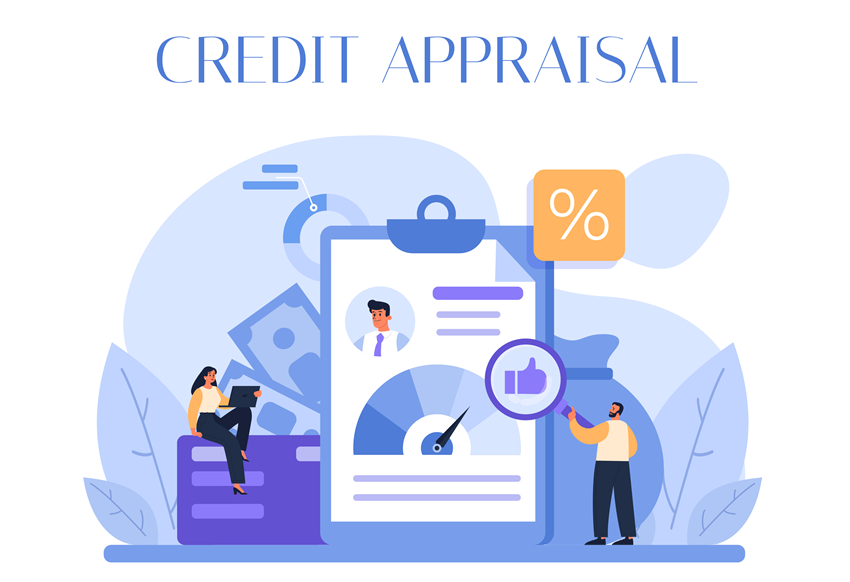

Lenders prioritise credit appraisal because it is one of the vital procedures. No one can avoid this crucial process prior to considering an applicant eligible for loans. When customers have a solid credit history, traditional financial institutions are willing to offer money. At the same time, loan applications submitted by candidates with low credit scores are denied.
Loan providers thoroughly evaluate the financial capacity of a borrower, besides the credit history and loan repayment ability. Analysing the same enables lenders to make an assessment of the potential risks related to providing loans to a borrower. Thus, this appraisal is called credit assessment. Continue reading to learn everything about credit evaluation.
This appraisal process requires lenders to assess an individual or entity’s financial position and credit history. Anyone in need of substantial money can reach out to a licensed lender to apply for a credit. Every provider employs different techniques to get a clear idea of the potential risks associated with lending money.
The chances of a loan or credit application approval are lower if the risks are higher. Top loan providers are well aware of the methods to gain insights into the creditworthiness of a borrower. The main factors they prioritise are the borrowers’ monthly earnings, outstanding loans and repayment history. The credit score of an applicant is another crucial aspect banks and online lenders consider.
Lenders pay immense importance to checking the credit score of a loan applicant. The prime reason is this procedure is instrumental in ensuring the financial system remains stable. Here’s why traditional and online loan providers believe this appraisal is crucial.
The process of assessing credit scores is a must for every lender. They do so to determine the best loan repayment terms for a borrower. Loan providers decide the interest rate and repayment period after checking the profile of a borrower.
Conducting credit history checking procedures in a diligent manner helps lenders keep their financial health stable. The practice ensures they extend credit to a borrower in a responsible way. Loan providers become more confident about the repayment capacity of a borrower.
A credit appraisal is the backbone of your loan journey. Lenders use this to assess your financial standing and determine whether you can handle new debt. When you apply for an instant personal loan, this evaluation decides your fate.
Banks as well as digital lenders use the credit appraisal process to keep their money safe. It is not just about saying no (though it might feel like it). It is about making sure they lend to the right people.
To pass the credit appraisal, you must meet specific standards. These rules change depending on whether you are an individual or a business. For most of us, lenders focus on a few key areas.
Lenders do not just glance at your name. They review your credit report in depth to identify any red flags. This is where they decide if you are a “safe” bet or a risky one.
1. Credit history – They pull files from places like TransUnion CIBIL or Experian. These documents show every credit card and loan you have ever had. If you want a good CIBIL score, you must pay your bills on time every single month.
2. Money statements – They look at your bank statements and salary slips. This helps them see how much “extra” money you have left at the end of the month.
3. Credit score – This number is a quick way for them to judge you. A higher number means you are better at managing money. It is the first thing they see when you fill out a credit appraisal form.
4. DTI Ratio – They add up your current EMI and the new one you want. If this total is more than half your income, they might worry.
5. Job checks – They might call your office or ask for personal loan documents required like an offer letter. They want to know you won’t be out of a job next week.
Lenders often use different credit appraisal methods to get these answers. Some use humans, while others use smart software to speed things up. Using modern credit appraisal techniques allows for faster approvals (which is great for you). Understanding the credit appraisal process helps you prepare your papers better. If you know what credit appraisal is, you can fix your finances before applying. Following the steps in the credit appraisal process ensures nothing gets missed.
One of the aspects of a credit appraisal procedure is credit score. By checking their score, lenders gain a clear idea about whether an applicant is eligible to get credit. According to conventional and online loan providers, a good credit score can be 750 or more. The credit assessment procedure needs an applicant with a decent credit score.
Here are the cardinal steps that loan providers adhere to when conducting the process of credit assessment of borrowers.
The first step involves the lender reviewing the credit application the person or business seeking credit has submitted. Every detail in the application is carefully examined and confirmed by the financial institution. Therefore, an applicant must accurately fill out the application form because if they don’t, it could face rejection.
Banks or other lenders verify various submitted documents while evaluating the application form. These consist of identification, bank statements, and evidence of income, among other things. To avoid problems, submit the application form with the necessary supporting documentation.
Licensed lenders continue to decide the loan’s terms, including the initial loan amount, interest rate, and payback duration. They do so after a favourable assessment of the borrower’s creditworthiness, financial status, and risk profile.
A loan provider approves the loan application once all the steps are over. Each lender may have a different time requirement to finish the credit evaluation process.
The process of credit appraisal is changing remarkably due to technological improvements. Techniques like machine learning, artificial intelligence, and advanced analytics are used. The reasons are an improvement in the accuracy and effectiveness of credit evaluations. Lenders can now analyse vast amounts of data, spot trends, and make better decisions thanks to this technology.
A crucial step in ensuring that money is lent responsibly is credit evaluation. Lenders can reduce risk, maintain their financial health, and improve the state of the economy by closely assessing borrowers’ creditworthiness. Credit evaluation methods will advance in sophistication as technology develops further. More lenders will be able to make quicker and more accurate decisions.
It is basically a deep background check on your money habits. Lenders use it to see if you are a responsible borrower. They look at your income, your debts, and your past behaviour. It helps them decide if they should give you a loan and what interest rate to charge you.
Your score acts like a grade for your financial life. It is a major part of the credit appraisal. A high score proves you handle debt well. This leads to faster approvals and better deals. A low score might mean the lender says no or charges you a lot more.
When your appraisal is strong, you get the upper hand. You may ask for lower interest rates or better repayment terms. It makes the entire experience smoother. Plus, you won’t have to jump through as many hoops because the lender already trusts your ability to pay back the borrowed money.
Not exactly. The basics stay the same. However, the focus shifts. For a small personal loan, they might just check your salary. For a huge home loan, they will look at everything you own. Each loan type has its own specific rules and checks to keep the lender safe.
It starts with your application and document submission. Then, the lender verifies your income and checks your credit history. They calculate your debt ratios and look at any collateral. Finally, an officer reviews all this data to give a final “yes” or “no” on your loan request.
Credit analysis is more about the raw data and numbers. It is the technical part where someone crunches the stats. Appraisal is the bigger picture. It includes the analysis but also looks at your character and the overall risk. It is the final judgement on whether you are trustworthy.
These are Character, Capacity, and Capital. The character looks at your history and if you seem honest. Capacity checks if your income can actually handle the new monthly payments. Capital looks at what you already own. Together, they give a better understanding of your overall financial health alongside reliability.
This adds more layers to the basic 3 Cs. It includes Character, Capacity, Capital, Collateral, and Conditions (like the economy). It also looks at Control (legal aspects) and Common Sense. Lenders use these seven points to make sure they aren’t missing any hidden risks before they hand over the cash.
Download our personal loan app to apply for a personal loan. Get up to 2Lakhs* as a personal loan. Download Now!


Sign into avail a personal loan up to ₹ 2,50,000

Unifinz Capital India Limited is a Non Banking Finance Company (NBFC) registered with the Reserve Bank of India (RBI). lendingplate is the brand name under which the company conducts its lending operations and specialises in meeting customer’s instant financial needs.










 RBI CMS
 RBI Sachet


