
Did You Know?
We serve loans, the best way you can borrow
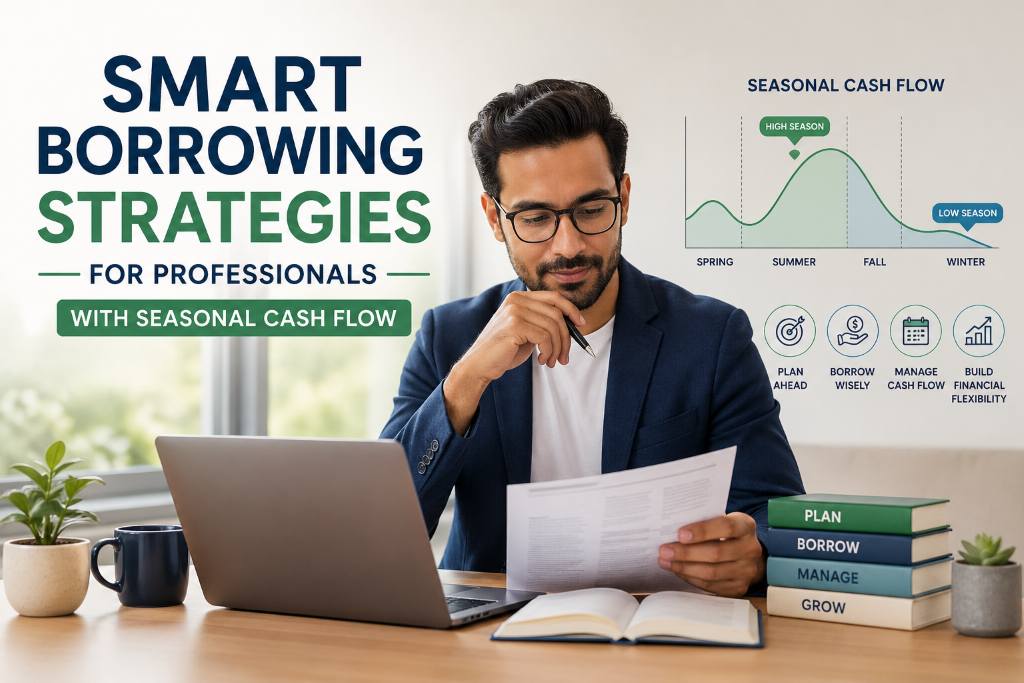

Seasonal income is the earning that fluctuates significantly throughout the year. You may experience periods of high revenue with months of minimal cash flow. That often happens when you work as a freelance consultant or a wedding photographer (sometimes even a tourism expert). Unlike those with a monthly salary, financial health depends on how you manage the peaks to cover the valleys.
What it requires is a different mindset (plus a lot of discipline) since your bank balance does not reflect your average monthly reality. You need to treat your "flush" months as a reservoir rather than a bonus.
Strategic borrowing keeps your business or personal life afloat when your income dips. Not implementing smart borrowing strategies risks you & you end up falling into a debt trap. Poor management often may result in high-interest debt (especially when the busy season returns). You must borrow with a clear repayment plan. It should align with your specific earning cycle. Strategic credit lets you maintain your lifestyle & pay essential bills. It’s all about using other people's money to bridge the gaps efficiently.
Managing irregular income requires a proactive approach to credit. You can't just wing it when the lean months arrive.
You must project your income and expenses at least twelve months in advance. This helps you see exactly when you will run out of cash. By mapping out your high-earning months and your fixed costs, you can anticipate exactly how much you need to borrow. This prevents over-borrowing (which is a common mistake).
A line of credit offers flexibility that a standard loan doesn't. You only pay interest on the amount you actually use. This is perfect for sudden, minor expenses during a slow month. However, you must treat it as a temporary bridge rather than a permanent extension of your wealth.
Short-term loans usually have immediate gaps of some months. They have higher monthly payments but lower total interest costs. Long-term loans provide smaller monthly payments (which might feel safer) but you pay more over time. Choose depending on how quickly your income bounces back.
Credit cards can bridge small gaps of 30 to 45 days if you pay the balance in full. This lets you keep your cash in the bank for emergencies. But, the high interest rates can ruin you if you carry a balance into the next month. (Seriously, be careful here).
You should apply for financing when your books look the strongest. Lenders want to see your high-income months to approve your personal loan eligibility criteria. Align your repayment start date with your peak season so you aren't struggling to find cash for the first installment.
Staying disciplined when you have a lot of cash is actually harder than when you're broke.
1. Set a Personal Salary - Pay yourself a fixed amount every month regardless of what you earned that week.
2. Build a Buffer - Keep at least three months of expenses in a separate account before you spend on anything "extra."
3. Automate Savings - Move money to your tax and emergency accounts the moment a client pays you.
Sometimes you need an expert to look at your numbers from the outside.
1. Consult an Accountant - They help you understand your tax liabilities so you don't borrow money that actually belongs to the government.
2. Talk to a Loan Officer - Ask about the personal loan processing fee and hidden charges before signing anything.
3. Hire a Financial Advisor - They can help you invest your peak-season profits so they grow while you sleep.
Managing seasonal cash flow requires smart borrowing strategies. You need to stay ahead of your expenses by forecasting & choosing the right credit tools. So, be it an instant personal loan or a line of credit, you always need to plan for the repayment. Keep your personal loan documents required ready & stay disciplined. You can build a much stronger future if you manage your debt wisely during the slow times.
Seasonal cash flow is when your income arrives in bunches rather than steady streams. This forces you to borrow money during lean months to stay operational. You have to be more calculated than a salaried worker. You must ensure that your borrowing doesn't exceed what your peak season can comfortably repay later on.
Lenders often prefer steady, predictable monthly paychecks because they see them as lower risk. When your income fluctuates, banks might worry you will miss payments during your off-season. You have to prove that your annual income is sufficient and that you have a solid history of managing your money through the slow periods.
Flexible credit lines or short-term personal loans usually work best for you. These allow you to grab cash quickly and settle the debt as soon as your next big contract pays out. You should always look for a competitive personal loan interest rate to ensure the cost of borrowing doesn't outweigh the benefits.
You can qualify by showing at least two years of consistent annual earnings through tax returns and bank statements. Lenders look at your average income rather than just your last month. Providing a healthy credit score and meeting the personal loan eligibility criteria will significantly increase your chances of getting a quick approval.
Choose a line of credit if you need ongoing, flexible access to funds for small expenses. It is better for "just in case" scenarios. Pick a term loan if you have a specific, large expense like a major equipment purchase. A term loan gives you a fixed amount and a structured repayment plan.
You should only borrow the absolute minimum required to cover your essential living and business expenses. Use your cash flow forecast to determine this exact number. Borrowing more than you need leads to unnecessary interest costs. You want to enter your peak season with as little debt as possible to maximise profits.
You will typically need to provide your PAN card, Aadhaar, and several months of bank statements. Lenders also want to see your Income Tax Returns for the last two years to verify your annual earning capacity. Having all your personal loan documents required ready beforehand speeds up the approval process for your funding request.
Most traditional lenders rely on historical data rather than future projections. However, showing signed contracts or purchase orders for the upcoming months can sometimes help your case. It demonstrates that your income dip is temporary. Always provide as much proof of future work as you can to build trust with the lender.
You should pay all your current bills on time and keep your balance in the credit card low. Avoid applying for multiple new credit lines at once, as this can lower your score. A better score helps you secure a lower personal loan processing fee and better interest rates, saving you a lot of money.
The biggest risk is that your upcoming busy season might be slower than you expected. If your income doesn't bounce back, you could struggle to meet your repayment deadlines. This can lead to late fees and damage your credit score. You must always have a "Plan B" for your loan repayments.
Download our personal loan app to apply for a personal loan. Get up to 2Lakhs* as a personal loan. Download Now!


Sign into avail a personal loan up to ₹ 2,50,000

Unifinz Capital India Limited is a Non Banking Finance Company (NBFC) registered with the Reserve Bank of India (RBI). lendingplate is the brand name under which the company conducts its lending operations and specialises in meeting customer’s instant financial needs.


















 RBI CMS
 RBI Sachet


