
Did You Know?
We serve loans, the best way you can borrow
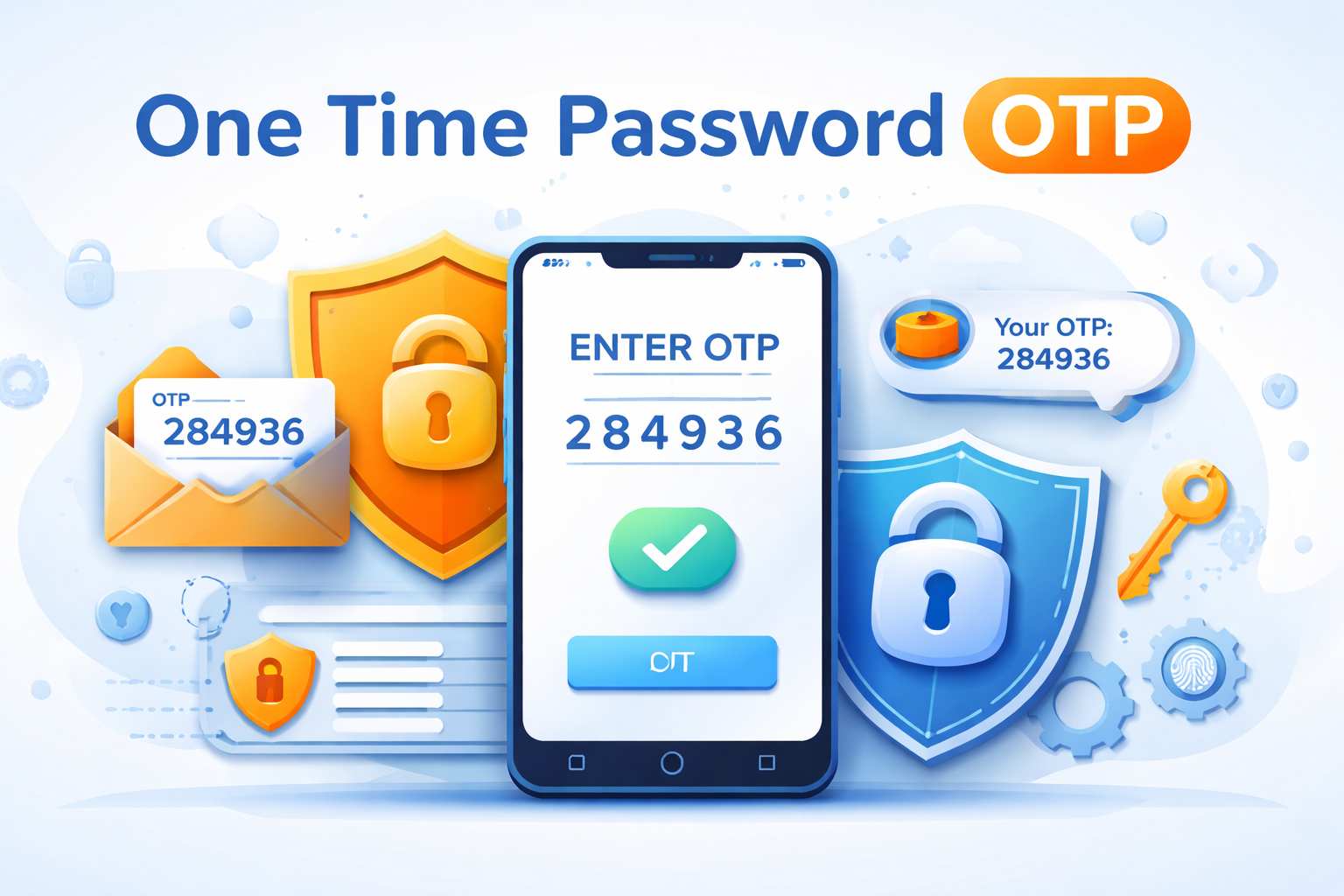

What is OTP if not your first line of defence against identity theft? Well, the OTP full form is One Time Password. OTP represents a unique sequence of digits or letters that the system creates specifically for a solitary entry attempt. These codes expire immediately after you use them once.
Using a One Time Password reduces the chances of hackers who can access your private accounts via fraudulent logins. It is a digital protection that keeps your sensitive personal data from falling into the wrong hands. You always need to ensure you receive this code on a trusted device before proceeding with any transaction.
The core reason you use a One Time Password is to establish a robust second layer of identity verification. You need this extra step to stay ahead of clever cybercriminals and shield yourself from the devastating financial impact of online fraud. Your security improves because you don’t rely solely on a username and a fixed password (which you know).
You also need a physical device that you own to finish the sign-in process. Most often, your mobile phone serves as this physical key. Its main purpose is always to provide that vital extra layer of verification (even though OTPs come in various formats).
1. One Time Password as SMS Message
Originally, you likely received most of your codes as text messages. After you start a login by typing your username and secret password, the system sends an SMS OTP to the mobile OTP number registered to your profile. You then view the code on your screen and type it into the login field to prove it is really you.
2. One Time Password as Voice Message
You might choose Voice as an alternative to standard texts. In this case, you receive a phone call and hear the code spoken aloud. This method is brilliant because the password never stays on your phone. It also helps if you have limited sight or if your mobile network is struggling to deliver standard text messages.
3. One Time Password as Push Notification
Using a push notification for two-factor authentication feels very similar to the SMS method. During your login, the system pushes an automated code directly to a specific app on your smartphone. You simply copy that number into the verification box. Of course, this requires you to have the official company app installed first.
Many businesses use a One Time Password because they want to lock down their data against remote hacking attempts. You will find OTP usage is standard practice across various sectors where security is non-negotiable:
Standard security usually depends on a static password that you create once and keep for months. The problem is that even very complex passwords can be leaked during a data breach or stolen via phishing.
OTP technology removes this massive risk by adding a temporary layer of safety. Even if a criminal discovers your main password, they still cannot get into your account without that live code. That is why you see them used everywhere, from online shopping to verifying your personal loan eligibility criteria. It makes sure that you are the only person who can authorise a change or a payment.
Systems create unique passcodes the moment you ask for access. But what is actually happening behind the scenes? It usually comes down to two different methods- HOTP or TOTP. Knowing these helps you see how your digital safety is maintained.
HOTP vs. TOTP
HOTP generates codes depending on a counter that increments each time you request a new one. It offers you more time to use the code. However, it stays valid longer. That potentially gives a hacker a slightly wider window to guess or steal it.
TOTP, on the other hand, creates an OTP that only lasts for a very short window (usually between 30 and 120 seconds). The code changes so fast. Thus, it is much harder for anyone to intercept and use it. TOTP is generally more secure and works perfectly in authentication apps even when you are offline. Most experts suggest using TOTP whenever you have the choice because it offers superior protection for your digital life.
Adding an OTP to your login routine makes your digital life much safer. Here is how this technology works for you:
1. Enhance Account Safety
The biggest plus is the immediate boost to your account security. Unlike your regular password, a One Time Password is never the same twice. A hacker would need to hold your phone to get in physically. Most criminals look for easy targets, so they usually give up when they see you have this protection active.
2. Stop Fraud and Cybercrime
Using these codes helps stop fraud before it starts (since stolen passwords are a top way for hackers to get in). It keeps your data locked away from everyone except you. Some studies even suggest that this extra step can block up to 90% of common cyberattacks.
3. Better User Experience
Using code is actually quite simple. You don’t need fancy hardware; just your phone or email. It prevents the headache of being locked out of your account due to “suspicious activity” by allowing you to prove your identity instantly. It’s a quick way to check CIBIL score by PAN card without OTP issues later on.
While an OTP is powerful, you must handle it correctly to stay safe. Here is how you can protect yourself-
A One Time Password is your best tool for staying safe in a world full of digital threats. Using a temporary code ensures that your private information and money remain protected. Whether you are looking at a personal loan interest rate or just logging into social media, this extra step is essential. It prevents unauthorized access even when someone knows your password. Always keep your codes private and follow safety tips to protect your digital identity.
It refers to One Time Password. This code helps you verify your identity during a digital transaction or login. It ensures that only you can access your accounts or approve financial procedures.
You use a One Time Password to stay protected against hackers who might have stolen your static password through phishing or data breaches. The system confirms that the person trying to log in is actually you and not an intruder by requiring a code sent to your physical device.
Most codes are active for a very short time, usually 30 seconds to 10 minutes. The exact duration depends on the service provider. For instance, when you check your personal loan processing fee, the code might expire in two minutes. This short window is intentional because it leaves almost no time for a hacker to intercept and use it.
Suppose you do not receive your code. Then, you first need to check your network connection or signal strength. You may often click on “Resend OTP” after a minute. Ensure the OTP number is correct on your profile. Contact your service provider if it still fails.
You can’t use a One Time Password more than once. Its entire purpose is to be a single-use key. The code becomes completely useless once you enter it and the system verifies it or once the time limit expires. This feature is exactly what makes it so much safer than a regular password that stays the same for months.
You must never share your One Time Password with anyone under any circumstances. Even when someone claims to be from a financial institution or bank, they do not need your code to help you. Sharing it is like giving a stranger the keys to your house. Always keep it private to prevent unauthorized transactions and keep your money safe.
This is a security process that needs you to give a temporary code along with your regular password to gain access. It is a form of Multi-Factor Authentication. The system makes it incredibly difficult for anyone else to break into your private digital accounts or apps by requiring two different types of proof (something you know, like a password, or something you have, like your phone).
Yes, it is an effective way you can prevent digital fraud. Since a hacker would need physical access to your phone to see the OTP in the credit card verification code, they cannot easily steal your money.
Your standard password is “static,” meaning it stays the same until you manually change it. An OTP changes every time you log in. A static password can be guessed or stolen and reused later. However, an OTP is valid for only one specific moment. This makes your data much more secure.
It might be difficult. However, a clever hacker could steal your code through SIM swapping or by tricking you into revealing it via a fake website. You may stay safe by never sharing the code & using biometric locks on your phone. Always be wary of unexpected calls requesting codes (especially when you are busy reviewing the personal loan documents required for an application).
Download our personal loan app to apply for a personal loan. Get up to 2Lakhs* as a personal loan. Download Now!


Sign into avail a personal loan up to ₹ 2,50,000

Unifinz Capital India Limited is a Non Banking Finance Company (NBFC) registered with the Reserve Bank of India (RBI). lendingplate is the brand name under which the company conducts its lending operations and specialises in meeting customer’s instant financial needs.









 RBI CMS
 RBI Sachet


