
Did You Know?
We serve loans, the best way you can borrow
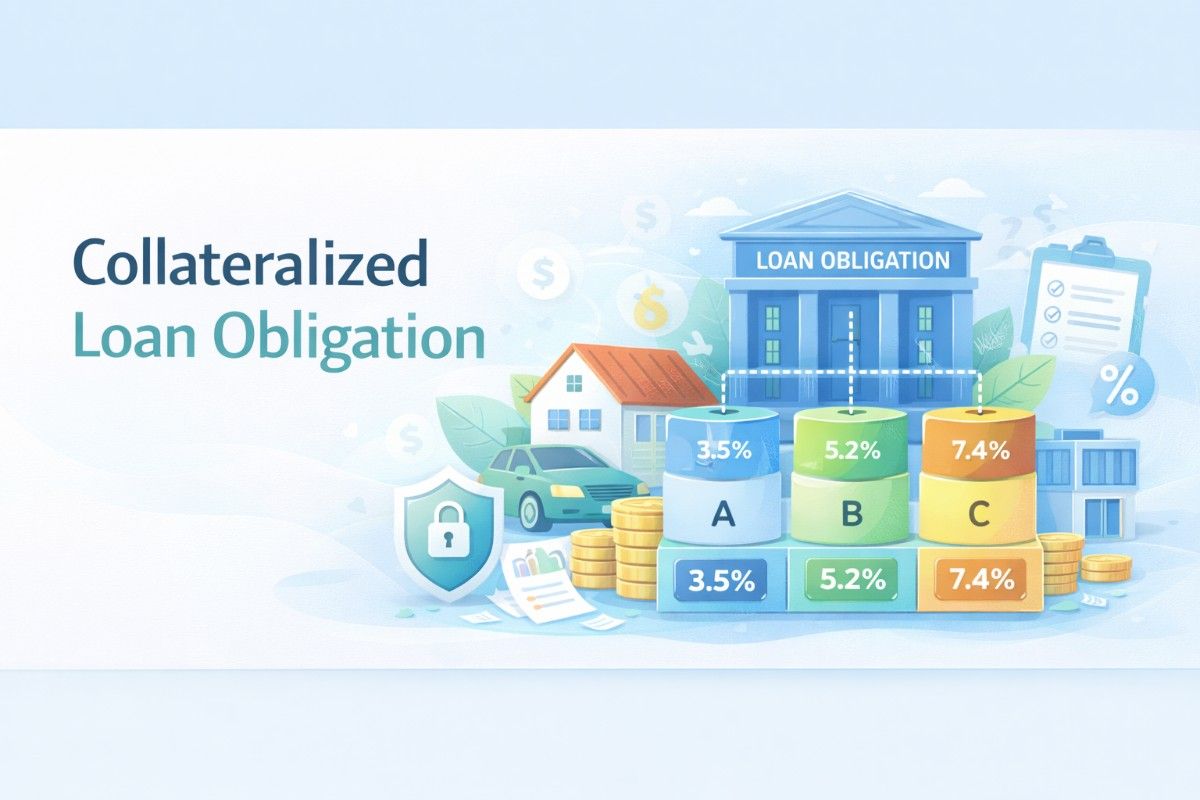

A collateralized loan obligation is the CLOS full form. It is a single security backed by a pool of various corporate debts.
Here is how the CLOS structure typically works –
The typical hierarchy looks like this –
Now you know what a collateralized loan obligation is. It is time to learn the goals. The primary goal of CLOS is to take corporate or private equity loans & turn them into tradable bonds. Banks do this to move debt off their own books. By cutting these loans into different tranches, they can sell them to a wider variety of investors.
You might see a single pool containing 150 to 250 individual loans. (That is a lot of diversification in one go). Most of these are “arbitrage CLOS.” They aim to make money on the “spread”—the difference between the interest they receive on loans and the money they pay out to investors.
The other type is a “balance sheet CLOS.” These exist mainly to help a bank manage its own capital and risk levels. If you hold a debt tranche, you are providing the financing. If you hold the equity, you own the pool and take the biggest hit if things go south.
Creating these assets is a step-by-step process that requires careful management. You cannot just throw loans together and hope for the best.
Step 1 – Plan the Capital Structure
Managers map out the different tranches and decide the risk levels.
Step 2 – Collect Capital
The CLOS managers find investors who want to put their money into the security.
Step 3 – Pick Your Tranche
As an investor, you choose a layer that matches how much risk you can stomach.
Step 4 – Purchase the Loans
Managers use the investor cash to buy the actual corporate loans.
Step 5 – Form an SPV
They set up a Special Purpose Vehicle to hold the loans and issue the CLOS.
Step 6 – Pay the Investors
The cash starts flowing back to you based on your specific tranche.
Step 7 – Close the Deal
Once all debts are paid off, the CLOS is finally terminated.
Why would you even look at these? Well, they offer perks that regular bonds might not.
1. Better Returns – You often get higher yields than other fixed-income options because the underlying loans involve more risk.
2. Diverse Portfolio – Investing here gives you exposure to hundreds of different companies at once. This helps you avoid total loss if one company fails.
3. More Liquidity – Unlike a single collateral loan, these securities trade on the secondary market. You can sell them more easily.
4. Expert Oversight – Professional managers run the show and try to maximize your gains while watching the risks.
5. Safety Layers – The tranche system provides “credit enhancement.” This means the top layers are protected by the bottom layers.
You must stay aware of the downsides before diving in. These are not foolproof investments.
1. Credit Issues – Since the loans involve companies with lower credit ratings, the chance of a default is real. If too many companies fail, you lose money.
2. Interest Rate Shifts – Like any fixed-income product, if interest rates go up, the market value of your investment might drop.
3. Early Payments – Sometimes borrowers pay back their loans too fast. This can cut into the long-term interest you were counting on.
4. Market Instability – During a financial crisis, it might be very hard to find a buyer. You could get stuck with the asset.
5. High Complexity – Understanding how the tranches interact is tough. (It is definitely not as simple as an instant personal loan).
Understanding collateralized loan obligation is vital if you want to navigate the modern credit market. These instruments offer a unique way to gain exposure to corporate debt while picking your own risk level. They provide diversification and higher yields. However, the complexity and credit risks are significant factors. You should always weigh the potential for high returns against the chance of defaults within the loan pool. Make sure you know exactly which tranche you are buying into before committing your capital.
A collateralized loan obligation is a financial product that pools together multiple corporate loans to create a single investment security. You are essentially buying into a diversified portfolio of debt. Banks use these to distribute risk across the market. Each CLOS is divided into tranches. These tranches determine the order in which you receive payments and how much risk you actually take on.
When companies take out loans, managers bundle them into a CLOS. The interest and principal payments from those companies flow into the pool. Then, the money is distributed to you based on your chosen tranche. You receive payments sequentially. The top tranches get paid first. The bottom tranches get paid last but offer higher interest rates to compensate for the higher default risk.
A collateralized loan obligation example might involve an investment manager gathering 200 different leveraged loans from various industries. These could include debts from retail chains or tech firms. You buy a “Class A” bond within this structure. As those 200 companies pay their monthly interest, you receive your cut. It works differently than a simple personal loan processing fees structure because of the pooling.
In most cases, you will find between 150 and 250 individual loans inside a single CLOS. This high number is intentional. It ensures that if one or two companies default, the overall impact on your investment is minimized. This level of diversification is why many institutional investors find them attractive. It spreads the risk across different sectors and various types of corporate borrowers.
The returns come directly from the interest paid by the companies in the loan pool. As an investor, you receive a portion of these interest payments. Your specific rate depends on which tranche you own. If you hold a senior tranche, your return is lower but more stable. If you hold the equity tranche, you get whatever cash is left over after everyone else is paid.
When you buy a debt tranche, you are essentially a lender. You get a fixed or floating interest payment and have a higher priority for repayment. The equity tranche is different. It is the most junior part of the CLOS. You only get paid after all debt holders receive their money. It is riskier but offers the highest potential reward if the loans perform well.
The main difference lies in what is being bundled. A CLOS focuses on corporate loans. A CDO (Collateralized Debt Obligation) can include various types of debt like bonds or even other CDOs. A CMO (Collateralized Mortgage Obligation) specifically bundles home mortgages. While the structures are similar, the underlying assets change the risk profile. You should always check what is inside the package before you invest.
Generally, these are complex instruments meant for institutional investors like insurance companies or hedge funds. However, you can sometimes access them through certain exchange-traded funds (ETFs) or mutual funds. They are not as straightforward as a standard collateral loan. They might not be the best fit for someone looking for a simple, low-risk investment. This is because they are complex & involve non-investment-grade debt.
The credit quality can fluctuate. If the companies within the pool start struggling financially, the risk of default rises. Rating agencies might then downgrade the CLOS tranches. You need to monitor the performance of the underlying loans. Even a “safe” AAA tranche could come under pressure if the economy enters a severe downturn and many corporate borrowers default.
You should assess the CLOS manager’s reputation and the quality of the underlying loans. Check the diversification across industries to ensure you are not too exposed to one sector. You need to consider your own risk tolerance when picking a tranche. Understand the current interest rate environment. Then, you should look at the fees involved. This is because management costs can trouble your total returns over the long term.
Download our personal loan app to apply for a personal loan. Get up to 2Lakhs* as a personal loan. Download Now!


Sign into avail a personal loan up to ₹ 2,50,000

Unifinz Capital India Limited is a Non Banking Finance Company (NBFC) registered with the Reserve Bank of India (RBI). lendingplate is the brand name under which the company conducts its lending operations and specialises in meeting customer’s instant financial needs.


















 RBI CMS
 RBI Sachet


