
Did You Know?
We serve loans, the best way you can borrow
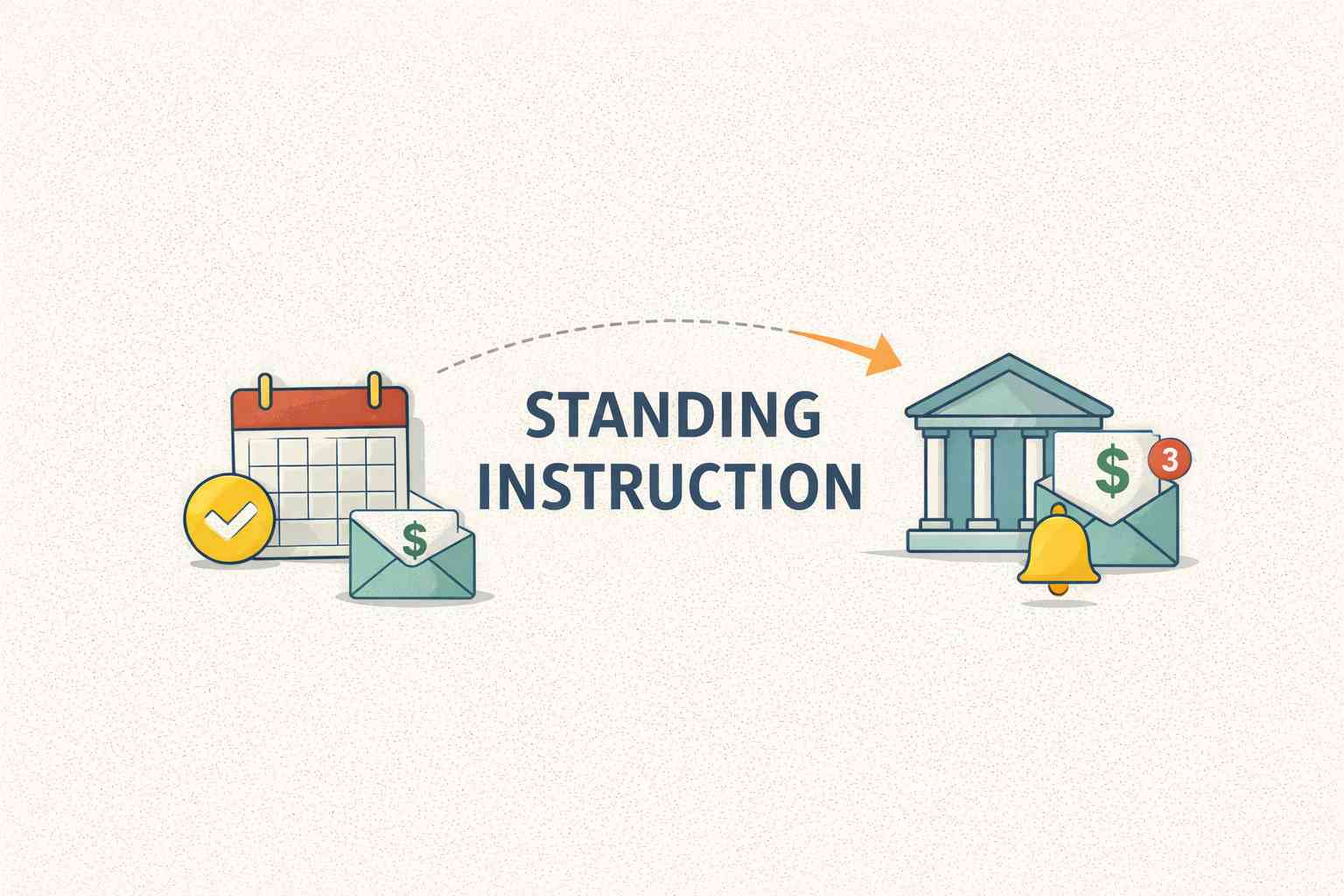

A standing instruction is an order that you give your bank in order to move a set amount of cash from the balance to another party (at regular intervals). You do not have to lift a finger once it is active.
This setup becomes a lifesaver for managing your EMIs when you take an instant personal loan. It ensures that your monthly instalments are out on the dot.
This helps you dodge those annoying late fees while maintaining your credit. Imagine your loan payment is ₹10,000 due every 15th. With a standing instruction, your bank pulls that ₹10,000 from your savings automatically. It just happens.
You get total peace of mind because you aren’t manually tracking dates every single month. It is a simple way to stay consistent with your debt without the constant mental load of remembering deadlines.
Think of a standing instruction as a “set and forget” payment for a fixed sum. You use it to handle your loans, recurring bills, or even credit card dues on a weekly or monthly basis.
The money leaves your savings or current account like clockwork. Most people find it incredibly useful for paying off a mortgage, a car loan, or standard utility bills that don’t change in price.
A standing instruction might not suit everyone (especially if you hate paying bank fees) but it works wonders in specific scenarios. If the following points sound like your life, you should probably set one up:
1. You often forget dates – Automation ensures you never face penalties for missing a deadline again. (We’ve all been there.)
2. Your payments are consistent – This is the big one. These instructions only work for fixed amounts. If your loan amount fluctuates and you forget to update the bank, you might underpay and land in trouble.
3. You have a steady payday – Since banks charge standing instruction charges for failed attempts, you need to be sure your salary hits your account before the deduction date. It’s risky if your income relies on irregular commissions.
If you are a busy professional with zero time to obsess over billing cycles, this is your best friend. Just remember it isn’t always free. Paying a small fee every month adds up over a year. You have to decide if the convenience is worth that specific cost.
If the idea of an automated pull makes you nervous, you can try these other methods to stay on track:
1. Use a debt tracker. Both Android and iPhones have great apps for finance. IOU is a popular choice where you log your debt and the app pings you when it’s time to pay.
2. Stick to manual alerts. Use your phone calendar to set a loud alarm for the same day every month. If you travel a lot, get used to mobile banking so you can pay from anywhere in the world.
3. The buddy system. Ask a partner or friend to check in on you. Setting a shared “bill day” where you both sit down and pay your dues helps keep everyone accountable.
4. Standard online banking. You can pay almost any bill via your bank’s app at any hour. It’s a bit more manual, but it lets you keep total control over exactly when the money leaves your account.
A standing instruction definitely guarantees your payments arrive on time. However, always weigh that convenience against the extra fees involved in the process.
Managing your finances doesn’t have to be a headache. A standing instruction offers a reliable way to automate your recurring payments like an instant personal loan EMI. It saves time and protects your credit score from human error.
While there are standing instruction charges to consider, the benefit of never missing a deadline is often worth it. You should assess your monthly cash flow and decide if automation or manual tracking fits your lifestyle better.
A standing instruction is a service where you tell your bank to pay a fixed amount to someone else at regular intervals. It is essentially an automated payment plan. You don’t need to approve the transaction every time it happens. It is very common for people who want to automate their savings or pay off fixed-rate loans without any manual intervention.
Once you set the parameters, the bank takes over. You specify the amount, the date, and the recipient’s details. On the scheduled day, the bank checks your balance and transfers the funds automatically. This continues until you reach an end date or tell them to stop. It’s a “push” payment initiated by your bank based on your original request to them.
You can use them for any payment where the amount stays the same. This includes your rent, insurance premiums, or a monthly instant personal loan repayment. It also works well for transferring a fixed sum into a recurring deposit or a child’s savings account. Since the amount is static, it provides a very predictable way to manage your monthly outgoing expenses.
Yes, you can definitely set up these instructions across various accounts you hold. You might have one for your rent and another for your car loan. As long as you have enough money in the source account to cover all these hits, the bank will process them individually. It is a great way to build a completely hands-off financial management system for yourself.
Most banks let you do this through your mobile app or net banking portal. You just look for the “Payments” or “Transfers” section. You will need the recipient’s bank details and the exact amount you want to send. If you aren’t tech-savvy, you can also visit your local branch and fill out a physical form to get the process started.
Yes, most banks will apply standing instruction charges for the setup or the processing of these transfers. These fees vary depending on your bank and the type of account you hold. Some premium accounts might offer this service for free. You should always check your bank’s tariff sheet so you aren’t surprised by small deductions appearing on your monthly bank statement.
You have full control over the instruction. If you need to know how to cancel standing instruction orders, you usually just log into your online banking and delete the specific task. You can also change the amount or the date if your loan terms change. Just make sure you make these edits a few days before the next payment is actually due.
You can choose the frequency that fits your needs. Most people opt for monthly payments because that is when salaries arrive. However, you can also set them up to trigger weekly, quarterly, or even annually. The flexibility allows you to align your outgoings with your specific income cycle. You just need to ensure the funds are ready in your account every time.
These are very secure because they happen within the bank’s encrypted systems. You are the only one who can initiate, change, or stop the instruction. Because it is a fixed instruction, there is no risk of a third party pulling more money than you agreed to. It is actually safer than manual transfers where you might accidentally type the wrong account number.
If your balance is too low, the payment will fail. Your bank will likely charge you a penalty fee for the failed attempt. Additionally, the person or company you were supposed to pay might charge you a late fee. It can also hurt your credit score if it was for a loan. Always keep a buffer in your account for these dates.
Download our personal loan app to apply for a personal loan. Get up to 2Lakhs* as a personal loan. Download Now!


Sign into avail a personal loan up to ₹ 2,50,000

Unifinz Capital India Limited is a Non Banking Finance Company (NBFC) registered with the Reserve Bank of India (RBI). lendingplate is the brand name under which the company conducts its lending operations and specialises in meeting customer’s instant financial needs.

















 RBI CMS
 RBI Sachet


