
Did You Know?
We serve loans, the best way you can borrow
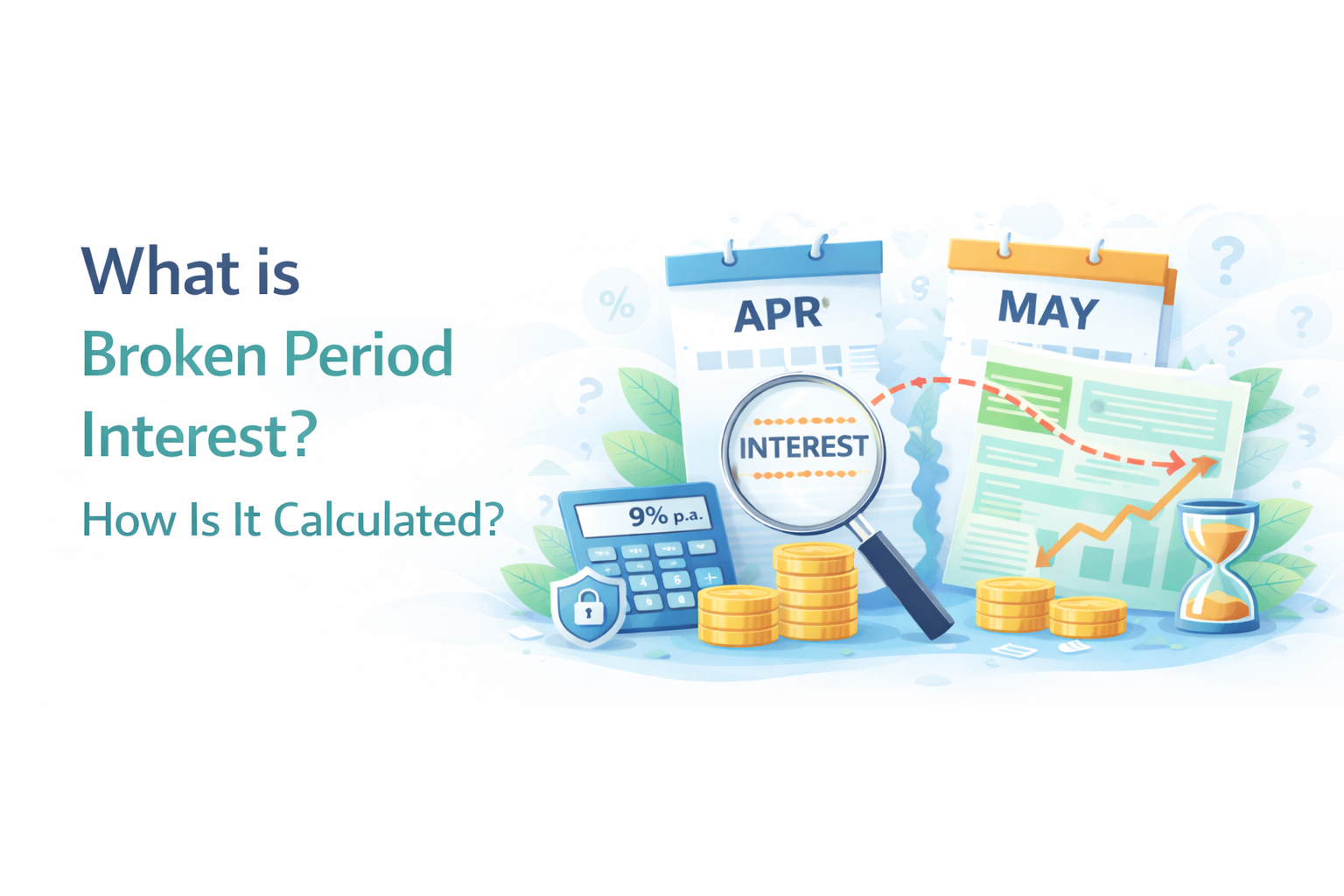

Broken period interest represents the specific interest cost you pay when a gap exists between the day your loan hits your bank account and your first scheduled EMI date. Most lenders, including those offering instant personal loans, set fixed monthly repayment dates. If you receive your funds on the 10th but your cycle starts on the 1st of the next month, those extra 20 days create a “broken” timeframe.
Financial firms determine the broken period interest based on the actual number of days you hold the money before that first official cycle kicks in. Since interest starts ticking the moment the capital reaches you, this gap remains outside the standard monthly structure. This is exactly what is broken period interest in the eyes of a lender. It ensures they get paid for every single day you use their money.
A personal loan can be the perfect broken period interest example. Imagine you secure a loan of Rs. 1,00,000 on April 1st. However, your lender sets your first EMI for May 1st. If the personal loan interest rates sit at 10% APR, you will owe interest for those 30 days of “gap” time.
Here is how to calculate broken period interest for this specific case-
Daily Interest Rate – 10% / 365 days = 0.027%
Interest for 30 days – 0.027% x 30 = 0.82%
Broken Period Interest Calculation – Rs. 1,00,000 x 0.82% = Rs. 820
In this scenario, you would be responsible for paying Rs. 820 to cover that initial month. This amount usually gets bundled with your first payment on May 1st. It simply covers the cost of borrowing for that specific early window.
Lenders use a few different methods to collect broken period interest from you-
1. Upfront Deduction – The lender might take the interest out before you even see the money. If you owe Rs. 820, you would receive Rs. 99,180 instead of the full lakh.
2. Added to First EMI – You receive the full loan amount. Then, on your first due date, you pay your regular EMI plus the extra Rs. 820.
3. A Separate Payment – Some might ask you to pay this specific interest amount as a one-off charge before the main EMIs begin.
4. EMI Adjustment – The lender adjusts the interest component within your first EMI. This keeps your initial payout the same as the others. You get the full amount you applied for without immediate deductions.
Understanding broken period interest helps you manage your finances better when taking a loan. It isn’t a hidden fee or a penalty. It is just the cost of borrowing for the days between your disbursement and your first official payment cycle. Whether the lender deducts it from your payout or adds it to your first EMI, knowing the math keeps you in control. Always check how your lender handles these dates to avoid any surprises during your first repayment month.
Broken period interest means the interest you owe for the days between getting your loan and your first EMI date. Most loans have fixed monthly cycles. If your money arrives mid-month, those initial days fall outside the regular schedule. Lenders charge for this “broken” time to cover the cost of the funds you used before the official repayment calendar actually begins.
No, it is not an extra charge or a hidden penalty. It is simply the interest for the specific days you had the money before your first EMI. Since interest accrues daily, you are just paying for the time the funds were in your possession. It feels like an extra cost (because it often changes the first payment), but it is just standard interest.
You calculate it by multiplying the daily interest rate by the number of days in the broken period. First, divide your annual rate by 365. Then, multiply that by the loan amount and the number of days between disbursement and the first EMI. This gives you the exact figure. Many people use a specific online broken period interest calculator to find this amount quickly.
Yes, it typically applies to most credit products where the disbursement date does not perfectly align with the monthly billing cycle. Whether you are looking at home loans or a small instant personal loan, the concept remains the same. If there is a gap between receiving the funds and the start of the standard EMI calendar, the lender will likely apply this specific interest.
Yes, these terms are often used interchangeably in the lending industry. They both refer to the interest accrued during the waiting period before your first regular instalment. While the name might vary between banks or financial institutions, the underlying logic is identical. You are simply paying for the “gap” days that exist between the fund transfer and your first official repayment due date.
Lenders charge this because interest starts building the moment the loan amount is credited to you. Since they are providing you with capital, they need to earn interest for every day you hold it. If they waited until the first EMI without charging for those initial days, they would lose out on the cost of lending the money for that specific early timeframe.
It is usually charged at the very beginning of your loan journey. Depending on your lender’s policy, they might deduct it from the disbursed amount alongside personal loan processing fees. Alternatively, you might see it added to your very first EMI payment. It is a one-time occurrence that happens only at the start of the loan to align your account with their billing cycle.
You can minimize or avoid it by timing your loan disbursement to match your EMI date. If your loan is disbursed exactly one month before your first payment is due, there is no “broken” period. However, this is often difficult to time perfectly. Most borrowers accept it as a standard part of the process since the primary goal is usually getting the funds when needed.
Download our personal loan app to apply for a personal loan. Get up to 2Lakhs* as a personal loan. Download Now!


Sign into avail a personal loan up to ₹ 2,50,000

Unifinz Capital India Limited is a Non Banking Finance Company (NBFC) registered with the Reserve Bank of India (RBI). lendingplate is the brand name under which the company conducts its lending operations and specialises in meeting customer’s instant financial needs.















 RBI CMS
 RBI Sachet


