
Did You Know?
We serve loans, the best way you can borrow
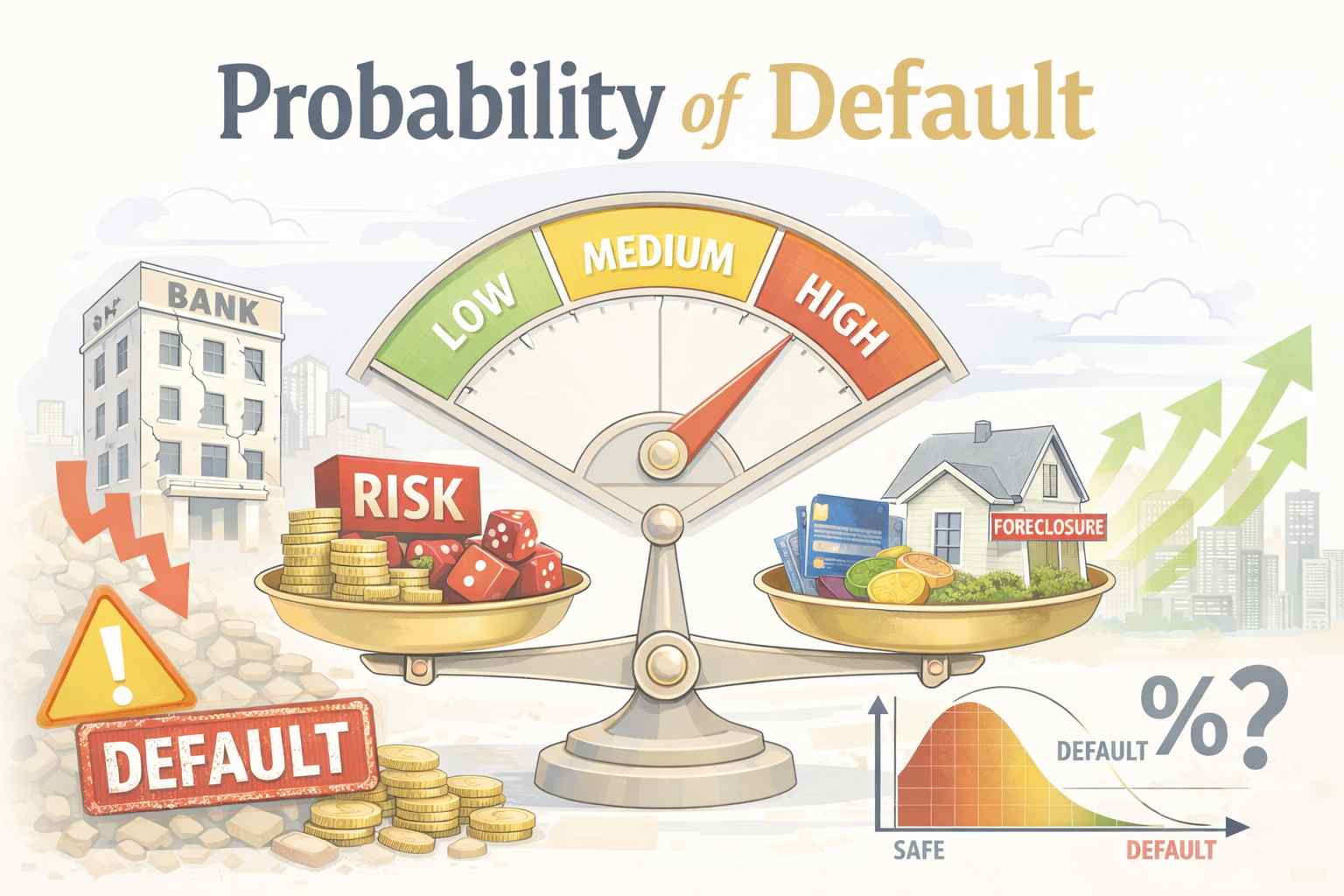

The probability of default represents the statistical likelihood that you, as a borrower, might fail to meet your debt obligations. In the world of finance, if an asset has a high probability of default, it basically means there is a chance the investment could lose its entire value and yield zero returns.
You can think of it as a crucial metric that investors use to estimate potential losses before they commit their money. When you understand the probability of default, you can better predict if a financial instrument will actually pay out over its expected lifespan.
1. Managing Credit Risk: This metric helps banks and lenders like us at lendingplate assess the risks when they provide funds to you. It allows them to keep their total exposure under control.
2. Setting Loan Prices: By knowing the probability of default formula, lenders can charge a fair rate. They find a sweet spot where they cover potential risks while still offering you a competitive deal.
3. Guiding Investment Choices: If you are buying bonds, you need this figure to judge the safety of your capital. It helps you pick assets that align with how much risk you can actually stomach.
Market prices shift based on how everyone perceives the probability of default. If most people think a specific bond is going to fail, they will rush to sell it (which naturally drives the price down). You can actually figure out what the market expects by looking at the data for credit default swaps.
Imagine you hold Greek government bonds for a ten-year period. If the swap price is 8% and you expect a 90% loss if things go wrong, you can work out the probability of default. By dividing that 8% by the 10% risk premium, you get a 0.8 or 80% chance of failure. This simple probability of default formula tells you exactly what the broader market thinks about that debt.
Credit default swaps act like a form of financial protection (sort of like an insurance policy for your investments). You use them to shield yourself from the fallout if a borrower stops paying. In a swap, you pay a regular fee to a bank, and in exchange, they promise to cover your losses if the underlying bond fails.
Think about an investor holding Greek bonds who feels a bit nervous about the economy. They pay a steady “coupon” to a bank to stay safe. If Greece defaults, the bank steps in and pays the investor the lost amount. It is essentially a tool that lets two parties trade depending on their different views of a security without actually owning the physical bond.
Markets are not always right (even if they seem all-knowing). Sometimes the CDS market gets the probability of default wrong. If the general market thinks the risk is 80% but your own research suggests it is only 50%, you might decide to sell protection at a lower price.
When you act on your specific belief, your trades can actually push the market price down. Your individual view eventually blends into the collective price. This shows that a strong personal conviction about how to calculate the probability of default can eventually shift how the entire market views an asset’s safety.
Here are the challenges in finding the probability of default –
1. Quality of Data: If your data is messy or incomplete, your probability of default estimate will be wrong. You must ensure your records are clean and audited regularly to keep things accurate.
2. Model Reliability: Sometimes the math simply fails to catch sudden economic shifts. You need to update your models often so they reflect current trends in how you and others manage money.
When we look at how the probability of default is calculated, we usually rely on a few specific technical approaches.
This is a popular statistical tool because it deals with “yes or no” outcomes. It helps determine if you will default or stay on track.
These models combine hard math with professional insight to give you a score (like a FICO score).
Advanced algorithms like neural networks are now used to find what is probability of default by spotting complex patterns.
Sometimes, human intuition is better for unique or very complex cases.
A bank wants to see if you should get a new instant personal loan. They look at your past income and credit score. By plugging these into the probability of default formula, they decide if the risk is low enough to approve your application.
A lender looks at your mortgage application. They check your repayment history to give you a score. This score tells them your probability of default, helping them decide your interest rate.
Back then, many big banks got the probability of mortgage default totally wrong. They thought the risk was low (it wasn’t). This mistake caused a global meltdown because the probability of default formula they used didn’t account for a housing market crash.
When huge companies like Lehman Brothers went under, it showed everyone why knowing how to calculate the probability of default on loans is crucial for investors. These cases prove that even “safe” companies need constant monitoring.
Understanding the probability of default is vital to navigating the world of borrowing and lending safely. It is the core metric that determines whether you qualify for an instant personal loan and the interest you pay. Using a solid probability of default formula lets lenders keep the financial system stable. Whether through simple math or complex AI, calculating this risk ensures that both you and the bank stay protected.
The probability of default is a measure of the likelihood that you will miss your loan payments. Lenders use this to gauge the risk of losing their money when they lend to you. It covers a specific timeframe (usually a year). If your PD is high, you are seen as a risky borrower, making it much harder for you to get credit.
Lenders need to know the probability of default so they don’t lose too much money. It helps them decide if you can afford an instant personal loan without struggling. By calculating this risk, banks stay solvent and can continue offering services. It also dictates the interest rates they offer you, ensuring that the return justifies the potential risk they are taking.
If you want to know how the probability of default is calculated, it involves looking at your past financial behaviour. Lenders use the probability of default formula. That might involve logistic regression or machine learning. They take your total debt and compare it to your income and credit history. This data helps them estimate the likelihood that you might stop making your monthly repayments.
Several things change your probability of default. Your credit score is a big one (because it shows your track record). Your current income and your total existing debt also play huge roles. If the economy takes a downturn, your risk might go up even if your habits stay the same. Lenders consider all these variables to decide whether you are a safe bet.
Your probability of default directly controls how much your loan costs. If the lender thinks you might default, they will charge you a higher interest rate to cover that risk. That is why people with great credit scores get lower interest rates on loans. Basically, the lower your risk, the less you pay in interest over the life of the debt.
Lenders usually check the probability of default at least once a year. However, for large corporate loans or during economic crises, they might review it more often. If your financial situation changes suddenly, they will update their assessment. Keeping these figures current ensures that the bank’s risk models remain accurate and reflect the world you live in today.
Yes, your probability of default is not a permanent number. If you lose your job or take on too much extra debt, your risk goes up immediately. Conversely, if you get a pay rise and pay off other bills, your risk level drops. Changes in the national economy (like rising inflation) can also shift your default risk even if your personal life stays stable.
For a secured loan, the probability of default matters slightly differently because the lender has collateral. If you default on a car loan, they can take the car. With an unsecured instant personal loan, the lender has no assets to seize. Therefore, they look much more closely at your personal probability of default for unsecured debt because the risk of a total loss is higher.
Also Read: Secured and Unsecured Personal Loan
When you apply for credit, the lender compares your probability of default against the lender’s internal “risk appetite.” If your score is too high, they will simply reject your application to avoid a loss. They want to ensure you have a high chance of successful repayment. Finding a balance helps them lend responsibly while ensuring you don’t take on more debt than you can handle.
Download our personal loan app to apply for a personal loan. Get up to 2Lakhs* as a personal loan. Download Now!


Sign into avail a personal loan up to ₹ 2,50,000

Unifinz Capital India Limited is a Non Banking Finance Company (NBFC) registered with the Reserve Bank of India (RBI). lendingplate is the brand name under which the company conducts its lending operations and specialises in meeting customer’s instant financial needs.
















 RBI CMS
 RBI Sachet


