
Did You Know?
We serve loans, the best way you can borrow
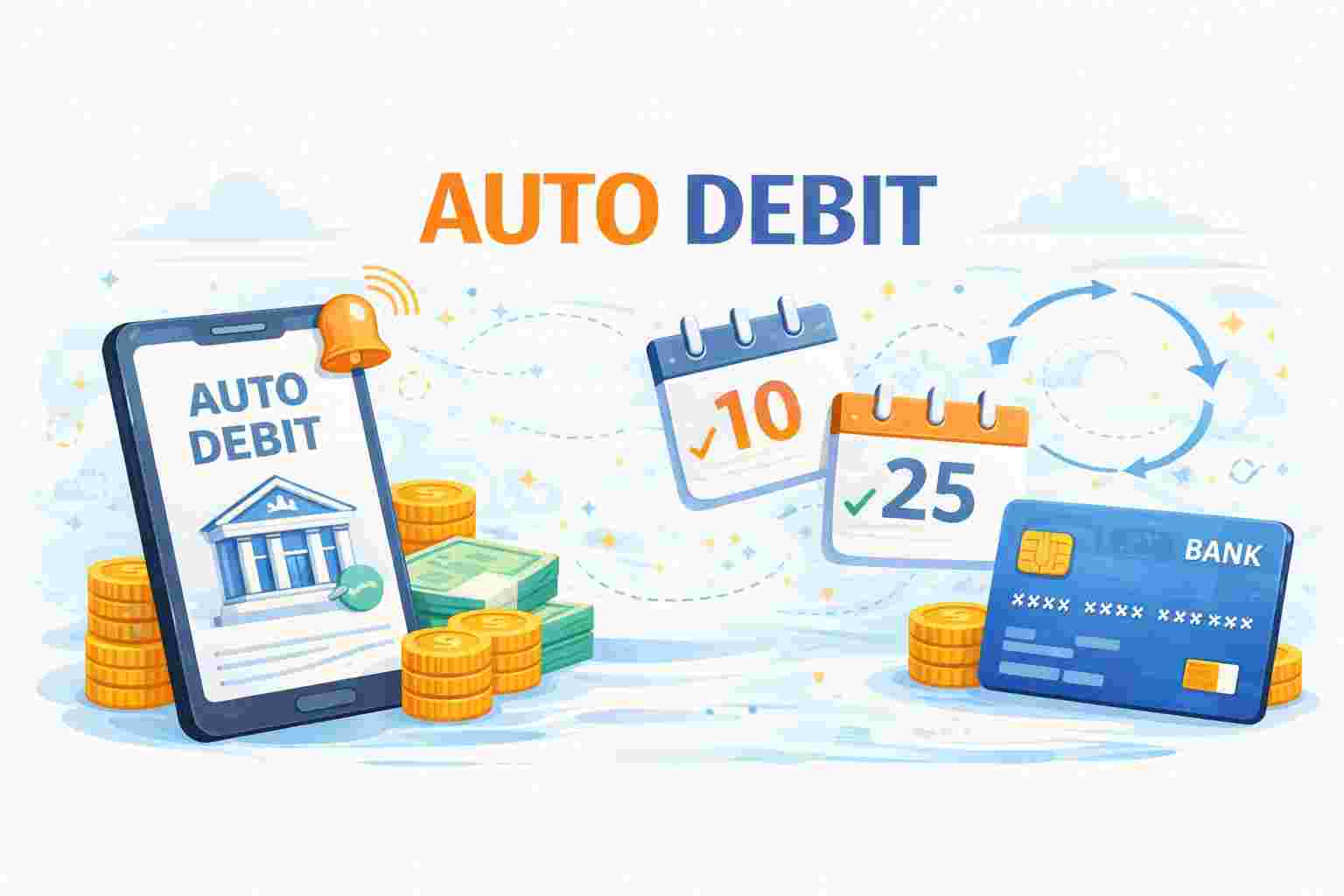

Going by the auto debit meaning, it is a banking option that allows your bank to take money from your account on a fixed date. The set amount is deducted automatically without you needing to handle it yourself only after you give consent.
So, you can pay your credit card bills, loan EMIs, utility payments, or monthly subscriptions timely. Using auto debit helps you avoid late charges or missed payments. At the same time, it also keeps your monthly budget seamless.
Let us take an example to get a better understanding. A real-life example makes auto debit easier to understand. Think of a company that provides monthly subscription services online.
By using auto debit, the company can:
1. Collect subscription charges directly from customer accounts on the set date every month.
2. Maintain a steady cash flow as payments come in without delays.
3. Save time by reducing manual billing and repeated reminders.
4. Give customers a smooth payment process without worrying about due dates.
This example shows how auto debit makes financial tasks easier while improving customer satisfaction as well as helping business operations run better.
Setting up an auto debit facility is simple and quick. Here is a step-by-step way it works:
1. Authorisation – You give consent to allow money to be taken from your bank account or card. This is done through an online e-mandate or a signed form.
2. Setup – Your payment details are added to the auto debit system, which may connect with a payment gateway or bank.
3. Scheduling – Payments are set for a fixed time (such as monthly or quarterly) along with the agreed amount.
4. Notification – You get an alert by SMS or email before every debit. This reminder helps you keep enough balance in your account.
5. Deduction – On the set date, the money is taken directly from your account and sent to the business.
Additional steps like an OTP may not be required for payments below ₹15,000. You can also set a limit on deductions for more safety.
Here are the types of auto debit payments:
Fixed auto debit is the set amount deducted regularly. A few examples of this type of auto debit payments include the following:
a. Loan EMIs where the instalment remains the same every month.
b. Subscription services (such as monthly streaming platforms with a fixed fee).
c. Insurance premiums that have a fixed amount.
The next comes the variable auto debit. This refers to payments where the amount changes each cycle. A few of the examples include the following:
a. Utility bills like electricity or water (note that this may vary depending on the usage)
b. Credit card bills where the total depends on monthly spending
The e-mandate is the digital approval given by customers to allow recurring payments. It forms the base of the auto debit system. That makes it possible for businesses to collect payments automatically. This process is monitored by the Reserve Bank of India as well as the National Payments Corporation of India. This ensures compliance & safety.
The collection of recurring bills becomes easier when e-mandates are linked with auto debit card payments. Using the wallet auto debit option, customers can set up automatic payments through digital wallets. So, the entire process becomes faster & more convenient.
Here are the comparisons between auto debit payments & other types of payment methods.
Find them out from below:
Setting up an auto debit facility is simple and quick. Here are the steps to know how this process works:
1. Authorisation: You give consent to allow money to be taken from your bank account or card. This is done through an online e-mandate or a signed form.
2. Setup: Your payment details are added to the personal loan auto debit system, which may connect with a payment gateway or bank.
3. Scheduling: Payments are set for a fixed time, such as monthly or quarterly, along with the agreed amount.
4. Notification: You get an alert by SMS or email before every debit. This reminder helps you keep enough balance in your account.
5. Deduction: The money is taken directly from your account & sent to the business on the set date.
Additional steps like an OTP may not be required for payments below ₹15,000. You can also set a limit on deductions for more safety.
Net banking lets you handle payments directly through your bank’s online portal. When compared with auto debit, here are the key differences:
1. Total Control over the Payment: Net banking gives you more control over payments. This allows one-time or recurring transactions.
2. Supports Different Transactions: Auto debit is built to manage repeat payments automatically, while net banking supports many different types of transactions.
3. Two-Factor Checks: Both are safe as they come with encryption & two-factor checks to keep your information secure.
This shows that auto debit is best for regular payments. However, net banking also offers great flexibility.
The following are the differences between online bill pay & automatic debit payments. Find out from the table below:
| Feature | Automatic Debit Payments | Online Bill Pay |
|---|---|---|
| Initiation | Started by the payee with your permission | Started by you through the bank’s online platform |
| Process | Money is taken automatically on the fixed recurring date | You schedule one-time or recurring payments to chosen payees |
| Manual Payment Option | No option for manual payments | Manual payments are possible |
| Vendor Access to Bank Information | Vendors can access your bank account details | Vendors do not access your bank account details |
| Flexibility | You can change payment dates and amounts | Dates and amounts usually cannot be changed, unless allowed by the service |
Auto debit is used in many industries lately.
Here are a few:
1. Utilities: Bills for electricity, water, and gas are paid through auto debit.
2. Loan Repayments: EMI for a personal loan or home loan gets deducted automatically.
3. Subscriptions: Fees for streaming, magazines, and gym memberships are collected without reminders.
4. Insurance: Premiums for health, life, and motor insurance are paid using auto debit.
A company can get better on-time bill payments after implementing an auto debit system for customers.
Auto debit offers many advantages that make it a trusted payment method today:
1. Safe & Convenient: Payments are automatic, so you don’t need to track due dates.
2. Managing Finance: It supports timely payments, which keeps your money matters in order.
3. Extremely Affordable: You avoid late fees and extra charges linked with missed payments.
4. Improved Credit Scores: Paying on time can improve your credit history over time.
5. Seamless Business Operations: Companies receive money on time, keeping cash flow steady and reducing manual tasks.
These points show why many people and businesses choose auto debit as a reliable option.
Auto debit has become important in finance for both people and businesses. It supports smooth payments, prevents late fees, and protects credit scores. It improves cash flow by reducing missed payments for businesses. On the other hand, it ensures bills & EMIs are paid on time for customers. Here is how the system works:
Payments begin when you give permission for recurring deductions. This can be through a form, an online setup, or an e-mandate. The e-mandates are widely used in India. It is confirmed by secure portals or OTPs for transactions up to ₹15,000.
Your bank or card details are collected and linked with the auto debit system through a gateway or financial partner. This ensures payments happen on the decided schedule.
On the due date, the system sends a payment request. The bank checks the available balance or credit, then deducts the amount.
Many banks and businesses send alerts before each debit and confirmations after, keeping the process transparent.
Records of payments are shared with both sides, which helps with tracking and reconciliations. If funds are low, the system retries and updates both customers & businesses.
You can request changes like amount, date, or account details. You can also cancel auto debit completely by informing the provider or bank.
Using an auto debit system offers various advantages to businesses:
1. Improving the Cash Flow: Payments are received on time. This helps businesses plan better with steady inflows of money.
2. Customer Retention is Higher: A smooth payment process keeps services running without breaks. This increases the loyal customer base.
3. Reduced Administrative Work: Automation reduces time spent on billing, tracking, and follow-ups. So, it lets workers focus on business growth.
4. Minimum Late Payments: Scheduled collections mean less delay. That protects financial health as well as cuts recovery efforts.
5. Ease & Utmost Flexibility: Customers can select their preferred payment dates and methods. That makes the service more attractive.
RBI issued new rules for auto debit transactions from 1 October 2021. These apply to payments made through debit cards, credit cards, as well as prepaid methods. The rules aim to protect customers & reduce fraud while making recurring payments more secure.
Here are the key points to note:
1. Advance Notice: Banks must alert customers at least 24 hours before a recurring debit. Only after confirmation can the transaction be completed.
2. Additional Authentication for ₹15,000 or Above: Transactions above ₹15,000 need approval through an OTP. This added check gives more safety and prevents misuse. Customers can still pay larger amounts like premiums or education fees without OTP if they choose.
3. A One-Time Registration: Customers only register once to activate recurring payments. They can set the amount & duration for future debits during this.
4. Opt-Out Choices: Wondering how to stop auto debit? Customers can stop, change, or cancel an auto debit instruction from their bank account if required.
These guidelines make auto debit safer for both customers and businesses while improving trust & security.
Auto debit & e-mandates are shaping how payments work today. The value of secure & simple payments becomes clear as more customers alongside businesses adopt automation. The auto debit system is set to grow further with RBI support & advanced digital solutions.
Using auto debit is more than following payment trends for businesses. It helps improve efficiency while keeping customers happy and at the same time supporting long-term growth.
Using auto debit is safe because banks and financial institutions apply encryption and extra security checks to protect your account. You always receive alerts before transactions, allowing you to monitor every payment. Customers can also set transaction limits. They can also know how to cancel auto debit anytime.
You can cancel auto debit whenever needed. Simply contact your bank or service provider and request auto debit cancellation of the mandate. Most institutions also allow changes through online platforms or mobile apps. Once cancelled, future debits will not be processed. Always ensure to request cancellation in advance before the scheduled payment date.
The payment will fail if your account does not have enough money during an auto debit transaction. The bank may charge a penalty, and the service provider might mark your payment as missed. The system retries the debit later in some cases. Keeping a sufficient balance avoids penalties while maintaining timely payments.
Many providers allow changes in the auto debit setup. You can update the payment amount or change the debit date by contacting your bank or service provider. Some platforms let you make changes online. It is best to request updates in advance so they reflect before the next scheduled transaction is processed.
You should report it immediately to your bank or service provider if you see a fraudulent auto debit transaction. Most banks offer customer support through phone, branch visits, or mobile apps for quick action. They investigate the case and stop future unauthorised debits. Always check your alerts and account statements to catch fraud early.
Personal loan EMI payments are often managed through auto debit (where the monthly installment is directly deducted from your account). The bank automatically collects the EMI on the due date once authorised. This prevents missed payments & late charges. EMI auto debit is widely used for loans, credit cards, as well as subscriptions.
Auto debit has both benefits & drawbacks. It helps you pay on time, avoid penalties, and keep your credit score strong. But if you forget to maintain enough balance, payments may fail, leading to extra charges. It is useful when managed responsibly, but regular account monitoring is necessary to prevent payment issues.
You need to cancel the authorisation with your bank or the service provider to stop auto debit. This can often be done online through internet banking or mobile apps. You can do it by submitting a request at the branch. No further debits will occur once processed. Always cancel at least a day before the due date.
Banks or providers do not charge extra for using auto debit services generally. It is included as part of their payment system. But your bank may apply penalty charges if your transaction fails due to low funds. Customers should check their provider’s terms to confirm any possible fees related to recurring payments.
Download our personal loan app to apply for a personal loan. Get up to 2Lakhs* as a personal loan. Download Now!


Sign into avail a personal loan up to ₹ 2,50,000

Unifinz Capital India Limited is a Non Banking Finance Company (NBFC) registered with the Reserve Bank of India (RBI). lendingplate is the brand name under which the company conducts its lending operations and specialises in meeting customer’s instant financial needs.

















 RBI CMS
 RBI Sachet


