
Did You Know?
We serve loans, the best way you can borrow
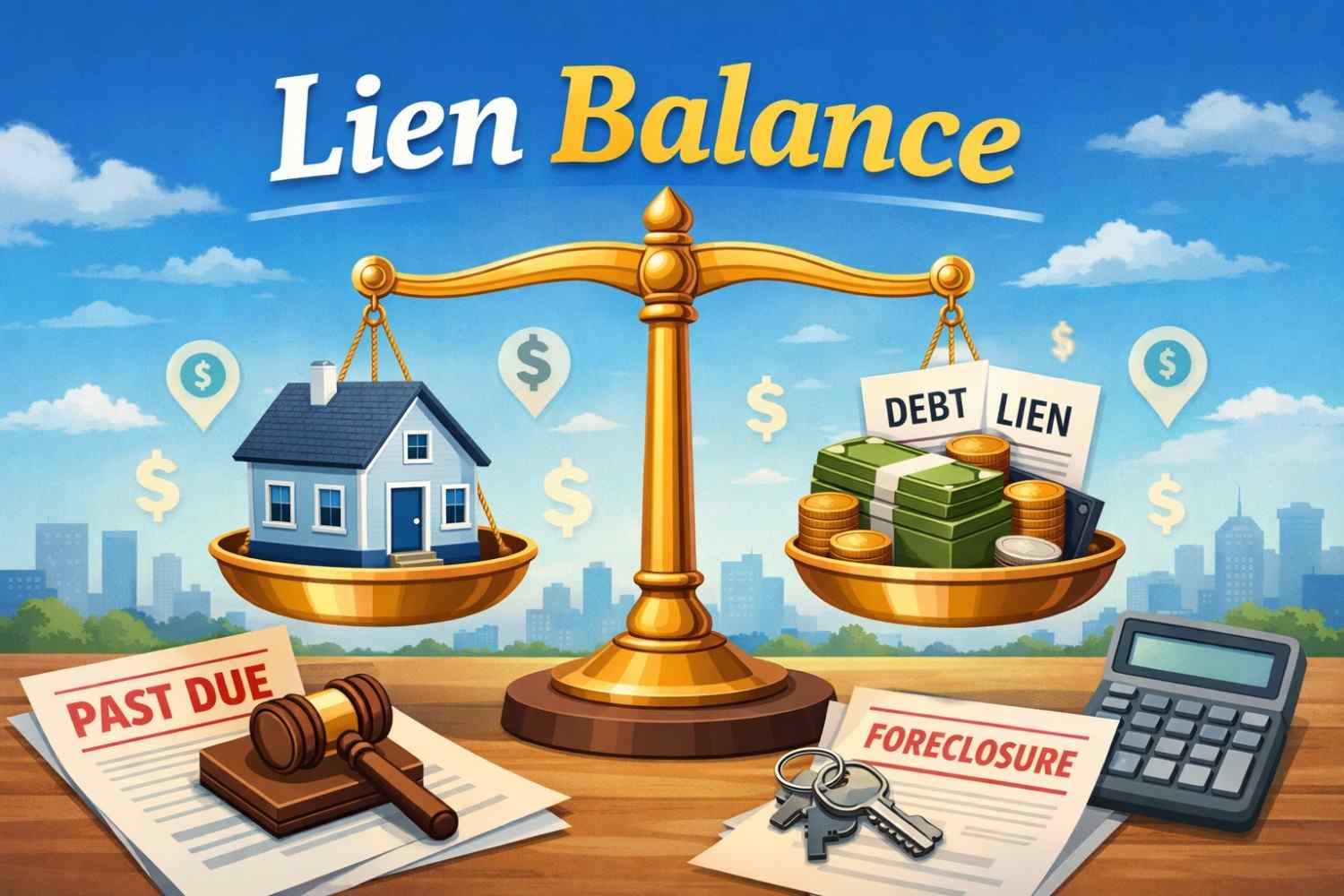

A lien represents a legal claim or a specific right over an asset you own. It gives a lender or creditor the authority to hold onto that asset until you settle a particular debt. If you take out a loan to purchase a vehicle, the finance company usually places a lien on that car.
Different scenarios lead to different types of liens. These are the ones you see most often –
1. Mortgage lien – This is arguably the most frequent type. When you borrow to buy a house, your bank places a lien on the property.
2. Mechanic’s lien – If you hire a contractor for home improvements but don’t pay the bill, they can put a lien on your home.
3. Tax lien – If you fail to pay your taxes, the government has the right to place a lien on your property or assets.
The lien balance is the specific portion of funds in your bank or loan account that stays “locked” or “on hold.” You cannot touch this money because your bank has reserved it to ensure you meet a pending financial obligation. It is essentially a frozen amount.
To put it in very simple terms –
Lien Balance = Funds or assets you cannot access because they are set aside to cover an outstanding debt.
For instance, if your bank places a lien of ₹10000 on your savings account due to an old credit card debt, that amount is your lien balance. You won’t be able to withdraw those ₹10000 or spend them until you resolve the underlying issue.
A lien balance is a security measure for the institution in the world of banking. Banks often place these holds to make sure they aren’t left empty-handed.
You might see a lien balance on your account for several reasons –
1. Loan defaults – If you miss an EMI, the bank might block an equivalent amount in your account.
2. Credit card dues – Unsettled credit card bills often lead to a bank-enforced lien.
3. Fixed deposit lien – If you decide to take an instant personal loan against your FD, the bank marks that FD as a lien until you pay it back.
4. Legal orders – Sometimes, courts or tax authorities tell the bank to freeze your funds (which is never a fun situation).
You might encounter a lien balance in various financial situations, depending on what triggered the hold.
1. Loan-Related Lien Balance – When you secure a loan using an FD, mutual funds, or even property, the bank marks that asset with a lien until you finish the repayment.
2. Savings or Current Account Lien Balance – Your bank might freeze a portion of your liquid cash if you have unpaid charges, a bounced cheque, or if you fail to maintain a minimum balance.
3. Credit Card Lien Balance – If you ignore your credit card statement for too long, the bank might just recover that money by placing a lien on your savings.
4. Legal/Tax Lien Balance – This happens when government bodies step in and demand a hold on your funds for unpaid penalties or taxes.
Working out your lien balance is usually quite simple. You can follow this basic formula –
Lien Balance = Principal Amount + Interest + Fees
Principal Amount is the original sum you borrowed or owe.
Interest is the cost of the debt (this keeps growing if you don’t pay).
Fees are the additional costs, such as late payment penalties or processing charges.
Suppose you have a home loan of ₹3000000 at a 4% interest rate over 30 years. After five years, your numbers might look like this-
Principal Paid – ₹400000
Remaining Principal – ₹2600000
Interest Accrued – ₹200000
In this case, your lien balance would be roughly ₹2800000 (which is the ₹2600000 remaining principal in addition to the ₹200000 interest).
It is easy to get confused between these two terms. They sound similar but mean different things for your wallet.
| Feature | Lien Balance | Loan Balance |
|---|---|---|
| Definition | The specific amount the bank has frozen as security. | The total debt you still need to pay back. |
| Access | Refers to your own money that you cannot use. | Refers to the money you owe. |
Suppose you owe the bank ₹200000 for a loan. However, they have only blocked your ₹50000 FD as security; ₹50000 is your lien balance, while ₹200000 is your loan balance.
Banks aren’t just being difficult; they use a lien balance as a tool to manage risk. It’s their way of making sure you keep your promises.
Here is why they do it –
1. Securing loans – They mark FDs or other assets as a lien to ensure the loan is closed properly.
2. Recovering dues – If you forget an EMI or a credit card bill, a lien helps them get their money back.
3. Legal compliance – Sometimes, the bank is just following orders from tax officials.
4. Cheque bounce cases – If a cheque is disputed, the bank might temporarily block that specific amount.
Having a lien balance isn’t just a technicality; it has real-world effects on your daily life.
1. Funds are Limited – You lose access to that money. You can see it in your account, but you can’t spend it.
2. Restricted Loans – Other lenders might see that lien and decide you are too risky for a new loan.
3. Impact of Credit – If a lien stays on your account because you aren’t paying your bills, your CIBIL score will likely take a hit.
4. Legal Penalties – Ignoring a lien from a court or the tax office can lead to much bigger legal headaches and extra penalties.
Your lien balance can definitely sway your credit reputation, even if indirectly.
Positive Impact – If you have a lien because you took a secured loan and you pay it off perfectly, it shows you are responsible.
Negative Impact – If the lien exists because you’ve ignored your debts, it signals poor financial discipline to the credit bureaus.
If you ever take a loan against your FD, the bank will mark that FD with a lien. You will still earn interest on that deposit (which is the good part), but you can’t withdraw the money or close the FD early until you pay back the loan.
Example –
FD Value – ₹100000
Loan Taken – ₹80000
Lien Balance – ₹100000 (the bank holds the whole FD until you are square).
Seeing a lien balance on your statement is stressful, but you can fix it.
Here is how to clear lien balance efficiently –
1. Understand the reason First – Call your bank immediately. You need to know exactly why they blocked the money.
2. Clear Your Dues – This is the big one. Pay off that missed EMI or credit card bill.
3. Give the Proof – If the lien was for a legal or tax matter, show the bank the clearance papers.
4. Appeal for Removal – Don’t just assume they will do it automatically. Ask the bank to lift the hold.
5. Processing Takes Time – Usually, it takes about 2 to 7 working days for the bank to release the funds.
Keeping a handle on your lien balance is a smart move for your financial health (and your peace of mind).
1. Regularly Pay – Use autopay so you never miss a bill. This keeps your balance low and your credit score high.
2. Pay Higher – If you can swing it, pay a bit extra. This cuts down the principal faster and reduces the interest you owe.
3. Monitor your progress – Check your accounts often. Seeing that balance drop is great motivation.
4. Talk to your lender – If money is tight, talk to the lender first. They might offer a payment plan before things get to the lien stage.
The best way to deal with a lien is to prevent it from happening. You can stay in control by doing these things –
1. Always pay your EMIs on time.
2. Watch your overdraft limits like a hawk.
3. Pay credit card bills before the due date.
4. Stay on top of your taxes.
5. Watch out for weird transactions that might look like fraud.
6. Scan your bank statements for any tiny fees that could snowball into a lien.
Let’s say you have ₹50000 in your savings account. You forgot to pay a ₹10000 credit card bill. The bank decides to mark ₹10000 as a lien.
Total Balance – ₹50000
Lien Balance – ₹10000
Usable Balance – ₹40000
You can still use the ₹40000, but that ₹10000 is out of reach until you pay the bill.
Knowing what is lien balance helps you stay in the driver’s seat of your finances. It’s just a tool banks use to protect themselves. If you see one, don’t sweat it too much. Just reach out to your bank, find out what is owed, and settle it. Once you do, your money will be back in your hands where it belongs.
A lien amount is a specific sum of money that your bank “freezes” within your account. You technically still own this money, but you cannot withdraw or spend it. The bank holds it as security to ensure you pay off a debt or meet a specific legal or financial obligation you owe.
Yes, it certainly can. If you owe a debt that is subject to interest, like a late loan payment or an unpaid tax bill, the lien balance often covers the original amount plus any interest that has piled up. It ensures the creditor gets everything you owe them, not just the start.
It isn’t necessarily “bad” if it is for a secured loan you are actively paying off. However, if the lien appeared because you defaulted on a payment or missed a tax deadline, it reflects poorly on your financial health. It restricts your cash flow and could potentially hurt your credit.
A lien stays on your account or asset until you satisfy the debt or the legal reason for the hold expires. There isn’t a fixed “expiry date” based solely on time; it is strictly tied to the settlement of the obligation. Once you pay what you owe, the removal process begins.
Once you have cleared your dues and notified the bank, the removal is usually processed within 2 to 7 working days. It isn’t always instant because the bank needs to verify the payment and update its internal records. If it were a legal lien, it might take longer.
In some cases, you might be able to negotiate. If you are dealing with an old debt or a tax issue, the creditor might agree to a settlement. If they accept a lower amount, they will issue a release once you pay the agreed sum, which will then clear the lien.
Yes, it can. If you share an account with someone and you owe a debt, the bank can often place a lien on that joint account. This can be tricky because it affects the other person’s ability to withdraw lien balance funds, even if they don’t owe the debt.
Generally, no. A lien is a legal claim against a specific asset for a specific debt. You cannot simply hand the lien over to someone else. However, if you sell an asset with a lien (such as a car), the debt usually must be paid off during the sale.
You cannot withdraw any money that is part of the lien balance. That is the whole point of the hold; it keeps the funds safe for the creditor. You can only withdraw the “available” or “usable” balance in your account, which is the total amount minus the blocked lien portion.
Download our personal loan app to apply for a personal loan. Get up to 2Lakhs* as a personal loan. Download Now!


Sign into avail a personal loan up to ₹ 2,50,000

Unifinz Capital India Limited is a Non Banking Finance Company (NBFC) registered with the Reserve Bank of India (RBI). lendingplate is the brand name under which the company conducts its lending operations and specialises in meeting customer’s instant financial needs.















 RBI CMS
 RBI Sachet


