headercom

Did You Know?

We serve loans, the best way you can borrow
Home / Blog / What is Direct Benefit Transfer?

What is Direct Benefit Transfer?

What is Direct Benefit Transfer?

What is Direct Benefit Transfer?

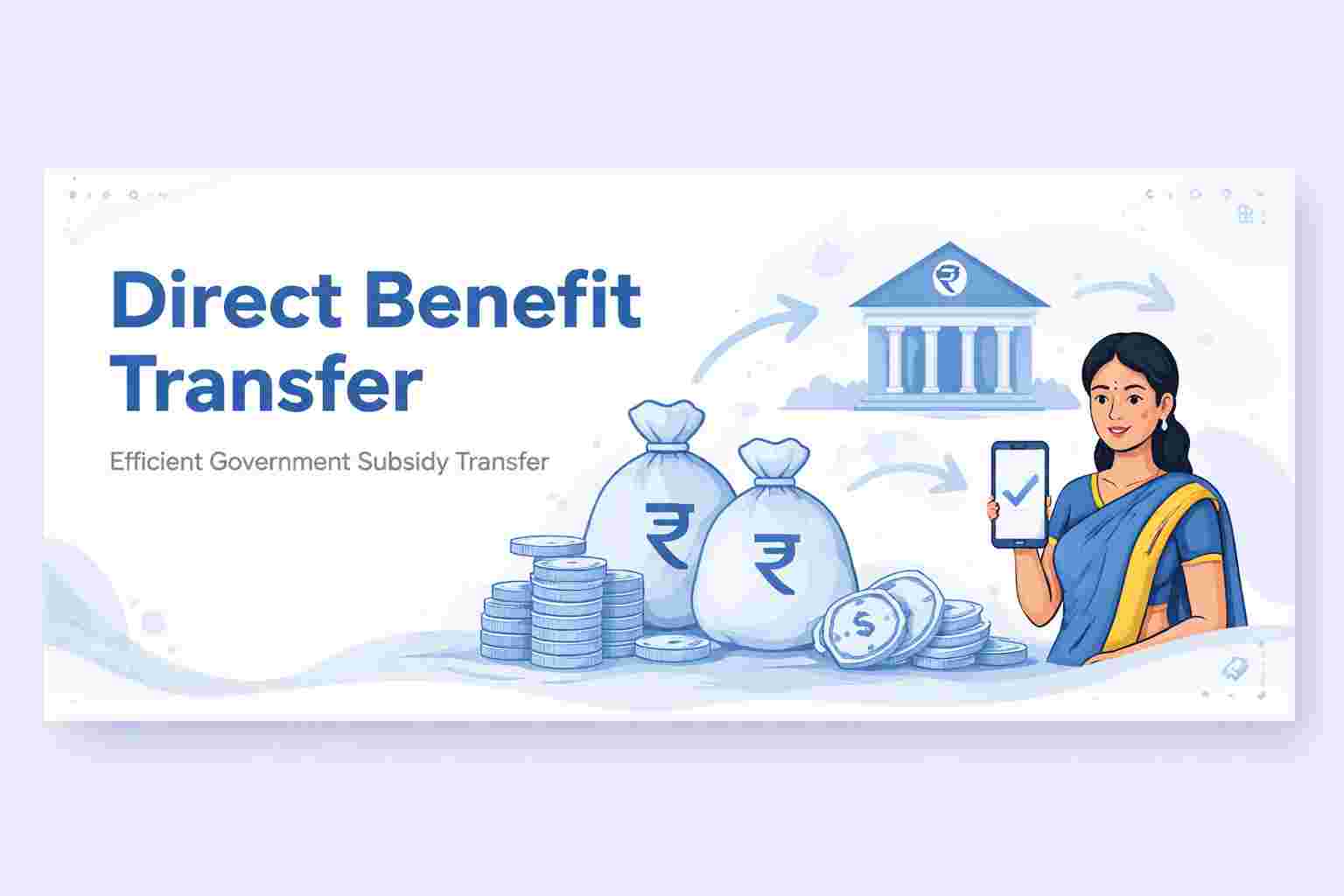
Launched on 1 January 2013, the direct benefit transfer initiative improves how the government sends subsidies, funds, and relief directly to you via linked bank accounts. Through this, the state intends to provide financial support to women, children, and workers in the labour sector. 

At first, direct benefit transfer in India began in 43 districts before expanding to 78 more districts across 27 specific schemes. 

The system operates in 300districts following the start of the MGNREGA- Mahatma Gandhi National Rural Employment Guarantee Act.

The direct benefit transfer meaning revolves around a system where the government sends welfare money straight to your personal bank account. You no longer have to worry about administrative hurdles (which used to be quite common) or missing out on your rightful dues. 

Key Components of Direct Benefit Transfer

The success of direct benefit transfer depends on the combination of these three vital parts-

  • Jan Dhan Yojana (JDY)- This Indian government project provides banking access to all citizens and makes sure your family has at least one active bank account.
  • Mobile Connectivity- Your phone acts as a tool to keep you updated on changes or news regarding the benefits you are entitled to receive.
  • Aadhaar- This Unique Identification Number assigned to residents helps the government identify you correctly as the rightful claimant for various funds.

How Does the Direct Benefit Transfer Work?

To keep things clear, the government starts by making a list of people who qualify for funds using the Central Plan Scheme Monitoring System (CPSMS). Then, your Aadhaar card serves as a digital ID to pull up your details and send money to you easily. 

While Aadhaar is helpful, you can still use Jan Dhan accounts and mobile links to access the direct benefit transfer. So far, 43 crore people have received aid through 316 crore transfers. 

The RBI and various banks (private, public, or regional) send payments to your account so you get funds without any middlemen.

Objectives of Direct Benefit Transfer

The main goals of the direct benefit transfer scheme include-

  • Better Transparency - You get your benefits directly because the scheme removes middlemen from the process entirely.
  • Lower Leakage - Sending money straight to your account makes it much harder for funds to be stolen or misused.
  • Rapid Delivery- You receive your money on time (which is a huge relief), and this improves how you interact with state schemes.
  • Financial Inclusion - This helps you open a bank account and brings you into the formal banking world for the first time.
  • Technology - Using the internet allows the government to store your data safely and perform tasks with high levels of accuracy.
  • Targeted Help - The main point is making sure subsidies reach you directly to stop theft, double entries, or the diversion of cash.
  • Economic Inclusion - Linking payments to your bank account helps you use digital tools and gives you better access to formal financial services.
  • Openness - Using Aadhaar and digital links allows for real-time tracking of your money, so the government stays accountable to you.
  • Cost Savings - Removing third parties saves the government money on paperwork and ensures your taxes are used much more wisely.
  • User Control - Receiving funds directly gives you control over your own wallet and helps you make better choices for your family.

Pros of Direct Benefit Transfer

Using the direct benefit transfer system has created many advantages of direct benefit transfer for the public -

  • User Empowerment - Having easy access to your cash makes you more financially independent and confident in managing your household.
  • Less Corruption - Cutting out human contact in the payment chain means there is almost no room for dishonest practices.
  • Money Saved - Streamlined digital steps save a lot of time and administrative costs for everyone involved in the process.
  • Better Accuracy - The government can now send aid to the specific people who actually need it most.
  • Higher Transparency - Digital tracking means the government can see exactly where every rupee goes and verify that you received it.

Cons of Direct Benefit Transfer

Even with the many benefits of direct benefit transfer, the system still faces a few hurdles-

  • Digital Gap - If you live in a remote area with no internet, participating in the scheme can be difficult.
  • User Awareness - The government must teach you how to use these systems so you can get your benefits.
  • Privacy Risks - Keeping your personal data safe is a top priority (and a constant challenge) for the digital systems used.
  • Bank Access - Some rural spots still do not have enough physical bank branches or ATMs for you to use.

Schemes Covered Under Direct Benefit Transfer

The direct benefit transfer scheme covers various welfare and subsidy models divided into these categories -

1. Cash Transfer

In this setup, cash reaches your account directly through these specific channels -

  • Direct bank deposits to your account.
  • Payments from the State Treasury.
  • Approved government agencies.
  • Funds from Central or State levels.

2. In-Kind Benefit

You get products or services through a third party, where the government pays the cost for you. Examples include your schoolbooks, fuel, or medicine.

3. Other Transfers

This covers aid to people who help run schemes, like NGO workers, teachers, or ASHA workers who get training or wages.

Implementation of Direct Benefit Transfer

Here are the implementations of direct benefit transfer-

  • Aadhaar Signup - You must register for Aadhaar so the government can verify your identity through the UIDAI system.
  • Linking Accounts - You connect your Aadhaar number to your bank account to start receiving your subsidy payments directly.
  • Data Sharing - Government offices sync their lists with the Aadhaar system to make sure you are the right person for the fund.
  • Online Payments - Your money arrives via digital channels like NEFT, IMPS, or the Aadhaar Payments Bridge for a smooth experience.

Impact of Direct Benefit Transfer

The following are the impacts of direct benefit transfer-

  • Stopped Theft - By using tech-driven checks, the government has cut down on the bribery and theft that used to happen.
  • Higher Speed - Sending money to your account is much faster now and costs the government less to manage.
  • Bank Growth - More of you are opening accounts and using cards, which brings you into the modern financial world.
  • Personal Freedom - Receiving money yourself gives you the power to make your own financial decisions and live a better life.

How to Avail Benefits under Direct Benefit Transfer?

To start getting your direct benefit transfer payments, you should follow these simple steps -

  • Get Your Aadhaar - Sign up for the program to get your unique number for future fingerprint checks.
  • Open Your Account - Make sure you have a bank account and that it is properly linked to your Aadhaar.
  • Join the Scheme - Apply for specific government programs that use the direct benefit transfer method for payments.
  • Stay Updated - Watch for mobile alerts or notifications, so you know when your money has arrived.

Need speedy funds for a personal emergency? You may look into an instant personal loan. Many lenders now allow you to apply for a loan on Aadhar quite easily. Just make sure you compare the personal loan interest rate and check for any hidden fees first.

Frequently Asked Questions (FAQs)

Q.1. Is Aadhaar mandatory for Direct Benefit Transfer?

You do not strictly need Aadhaar to get your benefits. The government also uses Jan Dhan accounts or mobile numbers to reach you. However, linking your Aadhaar is the most reliable way to verify your identity. It simply makes the transfer process much smoother and faster for your bank.

Q.2. How do I enable Direct Benefit Transfer in my bank account?

You can set this up by visiting your local bank branch with your Aadhaar card. Ask the staff to link your UID number to your savings account for subsidy purposes. Once they update your records, your account becomes a direct gateway for any government funds meant specifically for your welfare.

Q.3. Who gets the Direct Benefit Transfer payment?

You receive the payment if you are the officially registered beneficiary of a government scheme. The money lands directly in your linked bank account. This applies to students, farmers, or workers who meet the specific goals of programs such as LPG subsidies, pensions or other social security initiatives across the nation.

Q.4. Who is eligible to receive benefits under Direct Benefit Transfer?

Your eligibility depends on the specific rules of the scheme you want to join. You likely qualify for it if you are from a low income household, a student or a labourer. You should check the official portal of each scheme to confirm if you meet their specific requirements.

Q.5. What documents are required for Direct Benefit Transfer registration?

You generally need your Aadhaar card, a bank passbook, and your mobile number. Sometimes, you might need extra proof like an income certificate or a ration card. Ensure your bank details are correct (and your phone is active) so you never miss a notification when your money finally arrives.

Q.6. How secure is the Direct Benefit Transfer process?

The process is safe because it uses digital encryption and your unique biometric data. Since the money goes straight to your account, no one else can touch your funds. This modern system protects you from fraud and ensures your private financial information stays between you and the government.

Jaivinder Bhandari is a Senior SEO Manager at lendingplate with a passion for writing on a wide range of financial topics, including personal loans, credit and debit cards, investments, money management, and practical financial tips to help people improve their financial well-being. Linkedin Profile

Download Personal Loan App

Download our personal loan app to apply for a personal loan. Get up to 2Lakhs* as a personal loan. Download Now!


Google-Play Apple-app-icon

Do you want a Personal Loan?

Sign into avail a personal loan up to ₹ 2,50,000

We'll send OTP to verify Mobile Number.

Popular Search

Recent Blogs