
Did You Know?
We serve loans, the best way you can borrow
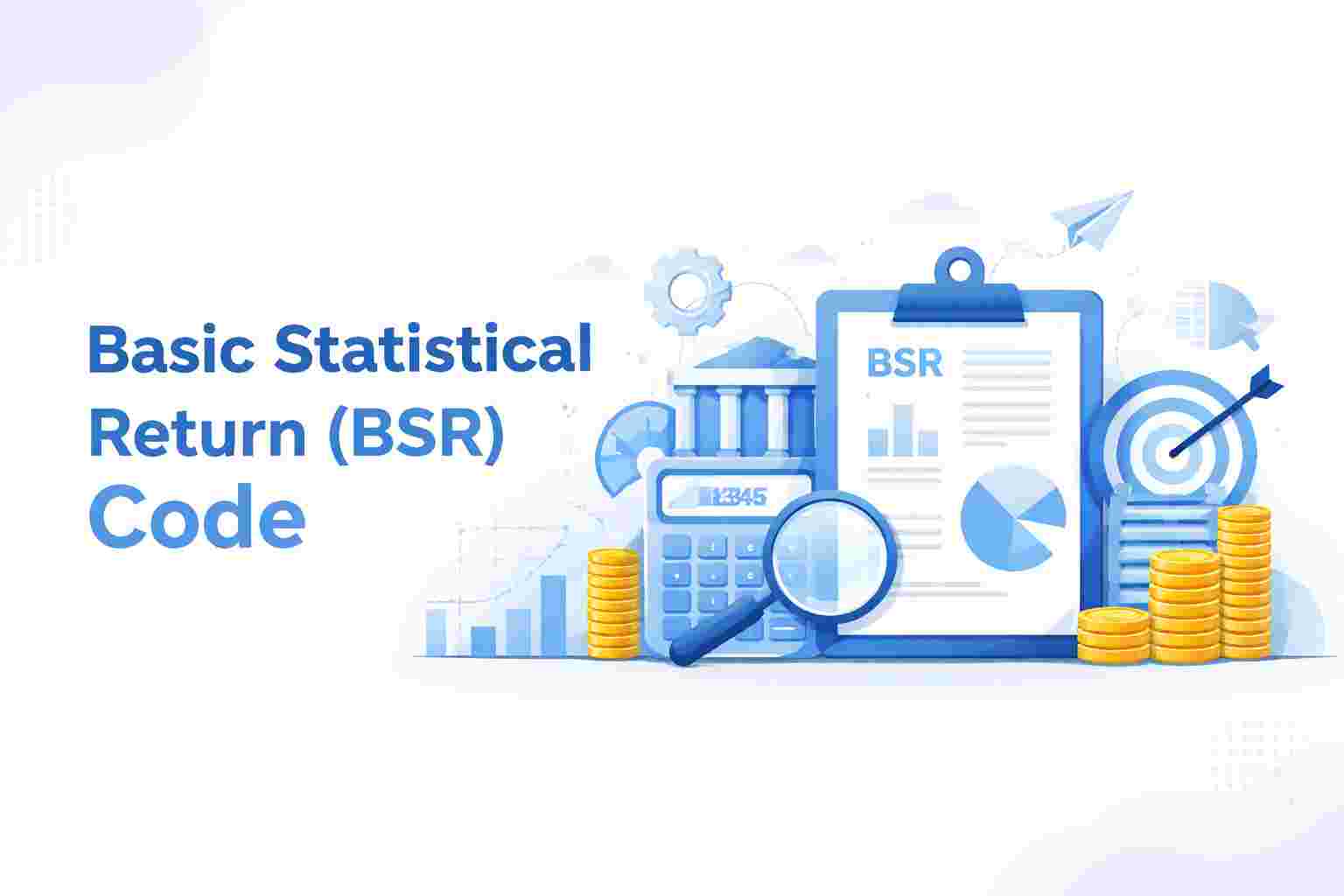

The basic statistical return 7 digit code is a unique identification string launched by the Reserve Bank of India in late 1972. This specific BSR code contains two distinct segments of banking data. You will find that the first three numbers identify your specific bank. The subsequent four digits pinpoint the exact branch location where you hold your account.
Consequently, every registered bank office has its own basic statistical return code. This system allows the Income Tax Department to track your digital tax payments and filings with high precision. It is the most reliable tool for stopping fraudulent activity when you file TDS or TCS returns.
This BSR code helps the Income Tax Department monitor the TDS & TCS returns you file. You can also utilize this specific sequence to double-check any digital payments you made during your tax submission process. You will generally spot this basic statistical return code on several official financial documents:
There are seven distinct types of basic statistical returns, and each serves a very specific purpose. Here are the precise details regarding these basic statistical returns RBI classifications –
| Classification | Purpose & Application |
|---|---|
| BSR 1 | You use this for advances from every bank branch on the last Friday of June and December. It is split into two sections—Part I handles accounts with balances exceeding ₹10,000, while Part II handles those with balances under ₹10,000. |
| BSR 2 | This relates to your half-yearly return deposits submitted to banks. It specifically tracks the data recorded on the final Friday of both June and December. |
| BSR 3 | This applies to the monthly return advances your Head Office makes toward the Security of Selected Sensitive Commodities. It focuses on records from the final Friday of each month. |
| BSR 4 | You will find this applies once every two years. It records the Return on Ownership of bank deposits across all branches on the final Friday of March. |
| BSR 5 | This specifically covers the yearly bank investment return from your Head Office. The records are finalised on the very last day of March each year. |
| BSR 6 | This classification is for the Quinquennial Survey (done every five years). It monitors debits made to various deposit accounts during March and April. |
| BSR 7 | This quarterly code monitors the Survey of Aggregate Deposits and Gross Bank Credit. Your Head Office tracks this on the last Friday of June, September, and December, plus March 31. |
The BSR code is a seven-digit identifier issued by the RBI to every bank branch across the nation. Now you know what BSR code is, but why is it important?
It keeps your tax as well as banking data organised & transparent.
You need a BSR code when you are filing your Tax Collected at Source (TCS) and Tax Deduction at Source (TDS) returns. It makes maintaining digital records of your tax-related payments much simpler (and far more accurate).
These specific records grant the Income Tax Department instant access to your payment history through the banking system. If you ever need an instant personal loan, keeping your tax records clean with the right BSR code is always a smart move for your financial profile.
The basic statistical returns meaning goes beyond just numbers; it offers several practical advantages for you:
To locate the BSR code for any specific bank:
The following table shows the first 3 digits of the BSR code for different popular banks in India.
| Bank Name | BSR Code |
|---|---|
| State Bank of India | 000, 002, 006, 010 |
| Punjab National Bank | 030 |
| Canara Bank | 024 |
| Bank of Baroda | 020 |
| ICICI Bank | 639 |
| Axis Bank | 636 |
| HDFC Bank | 051 |
| Kotak Mahindra Bank | 018 |
Both the IFSC and the BSR code are vital to our banking system (but they do very different things). Here is how you can tell them apart –
| Basic Structural Return (BSR) Code | Indian Financial System Code (IFSC) |
|---|---|
| A BSR code uses exactly 7 digits. | This code uses a total of eleven characters. |
| The RBI assigns this to help the tax department track your payments. | The RBI assigns this to identify bank branches for transfers. |
| The first 3 digits are the bank and the last 4 are the branch. | The first 4 are the bank, the 5th is zero, and the rest is the branch. |
| You use this to create your unique challan identification number. | You use this for online transfers like NEFT or RTGS. |
You calculate self-assessment tax on your own by looking at your total income and the tax rates that apply to you. After you subtract your tax credits (like TDS), you deposit the remaining amount with the government. To do this correctly, you must download the payment challan and secure the correct BSR code and challan number. This ensures your payment reaches the right department and settles your tax liability for the year.
You are not just responsible for paying tax in India. You also have to give details of your self-assessment tax in Schedule IT of your ITR. Once you pay, you get a copy of the challan. You must find the BSR code on that receipt and enter it into your ITR form. Ensuring this number is correct prevents the tax department from sending you a notice for unpaid taxes.
The Basic Statistical Return helps monitor banking operations in India. It helps find TCS or TDS returns. Besides, it is needed for retired individuals to get pensions more quickly.
The BSR code means a lot for tax tracking, but it is often confused with the CIN. Here is the breakdown –
| Feature | BSR Code | Challan Identification Number (CIN) |
|---|---|---|
| Length | Maximum of 8 characters | Usually 20 characters (including the BSR) |
| Components | Bank and branch identifier. | BSR code, date of deposit, and challan serial number. |
| Primary Use | Identifies the branch for tax reporting. | Acts as a unique proof of your specific tax payment. |
When you handle your taxes, precision is everything. Here are some slips you should watch out for:
While you will mostly use the BSR code within India, it still matters for international dealings:
A BSR code is a seven-digit number that the Reserve Bank of India gives to every bank branch. You use it primarily for tax-related tasks. It helps the government track your TDS and TCS payments (ensuring you get credit for the taxes you have already paid).
The BSR code full form stands for Basic Statistical Return. It is part of a system created by the RBI to collect data from banks. While it helps with statistics, you will most likely encounter it when you are filing your income tax returns or checking challans.
No, they are different. You use an IFSC for sending money via NEFT or RTGS. You use a BSR code for tax purposes and reporting to the RBI. An IFSC has eleven characters (letters and numbers), whereas a BSR code only contains seven digits.
A branch code is often an internal number used by a bank for its own records. However, a BSR code is a regulated seven-digit number assigned by the RBI. It is specifically designed for national tax tracking and statistical reporting across all Indian banks.
No, it is not. Every branch has a unique BSR code. The first three digits identify the bank (e.g., SBI or HDFC), while the last four digits are unique to that branch. You must use the code for the exact branch you paid with.
You can verify it by checking your physical tax challan or your Form 16. If you are still unsure, you can use the official NSDL website or your bank’s online portal to search for the specific BSR code assigned to your branch by the RBI.
Download our personal loan app to apply for a personal loan. Get up to 2Lakhs* as a personal loan. Download Now!


Sign into avail a personal loan up to ₹ 2,50,000

Unifinz Capital India Limited is a Non Banking Finance Company (NBFC) registered with the Reserve Bank of India (RBI). lendingplate is the brand name under which the company conducts its lending operations and specialises in meeting customer’s instant financial needs.


















 RBI CMS
 RBI Sachet


