
Did You Know?
We serve loans, the best way you can borrow
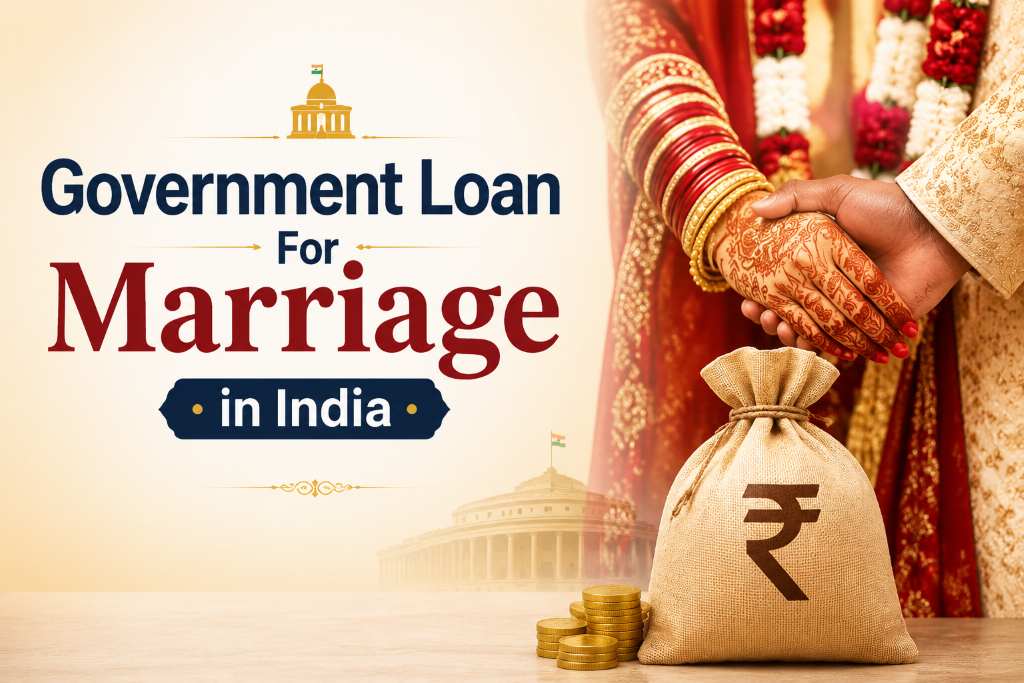

Marriage in India is one of the most precious moments of life. It’s arranged grandly, with families of both the bride and groom gathering to enjoy various functions and ceremonies. This marriage celebration can be very costly and involves a lot of expenses, including venue booking, catering, decorations, outfits, jewellery, etc.
Not everyone can afford these expenses, and for many families, funding a wedding is quite challenging. Here is where government-backed marriage assistance schemes and selected government-linked loans come into the picture.
These are not standard bank loans. They offer direct support or structured aid to ease financial pressure. These are offered to a specific category of people. In this blog, we will study in detail various types of government loans for marriage.
A government loan for marriage means financial support available through a government department, government welfare board, government-backed fund or an eligible institution for marriage-related expenses. Mostly, these loans fall into two categories: –
1. Marriage Assistance or Grants – This is direct financial support provided by the government to eligible families. The amount is not to be repaid in most cases.
2. Marriage-related Loans or Advances – These are subsidised loan programs provided by government agencies that help in reducing the financial burden of couples who are getting married. These loans come with low interest and need to be repaid.
So, this means a loan for marriage from the government doesn’t always mean it’s a loan scheme. At times, it can be a grant or financial assistance.
There are different types of marriage-related loans by the government, which are as under –
These schemes offer one-time financial support to eligible families, which depends on income, caste, disability, occupation or other social criteria.
Workers registered with certain labour or welfare boards get marriage assistance for themselves or their daughters. The amount of assistance and conditions can vary in different states and boards. The myScheme database has listed various such programmes for construction workers and other occupational groups.
There are some government-linked welfare funds that provide loans instead of grants. For example, the Tobacco Board’s Grower’s Welfare Fund offers an interest-free loan of ₹1 lakh for a daughter’s marriage.
Some schemes focus on social objectives like inter-caste marriage, widow remarriage or marriage involving persons with disabilities. These are not loans but incentive schemes.
There are a lot of benefits of a loan for marriage from the government or assistance schemes, which are as follows: –
Government-backed marriage loans are offered at lower interest rates. This helps families to repay the loan conveniently and reduces the overall interest cost.
Eligible families get financial support for marriage expenses like catering, decoration, clothing, venue booking, etc. This reduces their financial burden, and they don’t have to worry about where they will arrange funds.
Financial assistance is not treated like a concessional loan. Beneficiaries don’t have to repay it.
Most of the government loan schemes have flexible repayment options. This means you are free to choose the tenure that suits your budget. This helps in making it easier to manage EMI post- wedding.
Government loans for marriage are easily accessible to all, especially the weaker section of society. These schemes have been developed in such a manner that financial aid reaches one who needs it the most and doesn’t have tough eligibility criteria.
Mostly, the benefit is directly transferred to the beneficiary’s bank account. This removes the barrier of middlemen or third-party involvement.
These schemes are specially designed for certain people of society. This includes economically weaker households, SC/ST communities, minorities, persons with disabilities, etc.
Here are some of the common reasons why an application for a government loan for marriage is rejected:
As of now, there is no direct marriage-related loan scheme by the Central Government of India. The majority of such initiatives are run by state governments. But the Central Government supports certain marriage-related welfare activities. One such example is assistance for inter-caste marriages where one spouse belongs to a Scheduled Caste. The programme is implemented through the centrally sponsored framework for the Protection of Civil Rights Act and the SC/ST (Prevention of Atrocities) Act, with state-level implementation.
There are certain government-backed loan portals like Jan Samarth and credit guarantee platforms which provide loans to people as per their personal and social needs. But their schemes are in areas like agriculture, livelihood, business, renewable energy and housing rather than universal personal wedding loans.
There are many marriage assistance schemes by various states of India, which are as under: –
Kalyani Lakshmi and Shaadi Mubarak are two popular marriage assistance programs in Telangana. These schemes provide financial assistance of ₹1,00,116 to those who are eligible. To be eligible, one needs to be a Telangana resident, minimum marriage age of 18 of bride and prescribed family-income/category conditions.
The YSR Shaadi Tohfa Scheme by the Andhra Pradesh government supports Muslim girls’ marriages. This scheme gives financial aid of ₹1,00,000 for marriage expenses. Applicants have to meet the income and document requirements, which include verifying age and completing minimum education. One can apply for this scheme through the Navasakam Beneficiary Management Portal or can also submit the form in person at local offices.
Jammu and Kashmir has the Jammu and Kashmir State Marriage Assistance Scheme. This scheme was specifically launched to provide financial support to poor girls of marriageable age who belong to either AAY (Antyodaya Anna Yojana) or PHH (Priority Households) ration cardholder families. This scheme provides a one-time payment of ₹50,000 or more directly to the beneficiary’s bank account.
The state of Haryana has Mukhyamantri Vivah Shagun Yojana. This scheme offers financial support ranging from ₹31,000 to ₹71,000 based on your category. It is basically for daughters of widows, orphans and families from SC or BC backgrounds. You can apply for this scheme online through the Antyodaya-Saral portal or offline if it’s more convenient to you.
Uttar Pradesh operates Shadi Anudan Yojana for eligible weaker families, which includes OBC beneficiaries. The National Government Services Portal allows online registration of the scheme.
Rajasthan has listed Schemes like Mukhyamantri Samuhik Vivah and Anudan and other marriage-related support programmes through its Jan Aadhaar-linked ecosystem.
The Madhya Pradesh government has launched two major schemes for marriage assistance. The first is the Chief Minister Kalyani Marriage Assistance Scheme, which offers benefits to the widows (Kalyani) in the state to encourage widow marriages. The scheme gives a benefit of ₹2 lakh for widow marriage.
The second scheme is the CM’s Disabled Marriage Incentive Scheme. This scheme gives financial support to poor and disabled brides and grooms for their marriage. ₹2 lakh is offered if one of the bride and groom is disabled, and ₹1 lakh is offered if both are disabled.
Gujarat has various marriage assistance programs that target specific beneficiaries. For example, Dr Savitaben Ambedkar Inter-Caste Marriage Encouragement Scheme provides ₹50,000 in assistance, which comprises 25,000 in cash towards household articles and ₹25,000 through savings certificates. There is no income limitation in this scheme, but it requires that one spouse should be of Scheduled Caste and the other to be a Hindu Upper caste.
Eligibility criteria can vary among different schemes of different states. However, here are some of the common required conditions: –
Document requirements can vary as per different schemes. But the majority of schemes ask for the following documents: –
Some of the common steps of application are as follows: –
First of all, you need to go to the official government website of the state and check if you are eligible for the scheme or not.
After checking eligibility, you need to collect all documents as required. You should check that all documents are correct and have accurate information.
Most of the states accept online applications via official portals like: –
You can upload scanned copies of the required documents and submit the application.
If the online option is not available or you are not comfortable with the online option, then you can go for offline submission. For this, you will have to print the form, attach documents and submit the form at the relevant social welfare office or district office.
Government authorities will verify your documents and eligibility. If approved, then the assistance amount will be credited to your bank account.
| Scheme Name | State | Financial Assistance* | Eligible Beneficiaries | Annual Income Limit | Key Eligibility | Application Mode |
|---|---|---|---|---|---|---|
| Kalyana Lakshmi / Shaadi Mubarak | Telangana | ₹1,00,116 | Brides belonging to SC, ST, BC and EBC | It’s generally up to ₹2 lakhs. However, category specific conditions can apply. | The bride must be a Telangana resident. Should be 18+ and belong to SC, ST, BC, EBC or minority community. |
Online |
| Shadi Anudan Yojana | Uttar Pradesh | ₹20,000 | Economically weaker section of society, including specified OBC beneficiaries. | Should not be more than ₹56460 in urban areas and ₹46080 in rural areas. | UP Residence. The age of girl and boy has to be 18 years and 21 years respectively. Maximum 2 daughters can benefit. |
Online |
| Chief Minister Kalyani Marriage Assistance Scheme | Madhya Pradesh | ₹2 lakh | Widowed women | No income tax payer allowed. | Kalyani must be a native of MP. At least 18 years of age and not a taxpayer. Must not be a government employee. |
Offline / Online through Public Service Centre |
| Dr Savitaben Ambedkar Inter-Caste Marriage Scheme | Gujarat | ₹2,50,000 | Eligible intercaste couples | No Income Limit | One spouse SC and the other Hindu upper caste | Government Department |
| Mukhyamantri Samuhik Vivah Yojana | Uttar Pradesh | ₹51,000 | Couples belonging to poor families | Family income should not be more than ₹200,000 | Eligible couples must participate in the government-supported mass marriage programme. The age of a girl should be at least 18 years, and that of a boy should be at least 21 years. Must be a resident of UP. |
Online / Through concerned district authorities |
| Jammu and Kashmir State Marriage Assistance Scheme | Jammu and Kashmir | ₹50,000 | Marriageable girls from AAY or PHH ration-card-holder families. | Based on AAY/PHH status rather than a separate income ceiling. | Eligible girls must belong to an AAY or PHH household. Must be at least 18 years. Must be at least 8th pass. |
Online / Through Social Welfare Department |
Before applying for a government loan for marriage, keep the following points in mind: –
The government has been helping financially weaker families to manage their marriage expenses. They mostly provide financial support for marriage in the form of a grant or incentive rather than a concessional loan. Actual marriage-related loans are restricted to government-linked welfare funds or occupational schemes.
Families who are looking for financial support for marriage must first check schemes available as per their state, income, caste/community and other eligibility criteria. You can refer to government portals for this. If a person doesn’t qualify for a government loan for marriage, then they can consider loans from banks or NBFCs.
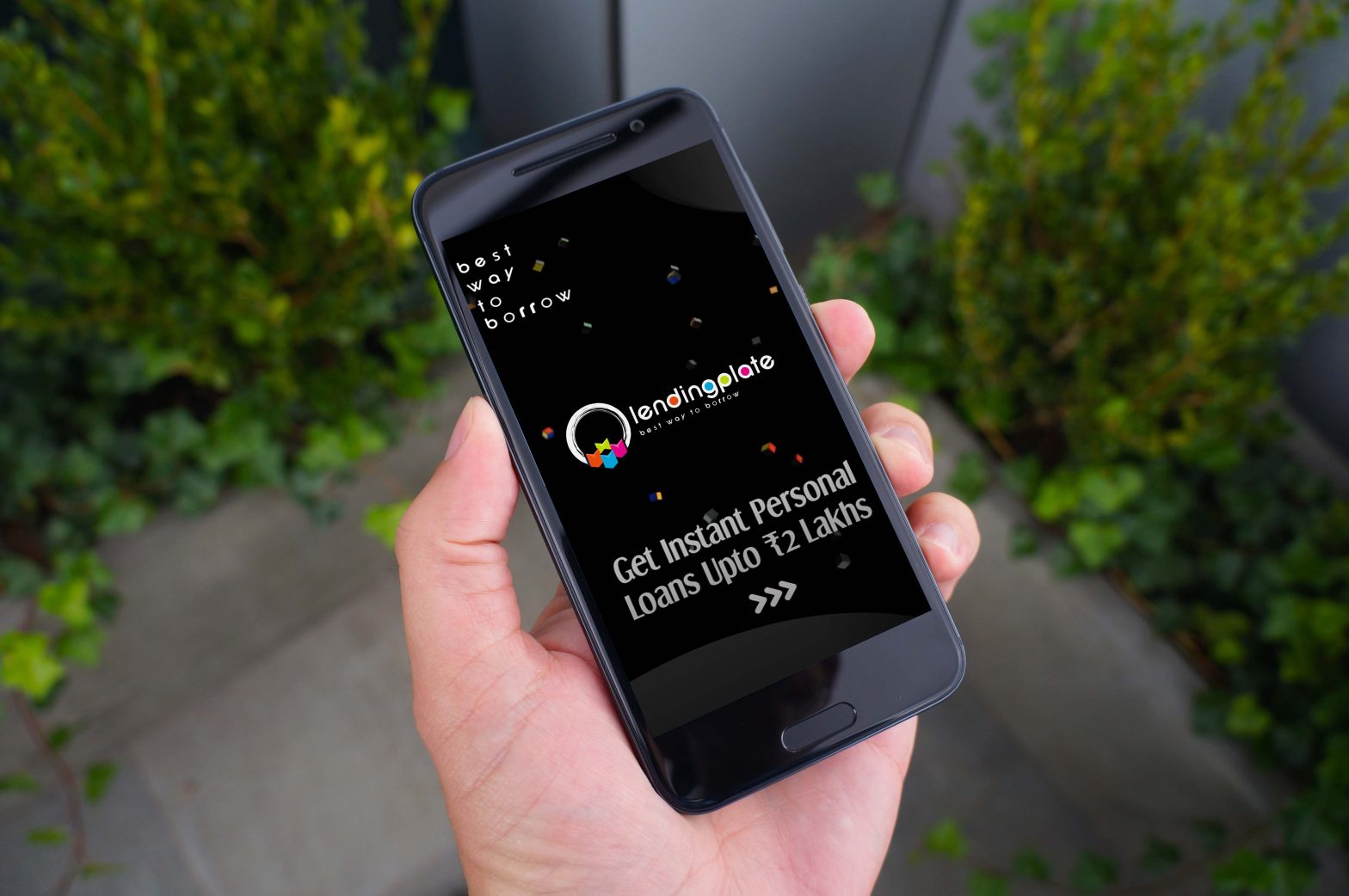
Apply Today for Instant Personal Loan from lendingplate!
There is no marriage-related loan by the central government. But there are many state government schemes that offer grants and financial assistance to eligible families for marriage expenses.
This can depend on the specific scheme. Many welfare fund loans are interest-free or have concessional terms that may not require collateral.
A government marriage scheme can provide a grant, incentive, or financial assistance that doesn’t have to be repaid. A marriage loan is a credit facility which needs to be repaid with interest. Therefore, a loan for marriage from the government should not be confused with a marriage assistance grant.
This depends on the scheme. There are certain schemes that allow you to apply after marriage, whereas there are also schemes that accept applications before marriage. You should check the scheme you are applying for to know whether you can apply after the wedding or not.
Financial assistance can vary from scheme to scheme. For example, the YSR Shaadi Tohfa Scheme by the Andhra Pradesh government provides financial assistance of ₹1,00,116, the Jammu and Kashmir State Marriage Assistance Scheme of Jammu and Kashmir provides financial assistance of ₹50,000, and Mukhyamantri Samuhik Vivah Yojana of UP provides financial assistance of ₹51,000.
Eligibility depends on the scheme. Beneficiaries can include economically weaker families, SC/ST communities, persons with disabilities, registered workers, OBC groups, etc.
This is not necessary. There are some schemes for economically weaker families, whereas some are for specific target groups like SC/ST, OBC, minority communities, persons with disabilities or other groups. One should check the scheme details before applying.
Download our personal loan app to apply for a personal loan. Get up to 2Lakhs* as a personal loan. Download Now!


Sign into avail a personal loan up to ₹ 2,50,000
Unifinz Capital India Limited is a Non Banking Finance Company (NBFC) registered with the Reserve Bank of India (RBI). lendingplate is the brand name under which the company conducts its lending operations and specialises in meeting customer’s instant financial needs.


 RBI CMS
 RBI Sachet


