
Did You Know?
We serve loans, the best way you can borrow
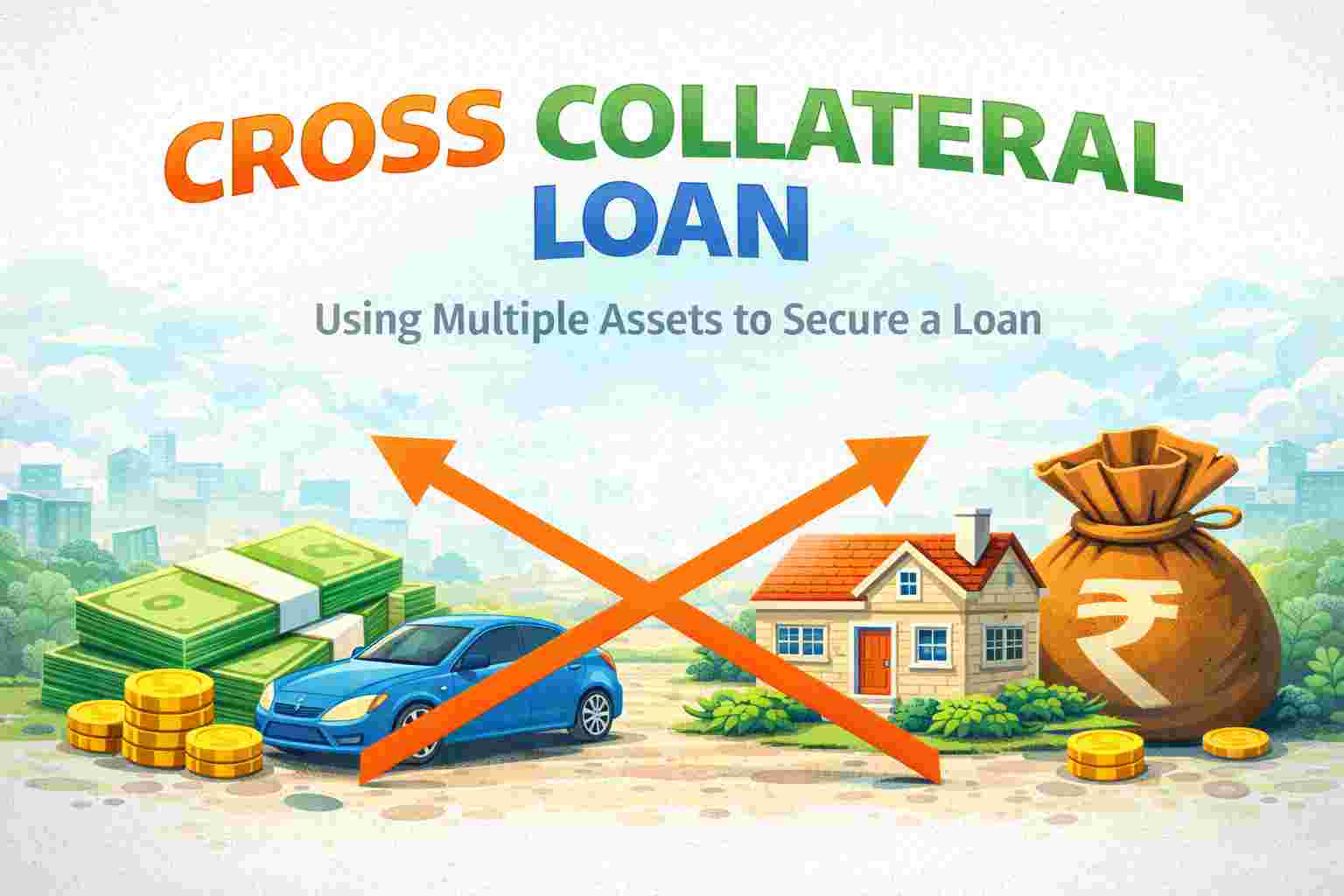

A cross-collateral loan links more than one loan to the same asset, such as your home or commercial property. One mortgage or loan agreement supports several credit needs at once in this loan. In practice, you might use the same property for a housing loan and a business or top-up loan from the same lender. This can raise your overall borrowing capacity and improve loan terms. However, it also means any repayment slip can put that shared asset at risk.
A cross-collateral loan links more than one credit facility to the same asset. Here is what you should know about its working mechanism.
1. Multiple Loans, Shared Collateral
In this structure, you may hold a home loan, business loan, or top-up loan with one lender, all backed by the same property. It means a single mortgage can quietly support several different borrowing needs over time.
2. Legal agreement
The lender records the charge through a formal agreement that clearly lists the property and each loan it secures. Therefore, the lender’s right extends to every linked facility and not just the original housing or mortgage account documented at the start.
3. Enhanced security for lenders
If one EMI falls overdue and remains unpaid, the lender can recover dues from the common collateral even where other linked EMIs are still on track. So, the overall risk of the portfolio reduces. It allows the lender to feel more comfortable extending higher limits or longer repayment tenures.
4. Efficient use of assets
Borrowers use this model to avoid pledging fresh security each time they need extra funding. On the other hand, those who prefer unsecured credit might choose an instant personal loan instead. This relies on income profile and track record rather than repeating charges on the same property.
A cross-collateral loan can feel like a strategic financing option for borrowers who want higher limits from a trusted lender. The advantages of this loan are as follows –
1. Increased Borrowing Capacity
By charging the same property for multiple loans, borrowers can access a larger overall sanction. It suits families funding a home, business expansion, and education at the same time. This is because the single asset backs layered facilities that align with different goals of your life.
2. Simplified Collateral Management
You work with one primary asset and one set of title papers, so documentation, property valuation, and renewal checks stay with a single lender. It reduces back-and-forth on paperwork and makes it easier for you to track obligations compared with maintaining separate collateral for every credit line.
3. Better Loan Terms
Since the lender’s risk reduces through shared security, the pricing on linked loans can be more attractive than an unsecured option. Moreover, the gap between that rate and a typical personal loan interest rate often translates into noticeable EMI savings over long tenures.
A cross-collateral loan can support higher borrowing. However, it also brings risks that you and your family need to think through calmly.
1. Risk of Losing Assets
If one linked loan slips into default, the lender can proceed against the shared property even when EMIs on other connected loans remain regular. This means a business cash-flow problem or missed top-up installment can disturb your housing security and broader financial plans.
2. Limited Flexibility
Selling, refinancing, or switching that property to another bank becomes harder. This is because every linked facility must be settled or restructured together. Therefore, you lose the freedom to close one loan, move another, or negotiate fresh terms without addressing the complete challenges.
3. Impact on Future Borrowing
Heavy cross-charges on a property can affect how other lenders read your profile. Therefore, you may rely more on unsecured products and tighter personal loan eligibility. This could carry higher pricing and shorter tenures in borrowing cycles in the future.
Also Read: Secured and Unsecured Loans
A cross-collateral loan structure is common across key sectors where borrowers rely on one core asset to support layered funding for growth. The applications of cross-collateral loans in India are as follows.
1. Agricultural Loans
Farmers may use the same parcel of land for multiple facilities. For instance, they can use the land for crop production credit as well as equipment finance. In this way, the charge on that land backs all linked accounts and helps them secure timely working capital during farming.
2. Business Financing
Small and medium businesses often mortgage their factory, shop, or warehouse once. These businesses then draw separate limits for working capital, machinery upgrades, and expansion. It simplifies credit security and lets them coordinate repayments with cash flows in a more organised way.
3. Real Estate
Developers sometimes use a single project property as collateral for different construction phases, such as land acquisition or early-stage development. In this manner, the sanctioned funds move from one stage to the next without fresh collateral checks. It allows for more predictable progress and fewer funding gaps.
Regulation shapes how a cross-collateral loan is structured, monitored, and closed. This ensures you and your lender work within clear boundaries at every stage of the borrowing cycle.
1. Asset Classification
The central banking regulator requires lenders to classify loans and underlying securities based on performance, overdue status, and provision rules. It means each account linked to common collateral must be tagged correctly in the system. It ensures that the risk on that property and the wider portfolio shows up transparently in periodic reports.
2. Risk Management Practices
Banks must run internal checks on collateral quality, valuation, and legal title at regular intervals. The risk teams track how much total exposure sits on the shared asset. Therefore, if one facility becomes stressed, it can trigger early action plans.
3. Disclosure requirements
Lenders need to spell out cross-charge clauses in loan sanction letters, loan agreements, and property documents. On the other hand, the borrowers are expected to share complete information about existing mortgages. It matters because non-disclosure can affect your credit score and may even lead to recovery action if the structure breaches laid-down rules or internal policy.
A cross-collateral loan usually relies on tangible assets with clear resale value, such as residential property, commercial premises, agricultural land, vehicles, or heavy machinery used in business operations. Lenders focus on assets where title can be verified, charges can be registered, and the realisable value comfortably covers combined outstanding balances.
A cross-collateral loan affects your profile in the same way as any other structured borrowing. The timely EMIs support a consistent repayment record across linked facilities. Missed payments or default on one connected account can damage your credit history more sharply. This is because recovery action may involve high-value secured assets.
A cross-collateral loan is almost always a secured structure, as it relies on a property, vehicle, or similar asset backing more than one borrowing. Unsecured products do not use this model because they are supported by income and credit score rather than common collateral.
A cross-collateral loan may still be available with a weaker history, since strong collateral partly offsets lender risk and can support higher combined exposure. However, numerous lenders have limits or seek extra documents if your current obligations suggest strain on future repayments.
A cross-collateral loan usually carries lower pricing than an equivalent unsecured facility. This is because the lender holds enforceable security over valuable pledged assets. This reduced risk can translate into tighter spreads over benchmark rates.
Download our personal loan app to apply for a personal loan. Get up to 2Lakhs* as a personal loan. Download Now!


Sign into avail a personal loan up to ₹ 2,50,000

Unifinz Capital India Limited is a Non Banking Finance Company (NBFC) registered with the Reserve Bank of India (RBI). lendingplate is the brand name under which the company conducts its lending operations and specialises in meeting customer’s instant financial needs.










 RBI CMS
 RBI Sachet


