
Did You Know?
We serve loans, the best way you can borrow
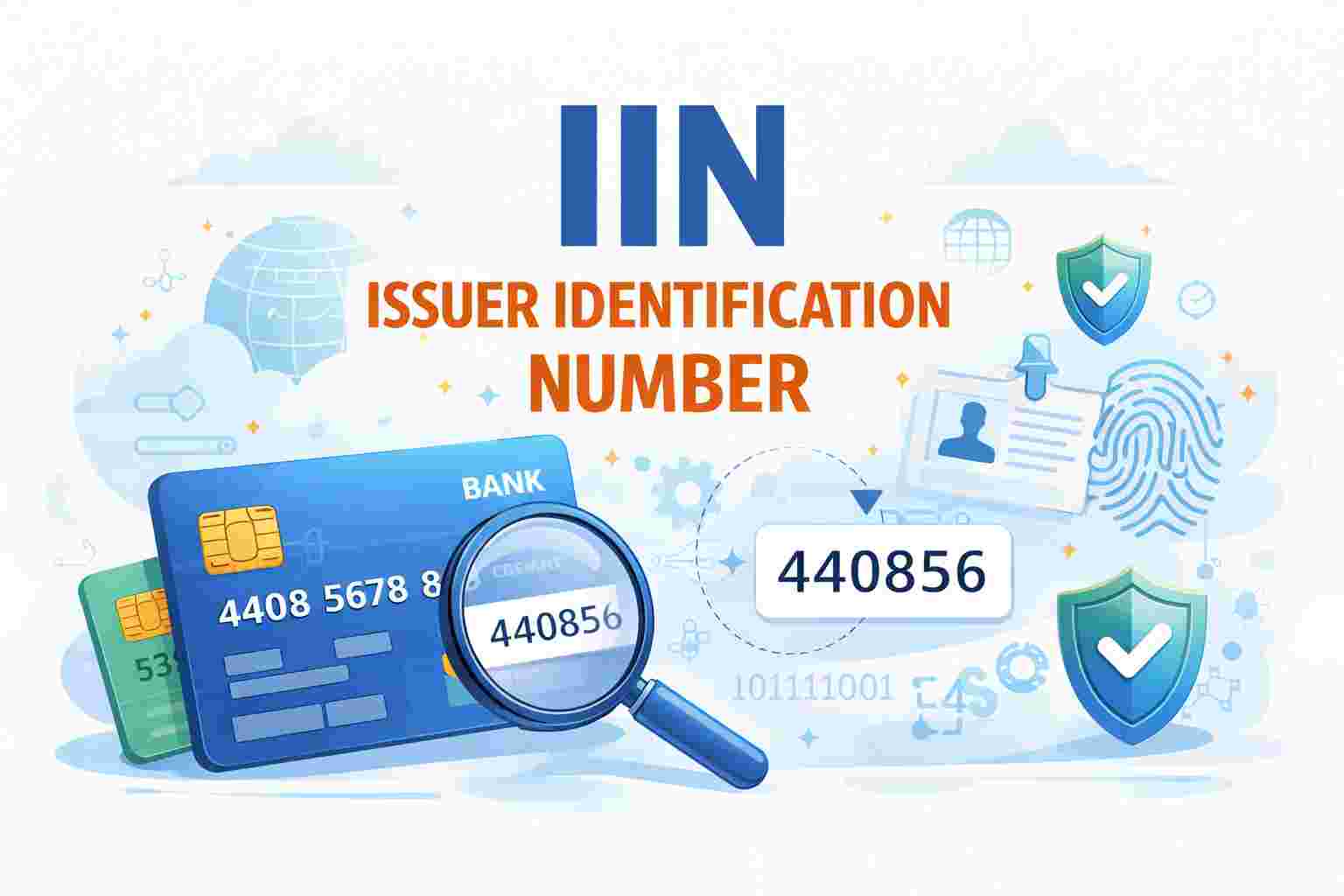

The Issuer Identification Number (IIN) is the six-digit code you see on your payment cards. Whether you hold a debit or credit card, this code tells the payment network exactly which bank or financial firm gave you the card. People frequently use the term BIN (Bank Identification Number) for this same sequence. You can find these digits on nearly every type of transaction card used globally today.
Retailers and payment systems rely on the IIN number to route your money to the right place. Since it clearly points to the issuing firm, the IIN helps security systems catch fishy or fake transactions before they finish.
For example, many Visa cards use an IIN beginning with 411111. That specific string tells the network which bank within the Visa system looks after your account.
Your IIN usually consists of 6 digits (though newer versions may use 8 digits, depending on your bank). The very first digit acts as the Major Industry Identifier.
This tells the system if the card belongs to a bank, a travel company, or some other company. The five digits following it pinpoint your specific bank. This setup ensures your payments reach the correct entity without any delay. It makes your card swipes fast and keeps the whole process stable.
Also Read: What is CIF Number?
The IIN full form is Issuer Identification Number, and it matters for several practical reasons (mostly involving your security and speed).
1. Makes Payment Processing Smoother: The IIN identifies the exact network your card is used for a transaction. This ensures your money flows through the right channels so your shopping goes through without a hitch.
2. Blocks Criminal Activity: This number adds a shield to your wallet. It verifies that your card is real and active. This check stops people from using stolen or fake card details at the checkout.
3. Organises Card Handling Better: Using the IIN helps banks track cards and transactions much better. It lets systems instantly spot the issuer. This reduces human error and cuts down the time you wait for a payment to clear.
4. Increases Trust In Every Swipe: The IIN number means a real bank with real funds backs your transaction. When merchants know the card is legitimate, they feel safer. This trust keeps the whole economy moving forward smoothly.
The IIN works behind the scenes every time you buy something. When you tap or swipe, the machine immediately reads the IIN. This tells the shop’s system which bank to contact (since the system needs to know where to send the bill).
The request flies to your bank to see if you have enough money. Your bank says yes or no, and the whole thing wraps up in a few seconds. It makes your daily spending feel effortless as the process is secure.
People often use these terms interchangeably. But you should learn the differences in how the industry views them. Find out more from the table below.
| Factor | IIN | BIN |
|---|---|---|
| Full Form | Issuer Identification Number | Bank Identification Number |
| Purpose | Identifies any issuer (bank or non-bank) | Specifically identifies a bank |
| Common Usage | Modern term for new networks | Older term still used by many |
| Identification | First 6 digits on your card | First 4 to 6 digits on your card |
| Represents | The specific entity issuing the card | The bank or financial house |
Both terms point to those initial digits on your card. However, IIN is the modern standard used by most payment professionals today.
Also Read: Control Number in CIBIL
You can find the IIN on your physical card quite easily:
1. Look at the long number on the front of your debit or credit card. The first 6 digits are your IIN. If your card reads 4111 1122 3344 5566, then 411111 is the code you want.
2. Notice the first digit. Visa cards usually start with a 4. Mastercards often start with a 5. These are unique to the networks.
3. You can use verified online tools to look up which bank owns a specific IIN. Just be careful to use reputable sites so you do not expose your full card details.
4. Call your bank’s support line. They can confirm these details if you feel unsure.
India is moving toward a cashless future very quickly. With more people using smartphones, the IIN will play an even bigger role.
1. Transactions Become Speedier: As you use RuPay or other card systems more often, the IIN will help banks talk to each other even faster. This means you won’t have to wait for “processing” screens as long as you do now.
2. Tighter Security & Fraud Detection: Scammers are getting smarter, but IIN verification is staying ahead. It helps banks spot weird spending patterns instantly. By knowing exactly who issued the card, networks can apply additional security measures, such as one-time codes, more effectively. It keeps your balance safe while you shop online.
Also Read: How to Check Loan Account Number (LAN)?
The IIN is a small but mighty part of your financial life. It keeps your data moving to the right bank and protects you from thieves. Whether you are paying your personal loan interest rate or buying groceries, those six digits do the heavy lifting.
Understanding how they work gives you more control over your banking. If you ever need extra funds for a big purchase, check out our personal loan processing fees to see how we can help. We keep things transparent and simple for you every time.
The IIN is the first six-digit sequence on your credit or debit card. It identifies the specific financial institution that issued the card to you. This number helps payment networks route your transactions to the correct bank for approval. It ensures your money moves safely and reaches the right merchant without any technical errors.
If you look at a standard Visa card, it often starts with the digits 411111. In this case, 411111 is the IIN. It tells the card machine that a specific bank within the Visa network manages your account. Different banks have different codes, so a Mastercard might start with a 51 or 52.
There is almost no functional difference between them for a regular user. BIN is an older term that stands for Bank Identification Number. IIN is the modern term because non-bank financial firms now issue cards too. Both refer to the same initial digits on your card that identify who provided the card to you.
You can find it by looking at the long sixteen-digit number printed on the front or back of your card. The very first six digits of that number make up the IIN. You do not need any special tools to see it. Just read the first block of numbers on your plastic or digital card.
The IIN helps because it allows the merchant’s system to verify the card’s origin instantly. If the number does not match a real bank or shows up as blocked, the system stops the payment. It acts as a primary gatekeeper. This keeps your account safe from unauthorized people trying to use fake card numbers online.
The International Organization for Standardization (ISO) works with various industry groups to hand out these numbers. They ensure that no two banks have the same code. This global coordination prevents confusion when you use your card in different countries. It keeps the global payment system organized and helps every transaction find its home bank.
The IIN tells the local payment machine which international network to contact. If you use an Indian card in London, the IIN directs the request back to your Indian bank. Without these digits, the foreign machine would not know where to send the approval request. It makes global travel and shopping possible for you today.
It is vital because it manages the flow of your money during every purchase. It speeds up the checkout process and keeps your data secure from fraudsters, which is especially helpful when applying for an instant personal loan online. By identifying the issuer, it ensures that your bank can authorize the spend. It makes the entire banking system reliable for you and the shops you visit regularly.
Download our personal loan app to apply for a personal loan. Get up to 2Lakhs* as a personal loan. Download Now!


Sign into avail a personal loan up to ₹ 2,50,000

Unifinz Capital India Limited is a Non Banking Finance Company (NBFC) registered with the Reserve Bank of India (RBI). lendingplate is the brand name under which the company conducts its lending operations and specialises in meeting customer’s instant financial needs.









 RBI CMS
 RBI Sachet


