
Did You Know?
We serve loans, the best way you can borrow
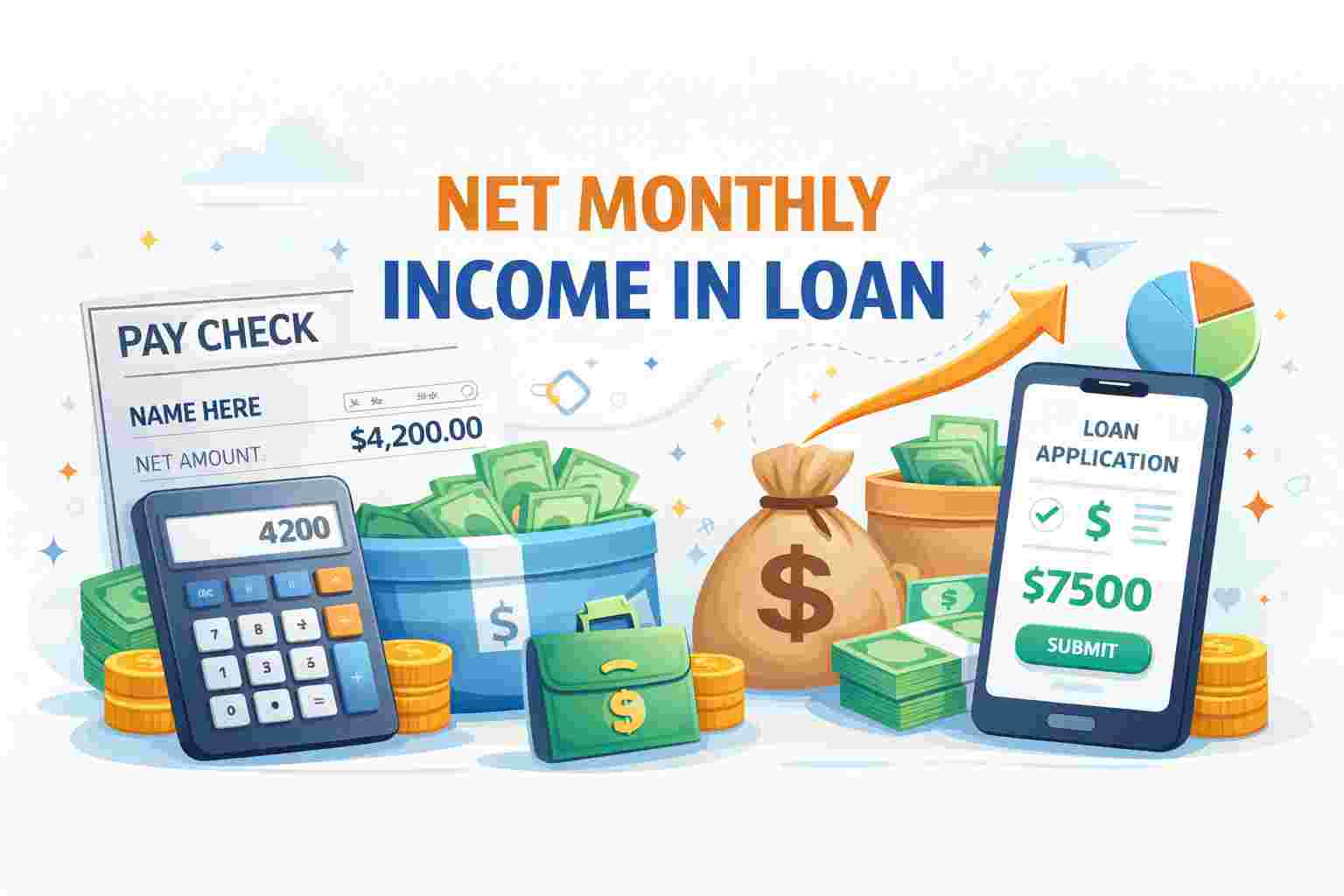

Your net monthly income is the actual cash that hits your bank account. It is what you have left after your employer takes away taxes, insurance, or pension contributions from your gross pay. Lenders care about this figure because it represents the money you actually have available to live on and pay back debts.
Banks use this figure to set your repayment limits. They often look at the net monthly income for your lifestyle to ensure you aren’t borrowing more than you can handle.
Also Read: Fixed Obligation to Income Ratio (FOIR)
Your net monthly income acts as a roadmap for your financial journey. It tells lenders how much you have in your budget each month. Without this metric, a loan agreement would be nothing more than guesswork.
1. Figuring Out Your Repayment Power – Lenders need to know you won’t struggle to buy groceries because of a loan bill. Your take-home pay helps them calculate a monthly installment that fits comfortably into your life.
2. Staying Safe from Excessive Debt – By looking at your actual earnings, lenders stop you from taking on too much debt. It is a safety net (one that works for both sides) to keep your finances stable.
3. Creating Personal Loan Deals – Every borrower has a different wallet. Knowing your specific income allows a lender to offer a plan that actually works for you. It makes the whole process feel much more personal.
4. Boosting Your Standing as a Borrower – If your income is steady or rising, you look like a superstar to a bank. Higher earnings usually indicate lower risk, which often leads to faster approvals and better support.
Basically, this figure is the heart of the lending process. It ensures you get a loan that matches your reality.
Here are the impacts of the net monthly income on the loan:
1. Eligibility of the Loan – Before any paperwork moves forward, a lender checks your net monthly income after tax. They usually want to see that your total debt payments don’t eat up more than half of your take-home pay. High earnings make you a very attractive candidate.
2. EMI Affordability – You want an EMI that you can pay without thinking twice. If you use a net monthly income calculator, you can see exactly how a new bill fits with your rent and bills. It keeps your life stress-free.
3. Lowering Risk for Lenders – A high income tells the lender that you are stable. You are less likely to hit a rough patch and miss a payment. This trust is vital for getting approved.
4. Deciding Your Limit and Timeline – Your limit is tied to your pay. If you earn more, you can borrow more. It also helps you decide whether to pay off the loan quickly or over a few years.
Net monthly income determines if the bank is ready to release the cash to your account.
1. Understanding Your Repayment Ability – Lenders use your earnings to guess your future behaviour. If you have plenty of cash left over each month, they feel confident you will pay them back on time.
2. Proving Your Financial Reliability – This is about your current financial health. A high income shows you have the means to manage your responsibilities well.
3. Getting Better Interest Deals – Your income can actually save you money. Borrowers with high take-home pay are often offered lower interest rates. Why? Because you are seen as a safe bet. Low-income earners might pay more because the lender is taking a bigger gamble.
Also Read: Debt to Income Ratio
Finding your number is quite simple. You need to look at what you actually get to spend.
1. Finding Your Total Earnings: Start with your total salary before any deductions. Include your base pay and any regular bonuses.
2. Deducting Mandatory Deductions: Subtract your income tax, provident fund, and any other legal cuts. This is the net monthly income formula that banks use to judge your file.
3. Calculate Net Income: The result is your NMI. This is the amount that matters when you apply for a personal loan for salaried employees.
4. Checking for Steady Money: Lenders love a steady heartbeat in your bank account. They look for income that arrives every month without fail.
5. Applying for the Loan: With your NMI in hand, you can shop for loans with your eyes wide open. You will know exactly what is affordable.
The NMI ratio is a simple comparison. It compares your new loan payment to your net monthly income. Banks use this to make sure you aren’t “over-leveraged.”
If your ratio is too high, it means most of your money is going to debt. That is a red flag. Keeping this ratio under 50% is a smart move. It shows you have a balanced life and plenty of cash for emergencies. If you want to improve this, try paying off a credit card or looking for a small pay rise. It makes you a much more attractive borrower.
Once you have your figures ready, the path to a loan is clear. Here is how you do it:
1. Figuring Out Your Actual Needs: Be honest about how much you need. Don’t borrow more just because you can.
2. Reviewing Your Score: A quick check ensures no nasty surprises are waiting for you.
3. Getting Your Paperwork Ready: Have your ID and bank statements ready.
4. Comparing Different Deals: Take a look at different lenders to see who offers the best deal for your income level.
5. Testing Your Qualification Online: These tools are great for seeing your potential limit without affecting your credit score.
6. Starting with lendingplate: Go to the website for a fast, digital experience.
7. Sending Your Details: Enter your details and upload your documents.
8. Undergoing the Verification Process: The team will double-check your income and identity.
9. Wait for Your Approval: This usually happens quickly if your NMI is solid.
10. Getting the Cash in Your Account: After you sign, the funds are deposited into your account.
Different loans look at your income through different lenses.
1. Personal Loans – These are usually faster. Lenders rely almost entirely on your pay because there is no house or car to take back if you don’t pay.
2. Home Loans – Since these are long-term loans, lenders are very strict. They want to see a net monthly income that can support a mortgage for 15-20 years.
3. Business Loans – If you are an entrepreneur, lenders look at your personal take-home pay alongside your business profits. It gives them a full picture of your financial strength.
4. Auto Loans – The bank wants to see that you can afford the car, the fuel, and the loan payment. Your income helps them set the right price bracket for you.
Several factors can change your net monthly income:
1. Understanding Tax & Statutory Cuts- These vary depending on your salary bracket.
2. Factoring in Future Savings- PFs, pension contributions, and life insurance premiums are investments in your future, but they reduce your current cash.
3. Variable Income- If you are a freelancer, your income might jump around. Lenders will usually take an average of the last six months.
Your NMI is only half the story. Lenders also look at your Debt-to-Income (DTI) ratio. This shows them how much of your net monthly income is already committed to others. A low ratio tells a lender that you are in great financial health, while a high one might suggest you are a bit over-leveraged.
By looking at these numbers together, a lender can find the answers to a few vital questions:
If you earn ₹60,000 and already pay ₹20,000 in other loans, your DTI is around 33%. Lenders usually like to see this stay under 40%. It ensures that you have enough money left for the future. If your DTI is too high, they might ask you to pay off a smaller debt before they give you a new loan.
You can actually take steps to improve your income in the eyes of a lender. Here is how:
1. Finding Ways to Earn More – If you can show extra, regular income, it boosts your borrowing power. Higher pay doesn’t just get you a loan from a lender; it also helps you secure larger amounts at lower rates.
2. Clearing Off Your Old Debts – Every time you close a small loan, your “available” income goes up. This is a massive win for your loan application. Lenders love to see that your money isn’t already tied up elsewhere.
3. Watching Your Monthly Expenditure – Lenders sometimes look at your bank statements to see how you spend. If you are careful with your money, you look like a much safer bet.
Doing the math yourself puts you in the driver’s seat. You should always ask what net monthly income is for your specific situation before you apply.
1. Staying Within Your Limits of Borrowing- You should not take an excessive amount that you can’t pay back later.
2. Keeping Your Life on Track- A good handle on your net monthly income means you don’t have to sacrifice your lifestyle for a loan. You can keep your hobbies & your home while paying off your debt.
3. Improving Your Credit Score- Borrowing within your means ensures you never miss a payment date. At the same time, it makes it easier to get an instant personal loan whenever you need.
Your net monthly income is a significant number in your financial life when it comes to borrowing. You need to understand how to calculate my net monthly income and how lenders view it. This way, you can make much smarter decisions. It offers you the confidence to apply for the right amount while ensuring you stay financially healthy for years to come.
This represents the actual cash that lands in your bank account each month after all mandatory deductions. It is your total salary minus taxes and other fixed deductions. Lenders use it to gauge your real-world spending power and determine if you can realistically afford to take on a new instant personal loan without struggling.
It provides a realistic picture of your disposable income rather than just your “on-paper” salary. Lenders check this to ensure you have enough money left over for your daily living costs after paying your EMI.
You begin with your total gross earnings and subtract items like income tax, provident fund contributions, and professional tax. The remaining balance is what lenders consider your true income.
Lenders typically consider statutory deductions such as income tax, employee provident fund or EPF and insurance premiums deducted at source. They also factor in any existing loan repayments or fixed financial obligations. Understanding these deductions helps you see your true financial standing before you commit to a new personal loan for salaried employees.
Gross income is your total compensation before any taxes or benefits are removed by your employer. In contrast, NMI is the actual “in-hand” amount you receive. Lenders focus on NMI because you cannot use tax money to pay back a loan; they only care about the cash you actually control.
Yes, you can include them if they are regular and documented through bank statements or payment slips. While one-time gifts might be ignored, consistent freelance earnings or monthly incentives bolster your total income.
They will consider it if you choose to apply for a joint loan with your partner. By combining both of your net monthly incomes, you create a much stronger financial profile. This earning power often lets you access larger funds & potentially enjoy more flexible repayment terms from the lender.
Existing EMIs are viewed as fixed commitments that reduce your available cash. Lenders subtract these from your take-home pay to find your “free” income. If a large portion of your salary is already going toward other debts, the lender may offer you a smaller loan to prevent you from being over-leveraged.
The basic net monthly income formula remains the same, but the acceptable debt ratios vary by loan type. Let’s take one net monthly income example. A home loan lender might allow a higher percentage of your income to go toward EMIs because the loan is secured by property, whereas personal loan lenders are usually stricter.
This ratio compares your proposed monthly loan payment to your total take-home pay. It acts as a barometer for your financial health. Most financial experts suggest keeping this ratio below 50% so that you can always have enough money left over for rent, food, savings, and unexpected monthly expenses.
You will typically need to provide your salary slips for the last 3-6 months (along with updated bank statements). These documents act as concrete proof that your income is stable and arrives on time. Lenders use these to verify that you have the financial means you claimed during your application.
Absolutely, though the process is slightly different from that of salaried workers. You calculate your NMI by taking your average monthly business profit and subtracting personal taxes and business expenses. Lenders will look at your audited financial statements and income tax returns to confirm these figures are accurate and consistent.
Yes, a higher net monthly income makes you a much more attractive borrower in the eyes of any lender. It suggests that you are financially stable and carry a lower risk of default. This often translates into the lender offering you lower interest rates, higher borrowing limits, and better overall terms.
Download our personal loan app to apply for a personal loan. Get up to 2Lakhs* as a personal loan. Download Now!


Sign into avail a personal loan up to ₹ 2,50,000

Unifinz Capital India Limited is a Non Banking Finance Company (NBFC) registered with the Reserve Bank of India (RBI). lendingplate is the brand name under which the company conducts its lending operations and specialises in meeting customer’s instant financial needs.


















 RBI CMS
 RBI Sachet


