
Did You Know?
We serve loans, the best way you can borrow
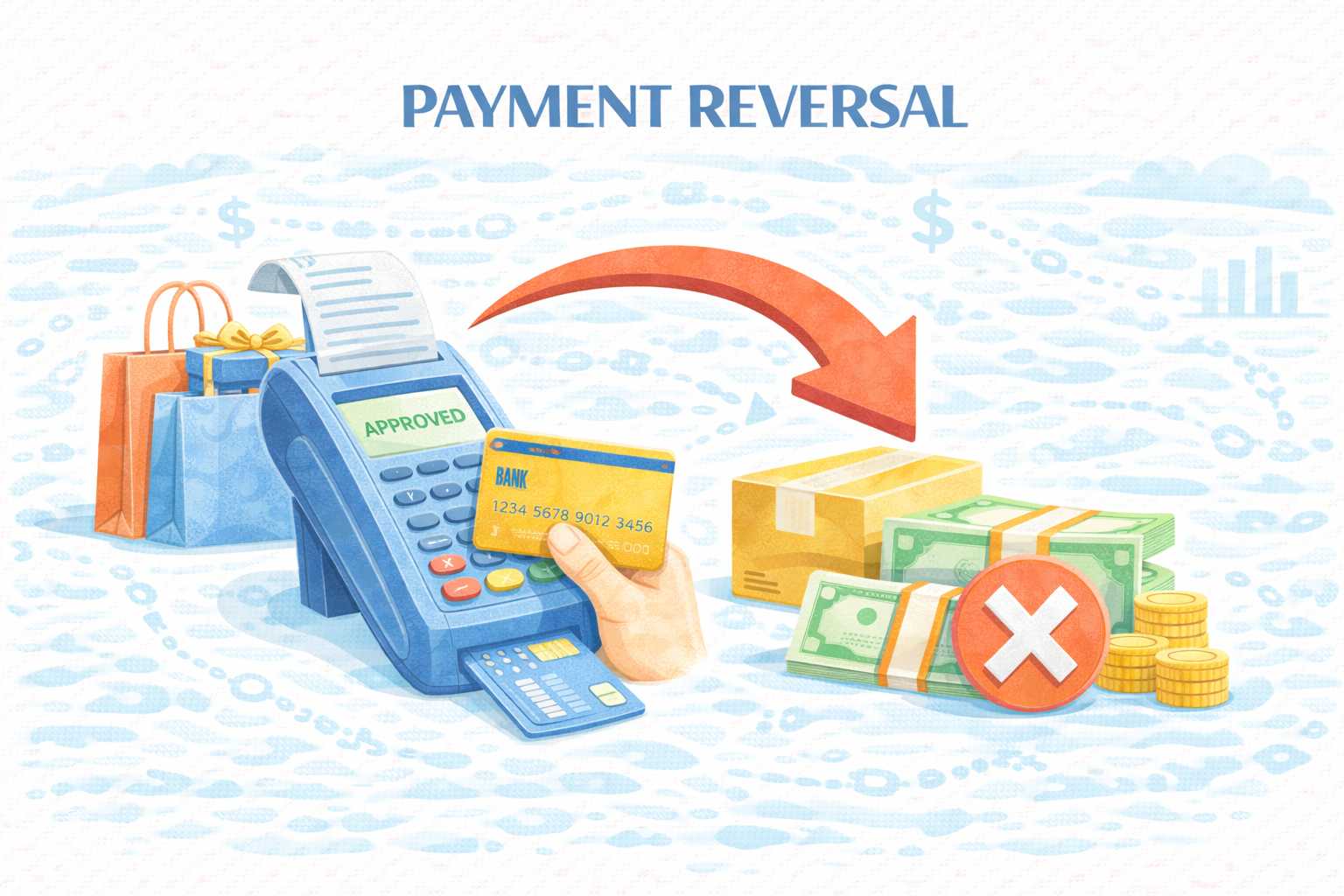

A payment reversal can feel like a real setback. It means lost money, wasted time, and a pause in business flow. It is the process of sending money back to a customer. While this may sometimes build trust, it also eats into your earnings and hours of hard work. At times, you may have no choice but to reverse a payment to keep your reputation intact or to follow legal rules.
Understanding the payment reversal definition and the types that exist helps you manage costs better and maintain customer trust. Find out more in this post.
A payment reversal means cancelling a completed transaction & sending the money back to the sender. This usually happens if there was a mistake or fraud (or technical issue). The bank or payment service steps in & processes the return in such circumstances. They do this so that the original amount reaches your account again.
The payment reversal definition goes beyond a simple refund. It helps people trust digital payments. You can use a reverse loan payment calculator. This process is guided by RBI rules in India. The steps depend on the method of payment. For instance, UPI payments, credit cards, or bank transfers have their own reversal process.
Most failed UPI transfers are corrected automatically within 3-5 working days. But the process becomes tricky if money is sent to the wrong account. That usually needs manual checks & agreement from the receiver before the money comes back.
A payment reversal can happen in different ways, and each type follows its own process. Knowing these types helps you understand what to expect when money is sent back.
1. Chargebacks – It happens when a customer reports a wrong or unauthorised transaction to the bank. The bank reviews the claim, and if it is valid, the money is returned.
2. Authorisation Reversals – This occurs before the money fully leaves your account. This usually takes place when a payment request is cancelled at the very start of the transaction.
3. Refunds – They are the most common type. A refund is processed when a customer is not satisfied with a product or service, or a mistake has been made. The merchant sends the money back directly.
The time taken for a payment reversal depends on the type of process involved. Some happen instantly, while others can stretch over weeks. An authorisation reversal is the fastest. It often happens before the money leaves your account, so you may not even notice it.
Refunds usually take longer. The time depends on how the money is returned, whether it is sent back to your bank account or credited to your card. In most cases, this can take one to five working days.
Chargebacks take the most time. If the bank or card company has to investigate, the process can extend for weeks or even months. While this goes on, many banks provide temporary refunds so that the customer is not left waiting without funds.
A payment reversal can happen for many reasons. These usually result in delays as well as financial loss for both sides.
These occur when buyers ask for money back or dispute a payment.
1. Customer Disputes / Chargebacks – Customers may file a chargeback if products do not arrive or quality is poor (or sometimes when bills are wrong).
2. Refund Requests – Buyers ask for refunds when they are unhappy or they may ask when they receive damaged goods.
3. Subscription Cancellations – Customers may seek a reversal if payments continue after a cancelled service.
4. Authorisation Issues – Expired cards, low balance, or mismatched details may result in payments reversals.
These happen when businesses make mistakes during payment processing.
1. Processing Errors – Double charges, wrong amounts, or system issues often result in reversals.
2. Merchant Error – Incorrect details or failing to deliver on promises can cause banks to send money back.
3. Regulatory Compliance – Payments that do not follow rules may be cancelled by financial institutions.
Fraud is another big issue. Stolen cards or identity theft often force banks to reverse money for customer safety.
Reducing payment reversals may improve business as well as customer trust. Most issues come from errors, unclear details, or delays. Here’s how you can prevent them.
1. Connect Authorisation & Transactions – Assign a unique ID to every payment so that authorisation always matches the right transaction. This cuts down mismatches.
2. Track with Audit Numbers – Give transactions a trace number. It keeps a clear record and helps resolve disputes faster.
3. Link Sales with Authorisation Codes – Tie every sale to its original approval. This avoids mistakes between estimated and final amounts.
4. Flag Variable Transactions Clearly – Show when charges may change. This prevents confusion and lowers the risk of disputes.
5. Explain Charge Duration – Let customers know how long the charges will last. This avoids billing misunderstandings.
6. Clear Payments without Delay – Process transaction data quickly. Slow submissions can cause failed payments or confusion.
7. Keep Billing Names Simple – Use easy-to-recognise billing labels. Customers are less likely to dispute when names are clear.
8. Share Payment Dates in Advance – Notify customers when money will leave their account. This helps them prepare and reduces reversal chances.
9. Ensure Authorisations – Get approval for an estimate first for the changing charges. You can then adjust to the final amount. This keeps expectations clear.
10. Fix Declined Payments Speedily – Handle failed authorisations right away. Returning funds fast builds trust and prevents reversals.
A refund can only occur after a payment at the customer’s request. On the other hand, a payment resersal happens during payment. It refunds the money after a failed transaction.
Here’s the table differentiating between payment reversal & refund:
| Parameter | Payment Reversal | Refund |
|---|---|---|
| How it starts | Initiated by the bank or payment system due to an error, fraud, or failed transaction. | The business refunds when the customer asks for money to be returned. |
| Time taken | Can be instant or may take a few days within 3-5 days or weeks depending on the system and checks. | Usually speedier, often between 7 & 10 business days based on business processing. |
| Main reason | Due to the failed transfers or wrong account details (or unauthorised payments). | Happens when a customer cancels & returns it. |
| Customer role | Very limited, as banks & regulators manage the process. | High control, as customers request it directly under the return policy. |
| Process used | Controlled under RBI rules & banking systems. | Managed through company return rules as well as customer service support. |
A payment reversal is the cancellation of a transaction that has already been processed & settled. The money first leaves the customer’s account. Then, it gets credited back through the reversal process. This usually happens due to errors, fraud, or disputes that require the original payment to be undone.
A returned payment, on the other hand, never completes in the first place. It fails at the time of the payment attempt, often because of insufficient funds, incorrect account details, or the bank placing a restriction on the account. No money is deducted from the customer’s account. This means there is no waiting period for funds to be returned.
The following are the impacts of payment reversals on customers as well as businesses:
1. Protects for Customers – A payment reversal gives confidence that their money will be returned if a transaction goes to the wrong account or involves fraud. It encourages more people to trust & use digital payments.
2. Cash Flow Pressure on Businesses – Reversals for businesses can slow down cash flow. Smaller companies that rely on fast settlements feel the impact the most. Chargebacks may even add extra costs, lowering overall profit margins.
3. Building Trust in Banking – Customers feel more secure when banks & payment providers handle reversals quickly. Timely action reduces disputes & builds stronger trust while making users more confident in continuing with digital payments.
4. Supporting Economic Growth – A reliable reversal system not only helps customers and businesses but also strengthens India’s digital economy. More people are encouraged to adopt cashless transactions by lowering risks.
5. Meeting Regulatory Demands – RBI requires strict processes for handling reversals. It pushes banks & service providers to maintain strong systems as well as customer support. This ensures the transactions remain transparent.
Every business will experience payment reversals at some point. However, that does not mean merchants have to accept the losses. The right systems & communication in place help avoid reversals or at least reduce them before they turn into expensive disputes.
Here are some common scenarios and what merchants can do about them.
Simple mistakes like charging the wrong amount or processing a transaction twice happen. In these cases, speed matters. An authorisation reversal can be triggered instantly if the error is caught early (often before the customer even notices).
A customer may feel irritated when they find the product they are planning to purchase is out of stock. Merchants can notify customers if an item is out of stock or when it will be back. This upfront clarity reduces cancellations & refunds later.
All payments carry information like transaction identifiers & reference numbers. The payment can get stuck between approval & settlement when any of these are missing or incorrectly formatted. A reliable payment gateway ensures the required data is included.
Sometimes customers don’t recognise a charge and raise a dispute without checking.
To avoid this, merchants should:
1. Use clear billing descriptors.
2. Communicate purchase updates regularly.
3. Process transactions promptly so they appear familiar on bank statements.
Recurring charges are commonly for businesses like hotels or rentals, etc. Merchants can group transactions under a single authorisation & not request multiple authorisations. It keeps billing clear for customers while reducing the chances of disputes over repeat payments.
Some reversals happen due to customer dissatisfaction. Tracking and analysing complaint data can highlight patterns. Maybe product quality needs improvement, or descriptions need to be clearer. Listening to customers helps cut future refund requests.
Merchants must use fraud detection in real time while allowing genuine payments. Keeping strong transaction records also helps in fighting friendly fraud when customers dispute legitimate charges.
When you apply for an instant personal loan, lenders look at your income & check how you manage money. Payment reversals can sometimes raise red flags, especially if they happen too often. Here’s how they come into play.
A reversal linked to missed or disputed payments can drag down your credit score. Since lenders rely on this score to measure reliability, too many reversals may result in higher personal loan interest rates – or worse, outright rejection. On the other hand, one-off technical glitches generally don’t leave a mark on your credit history.
Credit scoring systems can spot patterns. A few reversals because of server downtime or banking errors won’t count against you. But repeated customer-initiated reversals can be seen as poor money management, which hurts your profile in the long run.
Reversals due to fraudulent activity may actually work in your favour. Suppose you have spotted an unauthorised transaction. You took the right steps to reverse it. Lenders may view it as proof that you are financially alert.
Small mistakes in payment handling can result in delays when applying for a personal loan. But there’s good news. The steps (mentioned below) help you prevent reversals while keeping your application process seamless.
1. Set Up Auto-Debit Correctly – Activate auto-debit for personal loan EMIs or personal loan processing fees. Make sure your mandate is linked properly and always keep enough balance in your account before the due date.
2. Keep Your Bank Statement Clean – Lenders carefully scan transaction histories. A bank statement littered with reversal entries can make you look financially careless. Aim for a clean record by minimising reversals in the months leading up to your application.
3. Double-Check Account Details – A typo in an account number can result in funds being sent back. You must confirm details before transferring the money to avoid unnecessary delays.
4. Keep Records Handy – Save receipts and confirmation emails for each payment. A speedy access to proof makes resolving disputes much easier if an issue arises.
5. Ensure Strong Connectivity – Technical failures during online payments are often caused by weak internet connections. Always make reverse loan payments in a secure network environment to avoid failed or incomplete transactions.
6. Monitor Transactions Regularly – Check your statements after every loan-related payment. This not only helps spot unauthorised debits but also ensures you catch & fix problems before they escalate.
Not all payments are created equal when it comes to reversals. The possibility of getting your money back depends heavily on the payment method used. While some systems offer built-in protections, others are far less forgiving.
Here’s a breakdown:
Thanks to global chargeback rules, credit card payments are among the easiest to reverse. What if the fraud occurs or a merchant fails to deliver? Customers then file a dispute with their bank. Debit card transactions also fall under these protections. But timelines may vary based on the issuing bank.
Some platforms offer their own dispute processes. The exact rules differ by provider. But most allow customers to raise a claim or submit evidence.
An ACH transfer can sometimes be reversed if specific errors occur (such as duplicate charges, the wrong amount being sent, or funds landing in the wrong account). The sender’s bank works with the ACH operator. The operator notifies the recipient’s bank. However, reversals only succeed if the recipient still has sufficient funds or gives consent for the correction.
Bank transfers are irreversible once processed. That means both parties need to trust each other fully before moving large sums through these channels.
Payment reversals cannot always be avoided. The key is to reduce them.
Here are the smart ways:
a. Improve Fraud Checks – Use fraud detection & transaction monitoring to stop suspicious activity before it becomes a reversal.
b. Be Clear On Refunds – Publish return & refund policies that are easily understandable so customers know what to expect.
c. Resolve Disputes Fast – A trained customer support team that listens & responds quickly can often solve issues before they reach the bank.
a. Know The Chargeback Process – Merchants should be familiar with documentation requirements, deadlines, and how to present strong evidence when contesting a dispute.
b. Use Chargeback Management Tools – Many businesses partner with services that specialise in chargeback prevention & recovery. These help them limit financial losses.
A payment reversal happens when a transaction is cancelled before settlement, while a refund returns money after purchase, usually initiated by the merchant upon customer request.
Payment reversals occur due to fraud or customer disputes. It may happen due to duplicate charges or expired cards. At times, there are technical errors. On the others, they are initiated by banks or customers themselves.
Authorisation reversals are instant, refunds usually take a few business days, while chargebacks can stretch weeks or months, depending on bank investigations and whether disputes are raised.
A common example is when a customer pays online, but the product goes out of stock. The transaction is reversed, returning money to their account automatically or through a refund.
The bank may help only with the recipient’s consent if you transfer money to the wrong account. Technical errors, however, are usually reversed automatically by the system.
The bank can refund the excess or adjust it against upcoming EMIs if you overpay a loan installment. It depends on your lender’s loan repayment policy & process.
Accidental reversals usually do not harm credit. Repeated missed or failed payments might. Lenders may view frequent reversals as poor financial discipline. It may impact the loan approval or interest rates.
Multiple chargebacks can hamper a merchant’s reputation. At the same time, it may increase processing fees or result in account termination. Repeated reversals may result in bank scrutiny or impact creditworthiness for customers.
Download our personal loan app to apply for a personal loan. Get up to 2Lakhs* as a personal loan. Download Now!


Sign into avail a personal loan up to ₹ 2,50,000

Unifinz Capital India Limited is a Non Banking Finance Company (NBFC) registered with the Reserve Bank of India (RBI). lendingplate is the brand name under which the company conducts its lending operations and specialises in meeting customer’s instant financial needs.


















 RBI CMS
 RBI Sachet


